Colletier Jacques-Philippe, Chaize Barnabé, Winterhalter Mathias, Fournier Didier
Laboratoire de Synthèse et Physicochimie des Molécules d'Intérêt Biologiques-Groupe de Biochimie des Protéines, Université Paul Sabatier, Toulouse, France.
BMC Biotechnol. 2002 May 10;2:9. doi: 10.1186/1472-6750-2-9.
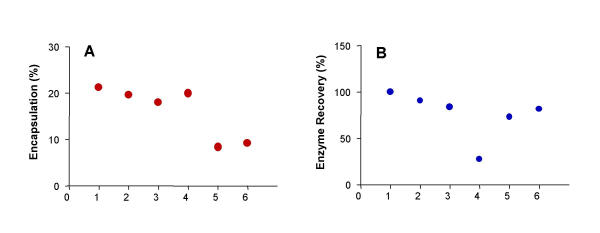
We investigated the encapsulation mechanism of enzymes into liposomes. The existing protocols to achieve high encapsulation efficiencies are basically optimized for chemically stable molecules. Enzymes, however, are fragile and encapsulation requires in addition the preservation of their functionality. Using acetylcholinesterase as a model, we found that most protocols lead to a rapid denaturation of the enzyme with loss in the functionality and therefore inappropriate for such an application. The most appropriate method is based on lipid film hydration but had a very low efficiency.
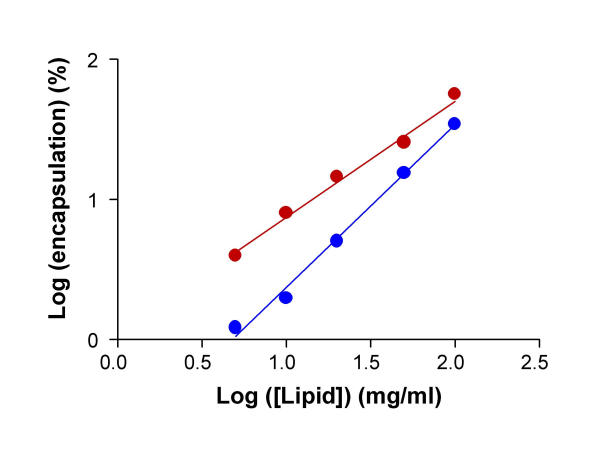
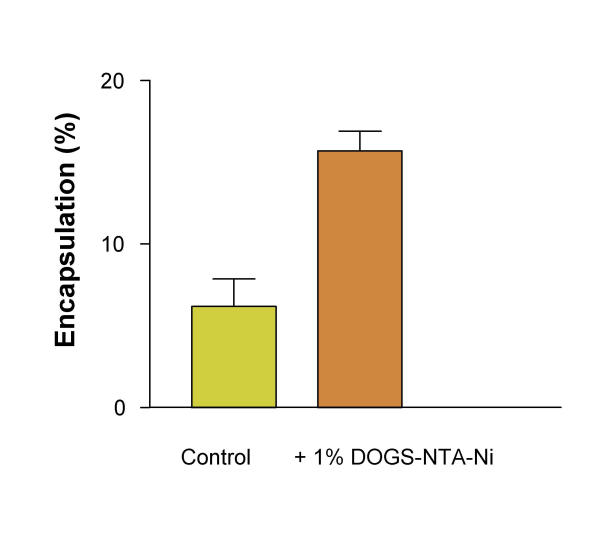
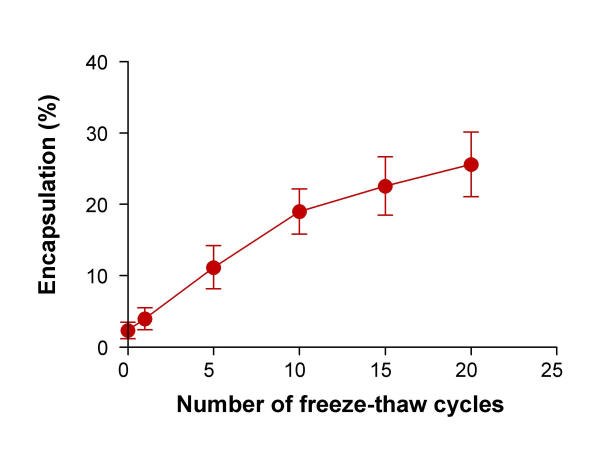
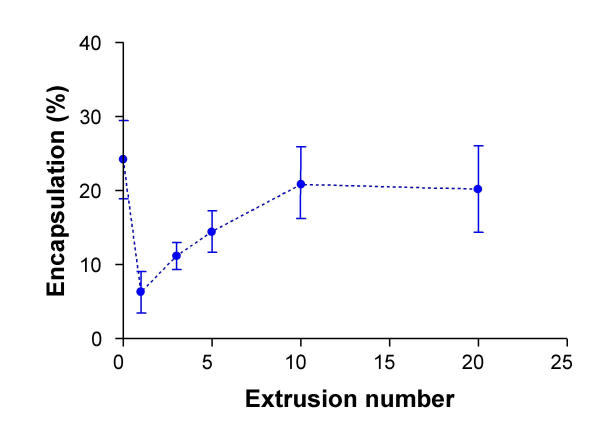
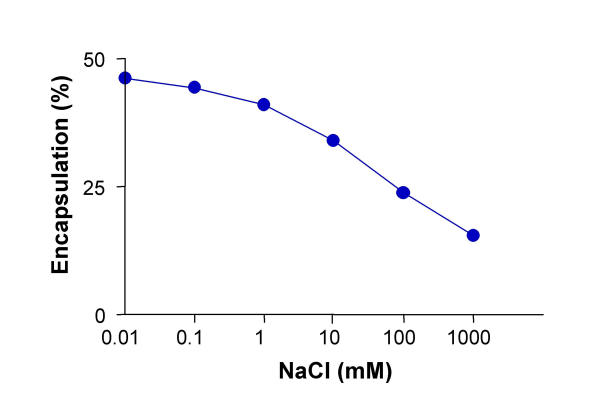
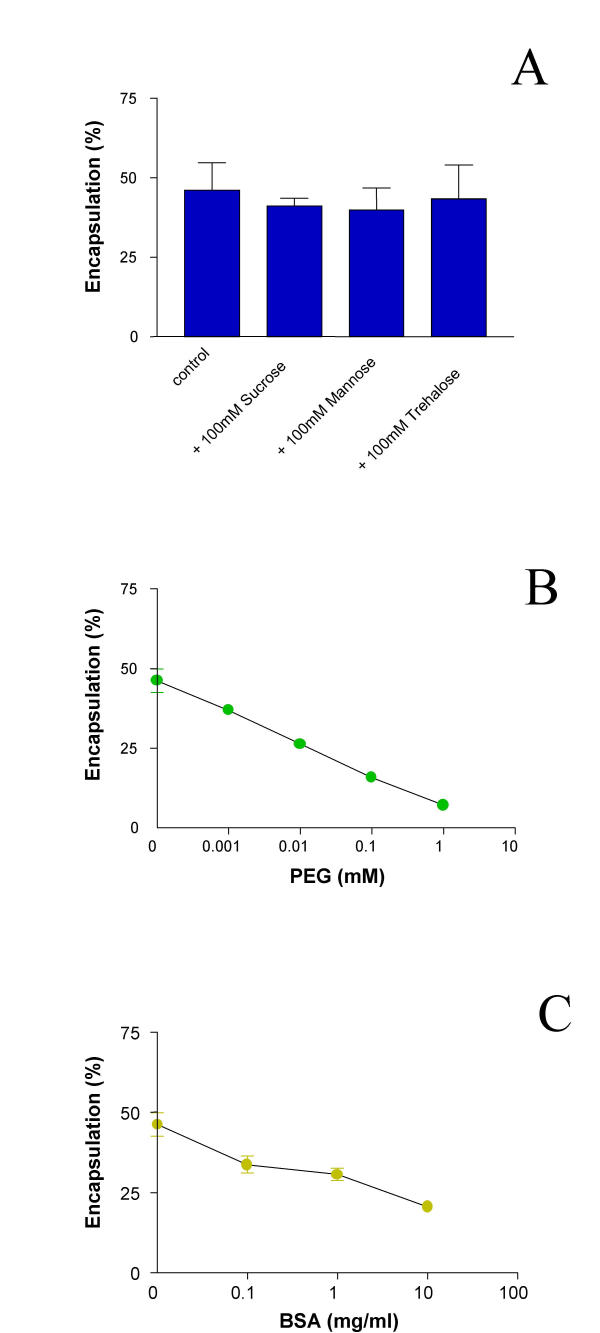
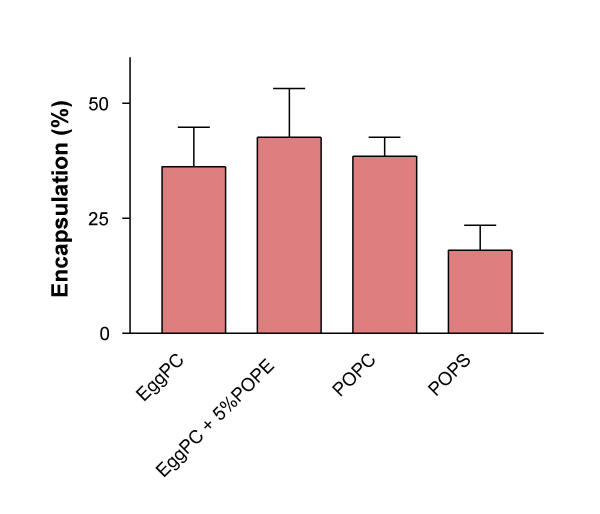
To improve it and to propose a standard procedure for enzyme encapsulation, we separate each step and we studied the effect of each parameter on encapsulation: lipid and buffer composition and effect of the different physical treatment as freeze-thaw cycle or liposomes extrusion. We found that by increasing the lipid concentration, increasing the number of freeze-thaw cycles and enhancing the interactions of the enzyme with the liposome lipid surface more than 40% of the initial total activity can be encapsulated.
We propose here an optimized procedure to encapsulate fragile enzymes into liposomes. Optimal encapsulation is achieved by induction of a specific interaction between the enzyme and the lipid surface.
我们研究了将酶包封到脂质体中的机制。现有的实现高包封效率的方案基本上是针对化学稳定分子进行优化的。然而,酶很脆弱,包封还需要保留其功能。以乙酰胆碱酯酶为模型,我们发现大多数方案会导致酶迅速变性并失去功能,因此不适用于此类应用。最合适的方法是基于脂质膜水合,但效率非常低。
为了改进它并提出一种酶包封的标准程序,我们将每个步骤分开,并研究了每个参数对包封的影响:脂质和缓冲液组成以及不同物理处理(如冻融循环或脂质体挤压)的影响。我们发现,通过增加脂质浓度、增加冻融循环次数以及增强酶与脂质体脂质表面的相互作用,可以包封超过初始总活性40%的酶。
我们在此提出一种将脆弱酶包封到脂质体中的优化程序。通过诱导酶与脂质表面之间的特定相互作用可实现最佳包封。