• 文献检索
  • 文档翻译
  • 深度研究
  • 学术资讯
  • Suppr Zotero 插件Zotero 插件
  • 邀请有礼
  • 套餐&价格
  • 历史记录
应用&插件
Suppr Zotero 插件Zotero 插件浏览器插件Mac 客户端Windows 客户端微信小程序
定价
高级版会员购买积分包购买API积分包
服务
文献检索文档翻译深度研究API 文档MCP 服务
关于我们
关于 Suppr公司介绍联系我们用户协议隐私条款
关注我们

Suppr 超能文献

核心技术专利:CN118964589B侵权必究
粤ICP备2023148730 号-1Suppr @ 2026

文献检索

告别复杂PubMed语法,用中文像聊天一样搜索,搜遍4000万医学文献。AI智能推荐,让科研检索更轻松。

立即免费搜索

文件翻译

保留排版,准确专业,支持PDF/Word/PPT等文件格式,支持 12+语言互译。

免费翻译文档

深度研究

AI帮你快速写综述,25分钟生成高质量综述,智能提取关键信息,辅助科研写作。

立即免费体验

在小鼠肝细胞中鉴定出的质膜碳酸酐酶为同工酶十四。

The plasma membrane carbonic anhydrase in murine hepatocytes identified as isozyme XIV.

作者信息

Parkkila Seppo, Kivelä Antti J, Kaunisto Kari, Parkkila Anna-Kaisa, Hakkola Jukka, Rajaniemi Hannu, Waheed Abdul, Sly William S

机构信息

Department of Clinical Chemistry, 90014 University of Oulu, Finland.

出版信息

BMC Gastroenterol. 2002 May 21;2:13. doi: 10.1186/1471-230x-2-13.

DOI:10.1186/1471-230x-2-13
PMID:12033992
原文链接:https://pmc.ncbi.nlm.nih.gov/articles/PMC115862/
Abstract

BACKGROUND

Biochemical and histochemical studies have both previously indicated plasma membrane-associated carbonic anhydrase (CA) activity in hepatocytes which has been assumed to be CA IV. However, immunohistochemical data did not support this assignment. Recent northern blotting results indicated the presence of mRNA for the most recently discovered membrane-bound CA isozyme, CA XIV, in the liver. The present study was designed to examine whether CA XIV could contribute to the CA activity described in the hepatocytes.

METHODS

Tissue samples from mouse liver were subjected to immunohistochemical staining using the antibodies raised against recombinant mouse CA XIV and CA IV. RT-PCR and western blotting were also performed for CA XIV.

RESULTS

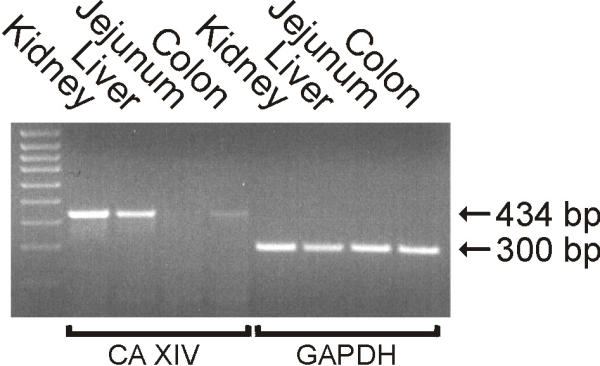
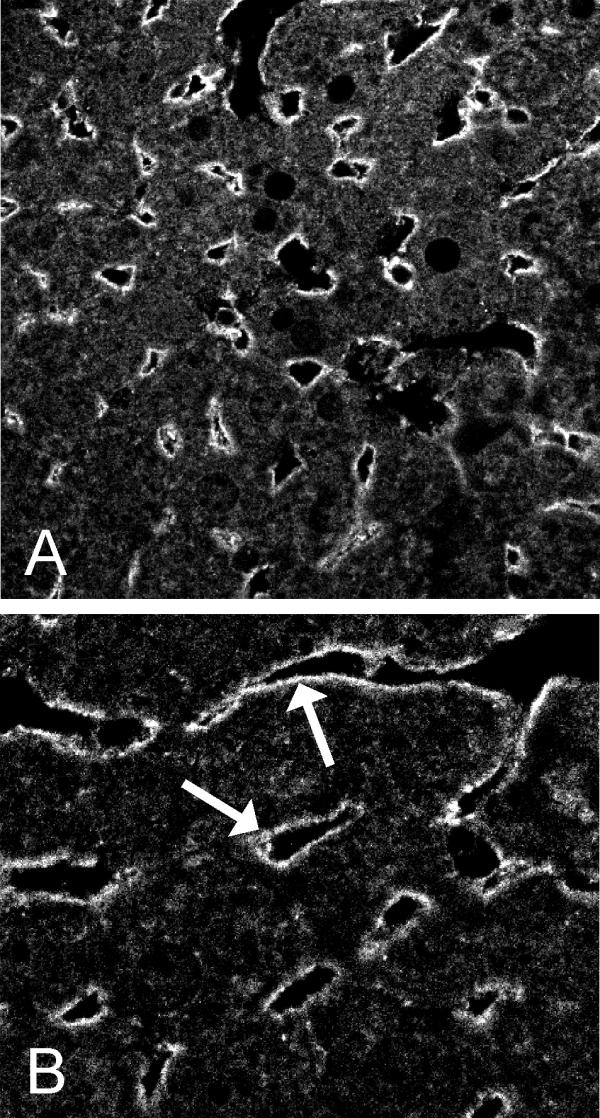
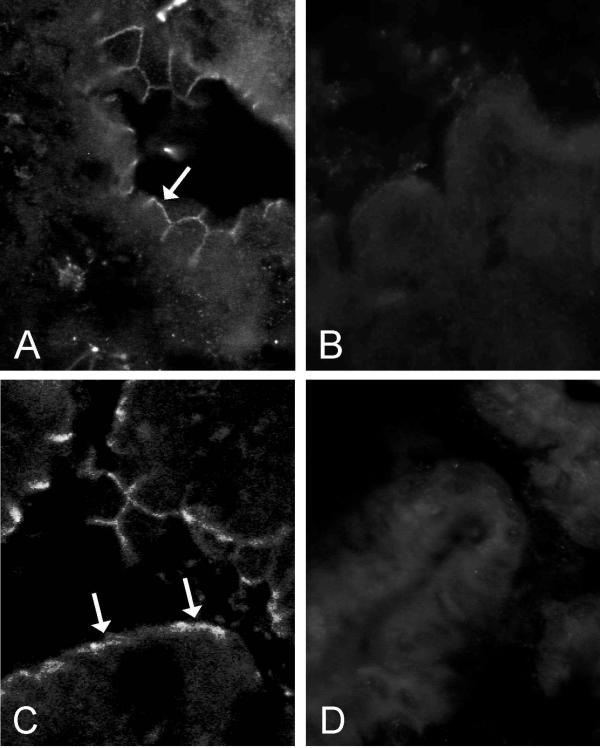
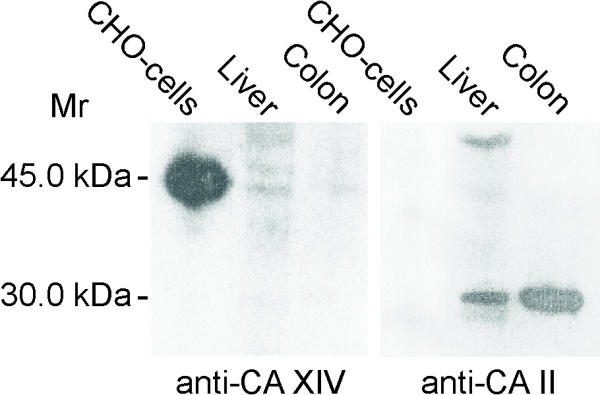
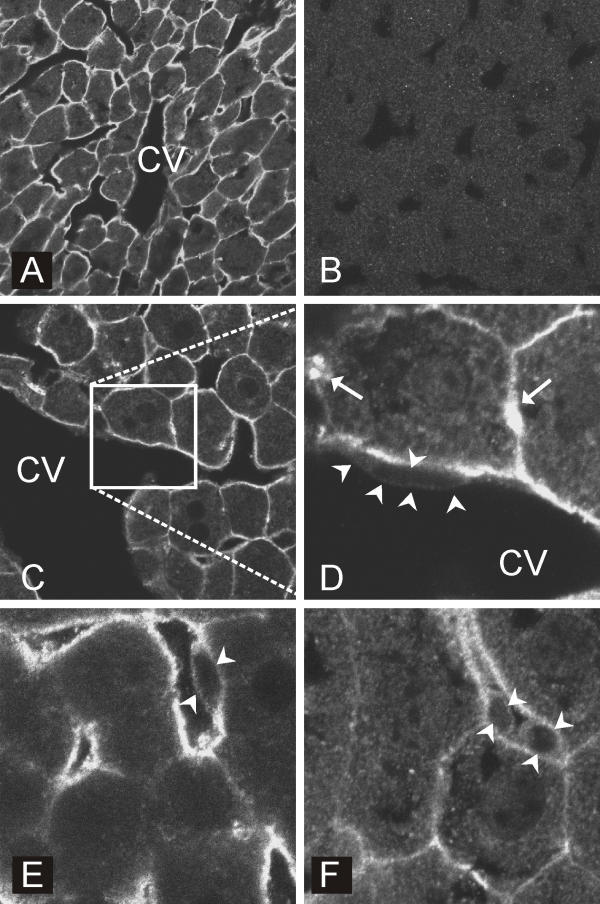
A strong immunofluorescent signal was observed in the plasma membrane of mouse hepatocytes. Although CA XIV was expressed on both the apical and basolateral surfaces, the staining was more prominent at the apical (canalicular) membrane domain. The expression of CA XIV in the liver was confirmed by RT-PCR and western blotting.

CONCLUSIONS

The presence of CA XIV in the hepatocyte plasma membrane places this novel enzyme at a strategic site to control pH regulation and ion transport between the hepatocytes, sinusoids and bile canaliculi.

摘要

背景

生化和组织化学研究先前均表明肝细胞中存在与质膜相关的碳酸酐酶(CA)活性,该活性一直被认为是CA IV。然而,免疫组化数据并不支持这一归属。最近的Northern印迹结果表明,肝脏中存在最新发现的膜结合CA同工酶CA XIV的mRNA。本研究旨在检验CA XIV是否对肝细胞中描述的CA活性有贡献。

方法

使用针对重组小鼠CA XIV和CA IV产生的抗体,对小鼠肝脏组织样本进行免疫组化染色。还对CA XIV进行了逆转录聚合酶链反应(RT-PCR)和蛋白质印迹分析。

结果

在小鼠肝细胞的质膜中观察到强烈的免疫荧光信号。尽管CA XIV在顶端和基底外侧表面均有表达,但在顶端(胆小管)膜区域的染色更为明显。通过RT-PCR和蛋白质印迹分析证实了肝脏中CA XIV的表达。

结论

CA XIV存在于肝细胞质膜中,这使得这种新型酶处于控制肝细胞、血窦和胆小管之间pH调节和离子转运的关键位置。
https://cdn.ncbi.nlm.nih.gov/pmc/blobs/90f1/115862/b02f85fa4632/1471-230X-2-13-5.jpg
https://cdn.ncbi.nlm.nih.gov/pmc/blobs/90f1/115862/a94ade5a75b7/1471-230X-2-13-1.jpg
https://cdn.ncbi.nlm.nih.gov/pmc/blobs/90f1/115862/ee6bcf0c6517/1471-230X-2-13-2.jpg
https://cdn.ncbi.nlm.nih.gov/pmc/blobs/90f1/115862/ae0aeec71ba0/1471-230X-2-13-3.jpg
https://cdn.ncbi.nlm.nih.gov/pmc/blobs/90f1/115862/a2d4df6a1f72/1471-230X-2-13-4.jpg
https://cdn.ncbi.nlm.nih.gov/pmc/blobs/90f1/115862/b02f85fa4632/1471-230X-2-13-5.jpg
https://cdn.ncbi.nlm.nih.gov/pmc/blobs/90f1/115862/a94ade5a75b7/1471-230X-2-13-1.jpg
https://cdn.ncbi.nlm.nih.gov/pmc/blobs/90f1/115862/ee6bcf0c6517/1471-230X-2-13-2.jpg
https://cdn.ncbi.nlm.nih.gov/pmc/blobs/90f1/115862/ae0aeec71ba0/1471-230X-2-13-3.jpg
https://cdn.ncbi.nlm.nih.gov/pmc/blobs/90f1/115862/a2d4df6a1f72/1471-230X-2-13-4.jpg
https://cdn.ncbi.nlm.nih.gov/pmc/blobs/90f1/115862/b02f85fa4632/1471-230X-2-13-5.jpg

相似文献

1
The plasma membrane carbonic anhydrase in murine hepatocytes identified as isozyme XIV.在小鼠肝细胞中鉴定出的质膜碳酸酐酶为同工酶十四。
BMC Gastroenterol. 2002 May 21;2:13. doi: 10.1186/1471-230x-2-13.
2
Membrane-bound carbonic anhydrases in osteoclasts.破骨细胞中的膜结合碳酸酐酶
Bone. 2007 Apr;40(4):1021-31. doi: 10.1016/j.bone.2006.11.028. Epub 2006 Dec 22.
3
Carbonic anhydrase XIV: luminal expression suggests key role in renal acidification.
Kidney Int. 2002 Jun;61(6):2111-8. doi: 10.1046/j.1523-1755.2002.00371.x.
4
Carbonic anhydrase XIV identified as the membrane CA in mouse retina: strong expression in Müller cells and the RPE.碳酸酐酶 XIV 被鉴定为小鼠视网膜中的膜碳酸酐酶:在 Müller 细胞和视网膜色素上皮细胞中强烈表达。
Exp Eye Res. 2005 Oct;81(4):492-500. doi: 10.1016/j.exer.2005.03.010.
5
Expression of membrane-associated carbonic anhydrase isoforms IV, IX, XII, and XIV in the rabbit: induction of CA IV and IX during maturation.兔中膜相关碳酸酐酶同工型IV、IX、XII和XIV的表达:成熟过程中CA IV和IX的诱导。
Am J Physiol Regul Integr Comp Physiol. 2005 May;288(5):R1256-63. doi: 10.1152/ajpregu.00735.2004.
6
Carbonic anhydrase XIV is enriched in specific membrane domains of retinal pigment epithelium, Muller cells, and astrocytes.碳酸酐酶 XIV 在视网膜色素上皮细胞、穆勒细胞和星形胶质细胞的特定膜结构域中富集。
Proc Natl Acad Sci U S A. 2005 May 31;102(22):8030-5. doi: 10.1073/pnas.0503021102. Epub 2005 May 18.
7
Expression of membrane-associated carbonic anhydrase XIV on neurons and axons in mouse and human brain.膜相关碳酸酐酶XIV在小鼠和人类大脑神经元及轴突上的表达。
Proc Natl Acad Sci U S A. 2001 Feb 13;98(4):1918-23. doi: 10.1073/pnas.98.4.1918.
8
Expression, assay, and structure of the extracellular domain of murine carbonic anhydrase XIV: implications for selective inhibition of membrane-associated isozymes.小鼠碳酸酐酶XIV胞外结构域的表达、测定及结构:对膜相关同工酶选择性抑制的意义
J Biol Chem. 2004 Feb 20;279(8):7223-8. doi: 10.1074/jbc.M310809200. Epub 2003 Dec 3.
9
Localization of carbonic anhydrase XII to the basolateral membrane of H+-secreting cells of mouse and rat kidney.碳酸酐酶XII在小鼠和大鼠肾脏H⁺分泌细胞基底外侧膜的定位。
J Histochem Cytochem. 2003 Sep;51(9):1217-24. doi: 10.1177/002215540305100912.
10
Identification of carbonic anhydrase XII as the membrane isozyme expressed in the normal human endometrial epithelium.鉴定碳酸酐酶XII为正常人类子宫内膜上皮中表达的膜同工酶。
Mol Hum Reprod. 2000 Jan;6(1):68-74. doi: 10.1093/molehr/6.1.68.

引用本文的文献

1
Correlation between Carbonic Anhydrase Isozymes and the Evolution of Myocardial Infarction in Diabetic Patients.糖尿病患者碳酸酐酶同工酶与心肌梗死演变的相关性
Biology (Basel). 2022 Aug 8;11(8):1189. doi: 10.3390/biology11081189.
2
Loss of luminal carbonic anhydrase XIV results in decreased biliary bicarbonate output, liver fibrosis, and cholangiocyte proliferation in mice.腔道型碳酸酐酶 XIV 的缺失导致小鼠胆汁碳酸氢盐分泌减少、肝纤维化和胆管细胞增殖。
Pflugers Arch. 2022 May;474(5):529-539. doi: 10.1007/s00424-021-02659-3. Epub 2022 Feb 4.
3
Insights into the role of reactive sulfhydryl groups of Carbonic Anhydrase III and VII during oxidative damage.

本文引用的文献

1
Carbonic anhydrase XIV: luminal expression suggests key role in renal acidification.
Kidney Int. 2002 Jun;61(6):2111-8. doi: 10.1046/j.1523-1755.2002.00371.x.
2
An overview of the distribution and function of carbonic anhydrase in mammals.
EXS. 2000(90):79-93. doi: 10.1007/978-3-0348-8446-4_4.
3
Use of carbonic anhydrase II-deficient mice in uncovering the cellular location of membrane-associated isoforms.利用碳酸酐酶II缺陷小鼠揭示膜相关同工型的细胞定位。
EXS. 2000(90):143-55. doi: 10.1007/978-3-0348-8446-4_8.
4
深入了解碳酸酐酶III和VII的反应性巯基在氧化损伤过程中的作用。
J Enzyme Inhib Med Chem. 2017 Dec;32(1):5-12. doi: 10.1080/14756366.2016.1225046. Epub 2016 Oct 21.
4
Synthesis of 5-arylidine amino-1,3,4-thiadiazol-2-[(-substituted benzyol)]sulphonamides endowed with potent antioxidants and anticancer activity induces growth inhibition in HEK293, BT474 and NCI-H226 cells.具有强效抗氧化和抗癌活性的5-芳叉基氨基-1,3,4-噻二唑-2-[(-取代苄醇)]磺酰胺的合成可诱导HEK293、BT474和NCI-H226细胞的生长抑制。
Med Chem Res. 2014;23(6):3049-3064. doi: 10.1007/s00044-013-0890-z. Epub 2013 Dec 27.
5
Dual farnesoid X receptor/TGR5 agonist INT-767 reduces liver injury in the Mdr2-/- (Abcb4-/-) mouse cholangiopathy model by promoting biliary HCO⁻₃ output.双重法尼醇 X 受体/TGR5 激动剂 INT-767 通过促进胆汁中 HCO₃⁻₃ 的分泌来减少 Mdr2-/-(Abcb4-/-)小鼠胆管病模型中的肝损伤。
Hepatology. 2011 Oct;54(4):1303-12. doi: 10.1002/hep.24537.
6
The most recently discovered carbonic anhydrase, CA XV, is expressed in the thick ascending limb of Henle and in the collecting ducts of mouse kidney.最近发现的碳酸酐酶,CA XV,在小鼠肾脏的粗升支和集合管中表达。
PLoS One. 2010 Mar 10;5(3):e9624. doi: 10.1371/journal.pone.0009624.
7
Modification of carbonic anhydrase II with acetaldehyde, the first metabolite of ethanol, leads to decreased enzyme activity.乙醇的首个代谢产物乙醛对碳酸酐酶II进行修饰,会导致酶活性降低。
BMC Biochem. 2008 Nov 27;9:32. doi: 10.1186/1471-2091-9-32.
8
Expression of membrane-bound carbonic anhydrases IV, IX, and XIV in the mouse heart.膜结合碳酸酐酶IV、IX和XIV在小鼠心脏中的表达。
J Histochem Cytochem. 2006 Dec;54(12):1379-91. doi: 10.1369/jhc.6A7003.2006.
9
Carbonic anhydrase IV and XIV knockout mice: roles of the respective carbonic anhydrases in buffering the extracellular space in brain.碳酸酐酶IV和XIV基因敲除小鼠:各自的碳酸酐酶在缓冲脑内细胞外空间中的作用。
Proc Natl Acad Sci U S A. 2005 Nov 15;102(46):16771-6. doi: 10.1073/pnas.0508449102. Epub 2005 Oct 31.
10
Identification of coexpressed gene clusters in a comparative analysis of transcriptome and proteome in mouse tissues.在小鼠组织转录组和蛋白质组的比较分析中共同表达基因簇的鉴定
Proc Natl Acad Sci U S A. 2005 Jun 14;102(24):8621-6. doi: 10.1073/pnas.0407672102. Epub 2005 Jun 6.
Carbonic anhydrase (CA)-related proteins (CA-RPs), and transmembrane proteins with CA or CA-RP domains.
EXS. 2000(90):105-20. doi: 10.1007/978-3-0348-8446-4_6.
5
Expression of membrane-associated carbonic anhydrase XIV on neurons and axons in mouse and human brain.膜相关碳酸酐酶XIV在小鼠和人类大脑神经元及轴突上的表达。
Proc Natl Acad Sci U S A. 2001 Feb 13;98(4):1918-23. doi: 10.1073/pnas.98.4.1918.
6
Expression of testosterone-dependent enzyme, carbonic anhydrase III, and oxidative stress in experimental alcoholic liver disease.
Dig Dis Sci. 1999 Nov;44(11):2205-13. doi: 10.1023/a:1026640317233.
7
Human carbonic anhydrase XIV (CA14): cDNA cloning, mRNA expression, and mapping to chromosome 1.人类碳酸酐酶XIV(CA14):cDNA克隆、mRNA表达及染色体定位至1号染色体
Genomics. 1999 Oct 1;61(1):74-81. doi: 10.1006/geno.1999.5938.
8
Primary structure of a sperm cell anion exchanger and its messenger ribonucleic acid expression during spermatogenesis.精子细胞阴离子交换器的一级结构及其在精子发生过程中的信使核糖核酸表达。
Biol Reprod. 1999 Oct;61(4):981-6. doi: 10.1095/biolreprod61.4.981.
9
Isolation and characterization of CA XIV, a novel membrane-bound carbonic anhydrase from mouse kidney.小鼠肾脏新型膜结合碳酸酐酶CA XIV的分离与鉴定
J Biol Chem. 1999 May 28;274(22):15701-5. doi: 10.1074/jbc.274.22.15701.
10
Carbonic anhydrase III protects cells from hydrogen peroxide-induced apoptosis.
FASEB J. 1999 Mar;13(3):513-22. doi: 10.1096/fasebj.13.3.513.