Hu Limei, Wang Jing, Baggerly Keith, Wang Hua, Fuller Gregory N, Hamilton Stanley R, Coombes Kevin R, Zhang Wei
Cancer Genomics Core Laboratory-Department of Pathology, The University of Texas M D Anderson Cancer Center, 1515 Holcombe Blvd, Houston, TX 77030, USA.
BMC Genomics. 2002 Jun 21;3:16. doi: 10.1186/1471-2164-3-16.
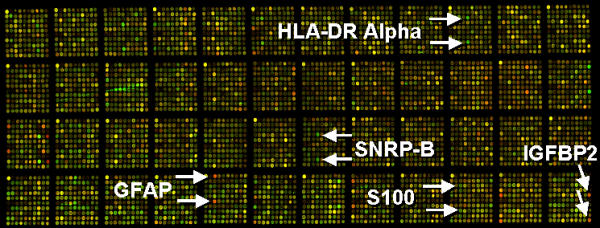
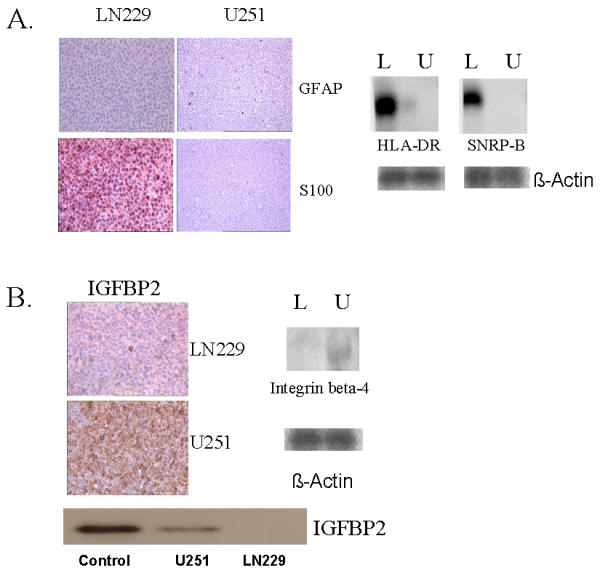
High density cDNA microarray technology provides a powerful tool to survey the activity of thousands of genes in normal and diseased cells, which helps us both to understand the molecular basis of the disease and to identify potential targets for therapeutic intervention. The promise of this technology has been hampered by the large amount of biological material required for the experiments (more than 50 microg of total RNA per array). We have modified an amplification procedure that requires only 1 microg of total RNA. Analyses of the results showed that most genes that were detected as expressed or differentially expressed using the regular protocol were also detected using the amplification protocol. In addition, many genes that were undetected or weakly detected using the regular protocol were clearly detected using the amplification protocol. We have carried out a series of confirmation studies by northern blotting, western blotting, and immunohistochemistry assays.
Our results showed that most of the new information revealed by the amplification protocol represents real gene activity in the cells.
We have confirmed a powerful and consistent cDNA microarray procedure that can be used to study minute amounts of biological tissue.
高密度cDNA微阵列技术为研究正常细胞和病变细胞中数千个基因的活性提供了一个强大的工具,这有助于我们理解疾病的分子基础并识别治疗干预的潜在靶点。该技术的前景因实验所需生物材料量巨大(每个阵列需要超过50微克总RNA)而受到阻碍。我们改进了一种扩增程序,该程序仅需1微克总RNA。对结果的分析表明,使用常规方案检测为表达或差异表达的大多数基因,使用扩增方案也能检测到。此外,许多使用常规方案未检测到或检测较弱的基因,使用扩增方案能清晰地检测到。我们通过Northern印迹、Western印迹和免疫组织化学分析进行了一系列验证研究。
我们的结果表明,扩增方案揭示的大多数新信息代表细胞中的真实基因活性。
我们证实了一种强大且一致的cDNA微阵列程序,可用于研究微量生物组织。