Mallik Ipsita, Smith Margaret A, Flower Ann M
Department of Microbiology and Immunology, University of North Dakota School of Medicine and Health Sciences, Grand Forks, ND 58202-9037, USA.
BMC Microbiol. 2002 Nov 11;2:32. doi: 10.1186/1471-2180-2-32.
The Sec-dependent protein export apparatus of Escherichia coli is very efficient at correctly identifying proteins to be exported from the cytoplasm. Even bacterial strains that carry prl mutations, which allow export of signal sequence-defective precursors, accurately differentiate between cytoplasmic and mutant secretory proteins. It was proposed previously that the basis for this precise discrimination is the slow folding rate of secretory proteins, resulting in binding by the secretory chaperone, SecB, and subsequent targeting to translocase. Based on this proposal, we hypothesized that a cytoplasmic protein containing a mutation that slows its rate of folding would be recognized by SecB and therefore targeted to the Sec pathway. In a Prl suppressor strain the mutant protein would be exported to the periplasm due to loss of ability to reject non-secretory proteins from the pathway.
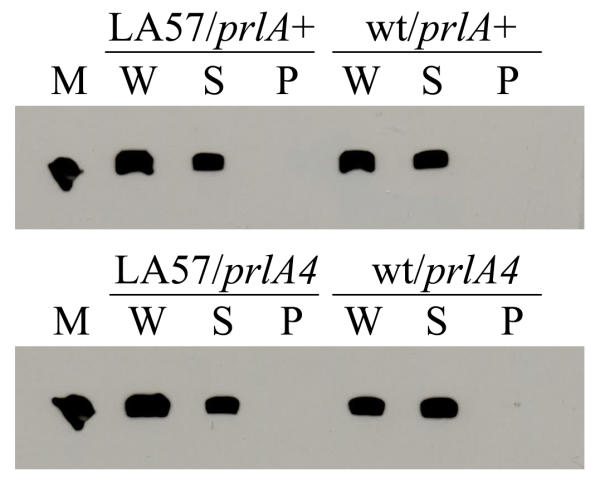
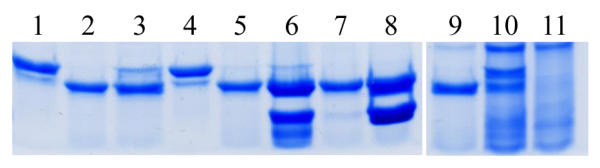
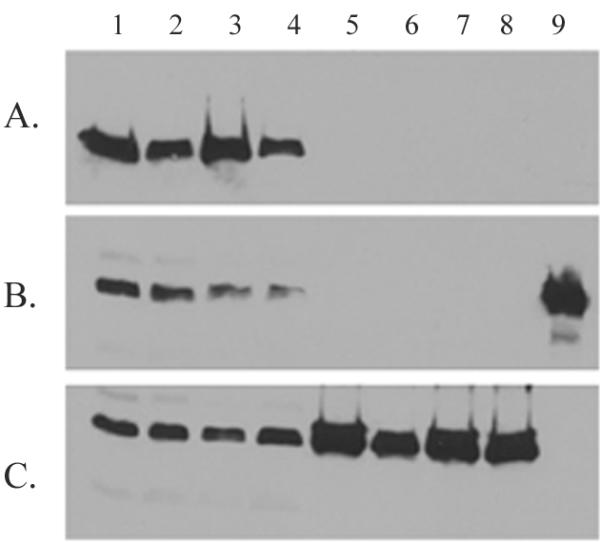
In the current work, we tested this hypothesis using a mutant form of lambda repressor that folds slowly. No export of the mutant protein was observed, even in a prl strain. We then examined binding of the mutant lambda repressor to SecB. We did not observe interaction by either of two assays, indicating that slow folding is not sufficient for SecB binding and targeting to translocase.
These results strongly suggest that to be targeted to the export pathway, secretory proteins contain signals in addition to the canonical signal sequence and the rate of folding.
大肠杆菌的依赖Sec的蛋白质输出装置在正确识别要从细胞质输出的蛋白质方面非常高效。即使是携带prl突变的细菌菌株,这些突变允许信号序列缺陷型前体的输出,也能准确区分细胞质蛋白和突变型分泌蛋白。先前有人提出,这种精确区分的基础是分泌蛋白的缓慢折叠速率,导致分泌伴侣蛋白SecB与之结合,并随后靶向转位酶。基于这一观点,我们推测,一种含有使其折叠速率减慢的突变的细胞质蛋白会被SecB识别,因此会靶向Sec途径。在Prl抑制菌株中,由于无法从该途径排斥非分泌蛋白,突变蛋白会被输出到周质。
在当前的研究中,我们使用折叠缓慢的λ阻遏物突变体形式来测试这一假设。即使在prl菌株中,也未观察到突变蛋白的输出。然后我们检测了突变型λ阻遏物与SecB的结合。通过两种检测方法,我们均未观察到相互作用,这表明缓慢折叠不足以实现SecB结合和靶向转位酶。
这些结果有力地表明,要靶向输出途径,分泌蛋白除了典型的信号序列和折叠速率外,还含有信号。