Dutta Ritaban, Hines Evor L, Gardner Julian W, Boilot Pascal
Division of Electrical and Electronic Engineering, School of Engineering, University of Warwick, Coventry, CV4 7AL, United Kingdom.
Biomed Eng Online. 2002 Oct 16;1:4. doi: 10.1186/1475-925x-1-4.
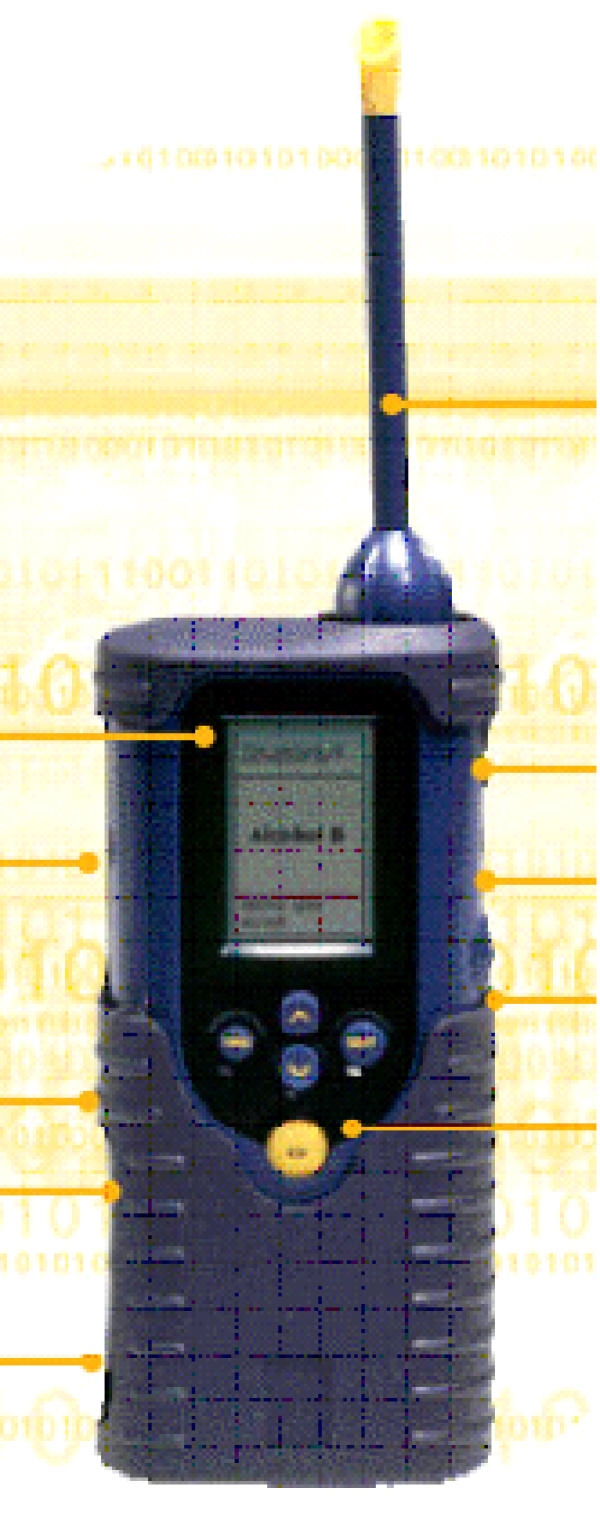
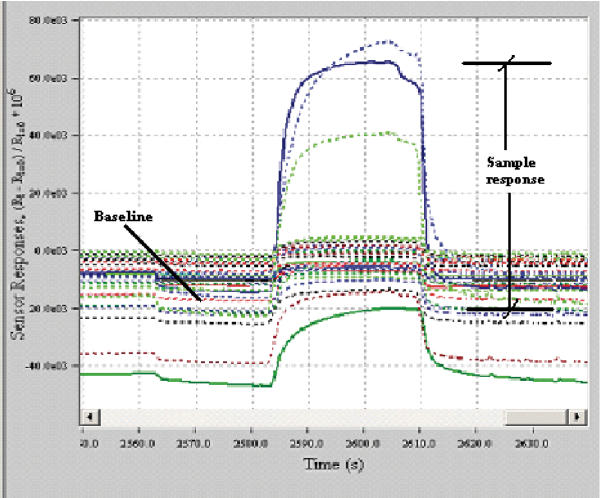
An electronic nose (e-nose), the Cyrano Sciences' Cyranose 320, comprising an array of thirty-two polymer carbon black composite sensors has been used to identify six species of bacteria responsible for eye infections when present at a range of concentrations in saline solutions. Readings were taken from the headspace of the samples by manually introducing the portable e-nose system into a sterile glass containing a fixed volume of bacteria in suspension. Gathered data were a very complex mixture of different chemical compounds.
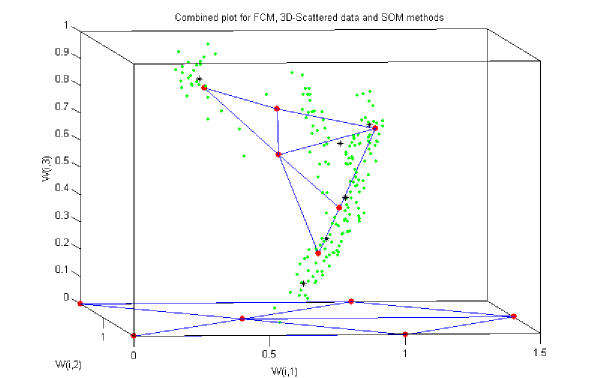
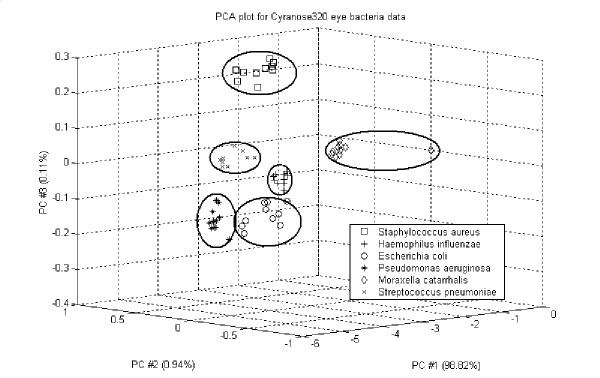
Linear Principal Component Analysis (PCA) method was able to classify four classes of bacteria out of six classes though in reality other two classes were not better evident from PCA analysis and we got 74% classification accuracy from PCA. An innovative data clustering approach was investigated for these bacteria data by combining the 3-dimensional scatter plot, Fuzzy C Means (FCM) and Self Organizing Map (SOM) network. Using these three data clustering algorithms simultaneously better 'classification' of six eye bacteria classes were represented. Then three supervised classifiers, namely Multi Layer Perceptron (MLP), Probabilistic Neural network (PNN) and Radial basis function network (RBF), were used to classify the six bacteria classes.
A [6 x 1] SOM network gave 96% accuracy for bacteria classification which was best accuracy. A comparative evaluation of the classifiers was conducted for this application. The best results suggest that we are able to predict six classes of bacteria with up to 98% accuracy with the application of the RBF network.
This type of bacteria data analysis and feature extraction is very difficult. But we can conclude that this combined use of three nonlinear methods can solve the feature extraction problem with very complex data and enhance the performance of Cyranose 320.
一种电子鼻(e-nose),即西拉诺科学公司的Cyranose 320,由32个聚合物炭黑复合传感器阵列组成,已被用于识别在一系列盐溶液浓度下导致眼部感染的六种细菌。通过将便携式电子鼻系统手动引入装有固定体积悬浮细菌的无菌玻璃容器中,从样品的顶空中获取读数。收集到的数据是不同化合物的非常复杂的混合物。
线性主成分分析(PCA)方法能够从六种细菌中分类出四类,尽管实际上另外两类从PCA分析中不太明显,并且我们从PCA中获得了74%的分类准确率。通过结合三维散点图、模糊C均值(FCM)和自组织映射(SOM)网络,研究了一种创新的数据聚类方法用于这些细菌数据。同时使用这三种数据聚类算法能够更好地呈现六种眼部细菌类别的“分类”。然后使用三种监督分类器,即多层感知器(MLP)、概率神经网络(PNN)和径向基函数网络(RBF),对六种细菌类别进行分类。
一个[6×1]的SOM网络在细菌分类中准确率达到96%,这是最佳准确率。针对此应用对分类器进行了比较评估。最佳结果表明,应用RBF网络我们能够以高达98%的准确率预测六种细菌类别。
这种类型的细菌数据分析和特征提取非常困难。但我们可以得出结论,这三种非线性方法的联合使用能够解决非常复杂数据的特征提取问题,并提高Cyranose 320的性能。