Fathallah D. M., Jamal T., Barbouche M. R., Bejaoui M., Hariz M. Ben, Dellagi K.
J Biomed Biotechnol. 2001;1(3):114-121. doi: 10.1155/S1110724301000250.
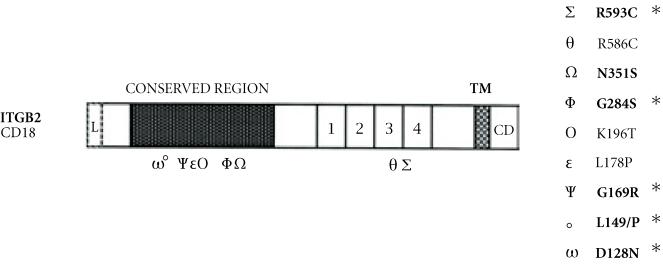
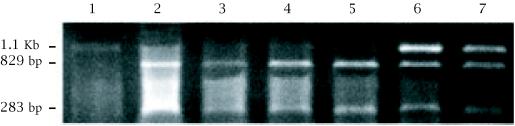
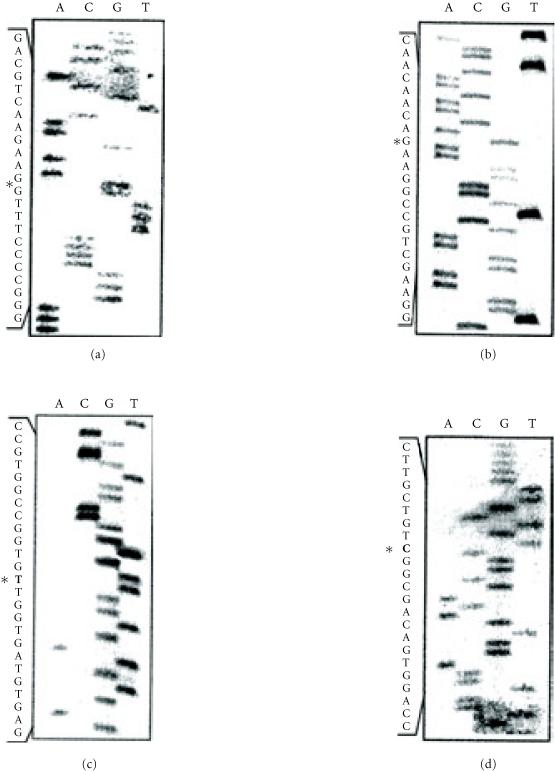
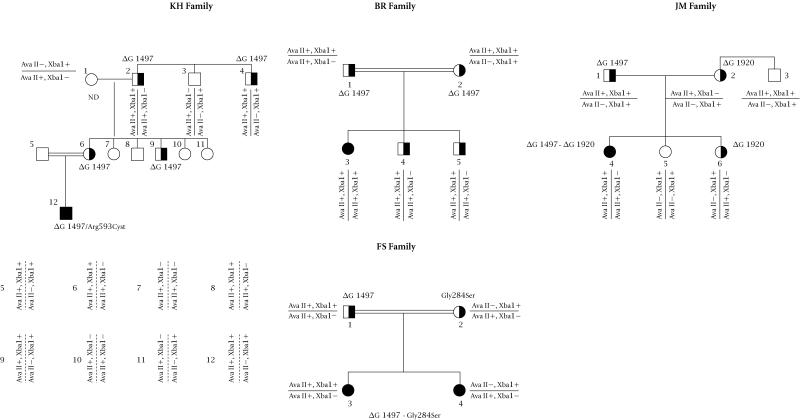
We have identified four different mutations causing leukocyte adhesion Deficiency (LAD) in the ITGB2 gene of patients from a highly inbred population. Two were novel single-bp deletions (1497delG and 1920delG) causing frame shift and the two others were the missense mutations G284S and R593C. In our study, the G284S was a recurrent mutation while the R593C occurred de novo. We have also characterized a novel Xba1 polymorphic site located at the 5' end of the ITGB2 locus. Family studies showed that the 1497delG mutation segregated with this marker and the intragenic AvaII polymorphic marker, suggesting the presence of a founder effect. The observation of a heterogeneous spectrum including de novo and recurrent mutations causing LAD in a highly inbred population is rather unexpected. In view of the literature published on the molecular genetics of LAD and considering the ethnic origin of the patients studied, our findings confirm the heterogeneity of the mutations causing LAD and point out potential mutational hot spots in the ITGB2 gene.
我们在来自一个高度近亲繁殖人群的患者的ITGB2基因中鉴定出了四种导致白细胞黏附缺陷(LAD)的不同突变。其中两种是导致移码的新型单碱基缺失(1497delG和1920delG),另外两种是错义突变G284S和R593C。在我们的研究中,G284S是一个复发性突变,而R593C是新发突变。我们还鉴定了位于ITGB2基因座5'端的一个新型Xba1多态性位点。家系研究表明,1497delG突变与该标记以及基因内AvaII多态性标记共分离,提示存在奠基者效应。在一个高度近亲繁殖人群中观察到包括导致LAD的新发和复发性突变在内的异质性谱是相当出乎意料的。鉴于已发表的关于LAD分子遗传学的文献,并考虑到所研究患者的种族起源,我们的发现证实了导致LAD的突变的异质性,并指出了ITGB2基因中的潜在突变热点。