Malkus Per, Jiang Feng, Schekman Randy
Howard Hughes Medical Institute and Department of Molecular and Cell Biology, University of California, Berkeley, Berkeley, CA 94720, USA.
J Cell Biol. 2002 Dec 23;159(6):915-21. doi: 10.1083/jcb.200208074.
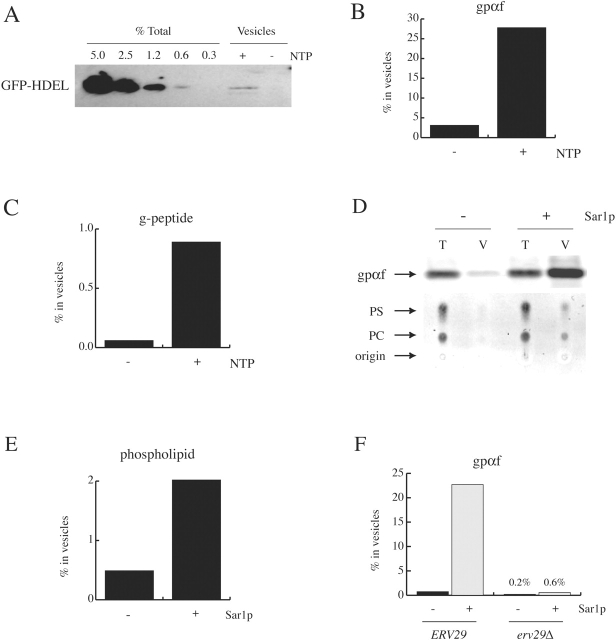
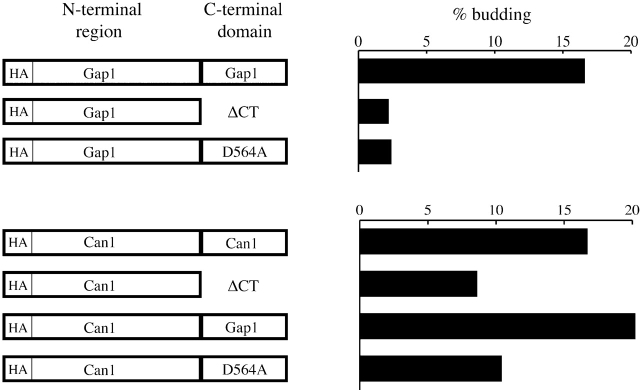
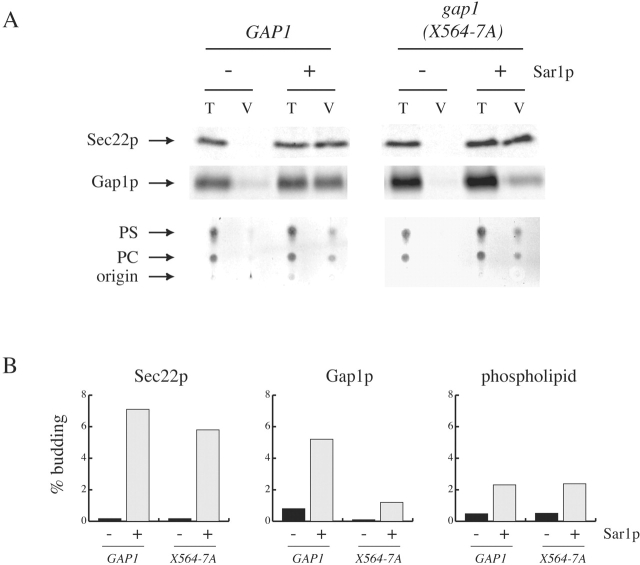
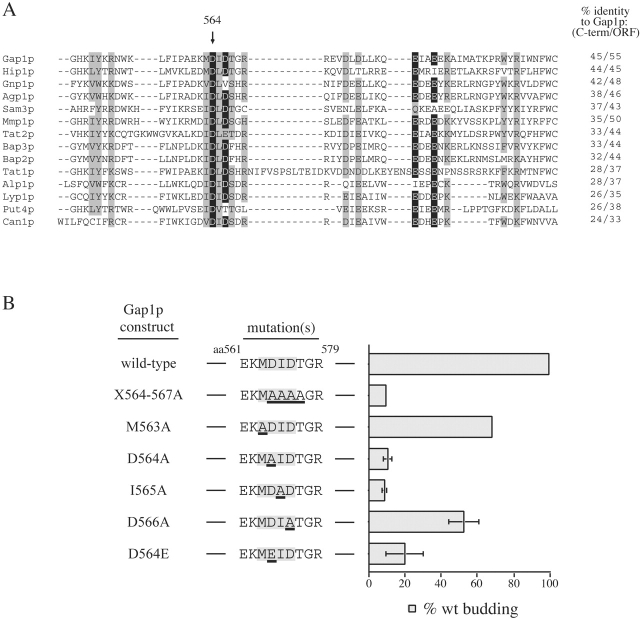
Here, we show that efficient transport of membrane and secretory proteins from the ER of Saccharomyces cerevisiae requires concentrative and signal-mediated sorting. Three independent markers of bulk flow transport out of the ER indicate that in the absence of an ER export signal, molecules are inefficiently captured into coat protein complex II (COPII)-coated vesicles. A soluble secretory protein, glycosylated pro-alpha-factor (gpalphaf), was enriched approximately 20 fold in these vesicles relative to bulk flow markers. In the absence of Erv29p, a membrane protein that facilitates gpalphaf transport (Belden and Barlowe, 2001), gpalphaf is packaged into COPII vesicles as inefficiently as soluble bulk flow markers. We also found that a plasma membrane protein, the general amino acid permease (Gap1p), is enriched approximately threefold in COPII vesicles relative to membrane phospholipids. Mutation of a diacidic sequence present in the COOH-terminal cytosolic domain of Gap1p eliminated concentrative sorting of this protein.
在此,我们表明酿酒酵母内质网中膜蛋白和分泌蛋白的高效运输需要浓缩和信号介导的分选。三种独立的内质网大量运输标记表明,在没有内质网输出信号的情况下,分子被低效地捕获到包被蛋白复合物II(COPII)包被的囊泡中。一种可溶性分泌蛋白,糖基化的前α因子(gpalphaf),相对于大量运输标记,在这些囊泡中富集了约20倍。在缺乏促进gpalphaf运输的膜蛋白Erv29p时(Belden和Barlowe,2001),gpalphaf被包装到COPII囊泡中的效率与可溶性大量运输标记一样低。我们还发现,一种质膜蛋白,即通用氨基酸通透酶(Gap1p),相对于膜磷脂,在COPII囊泡中富集了约三倍。Gap1p羧基末端胞质结构域中存在的双酸性序列的突变消除了该蛋白的浓缩分选。