Rosenbaum Tamara, Islas León D, Carlson Anne E, Gordon Sharona E
Department of Ophthalmology, University of Washington, Seattle, WA 98195, USA.
J Gen Physiol. 2003 Jan;121(1):37-47. doi: 10.1085/jgp.20028716.
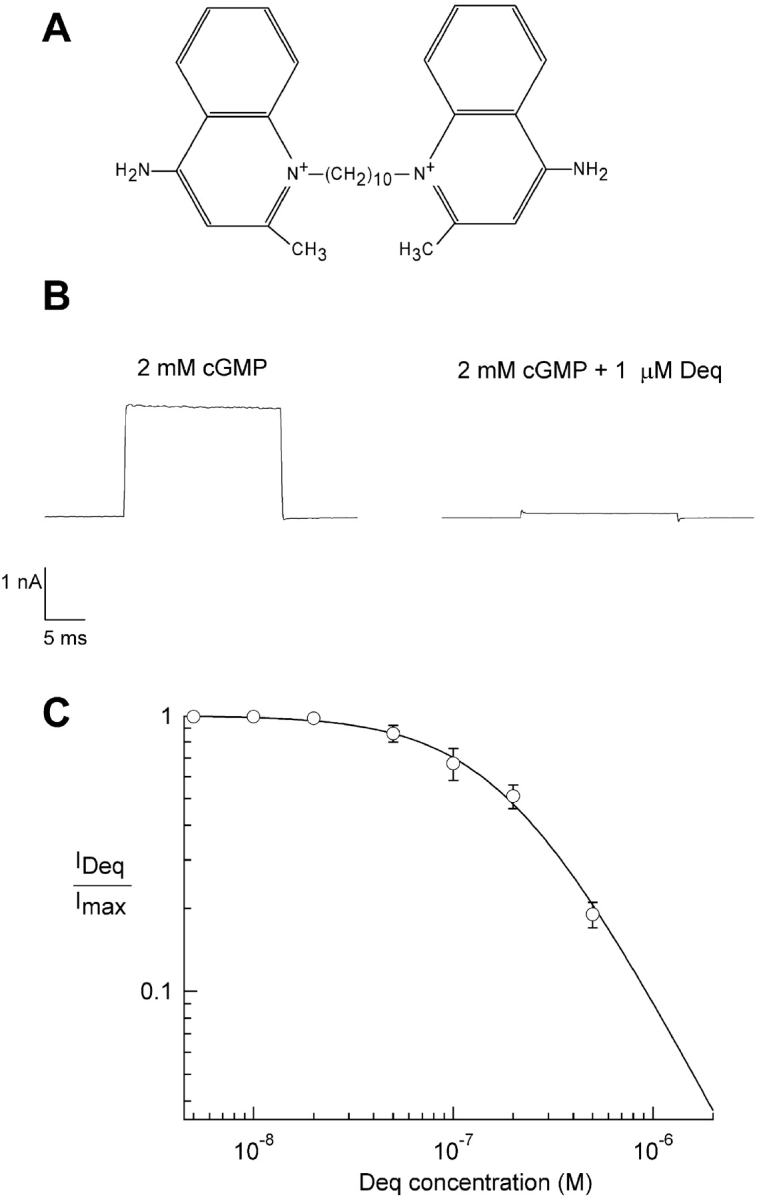
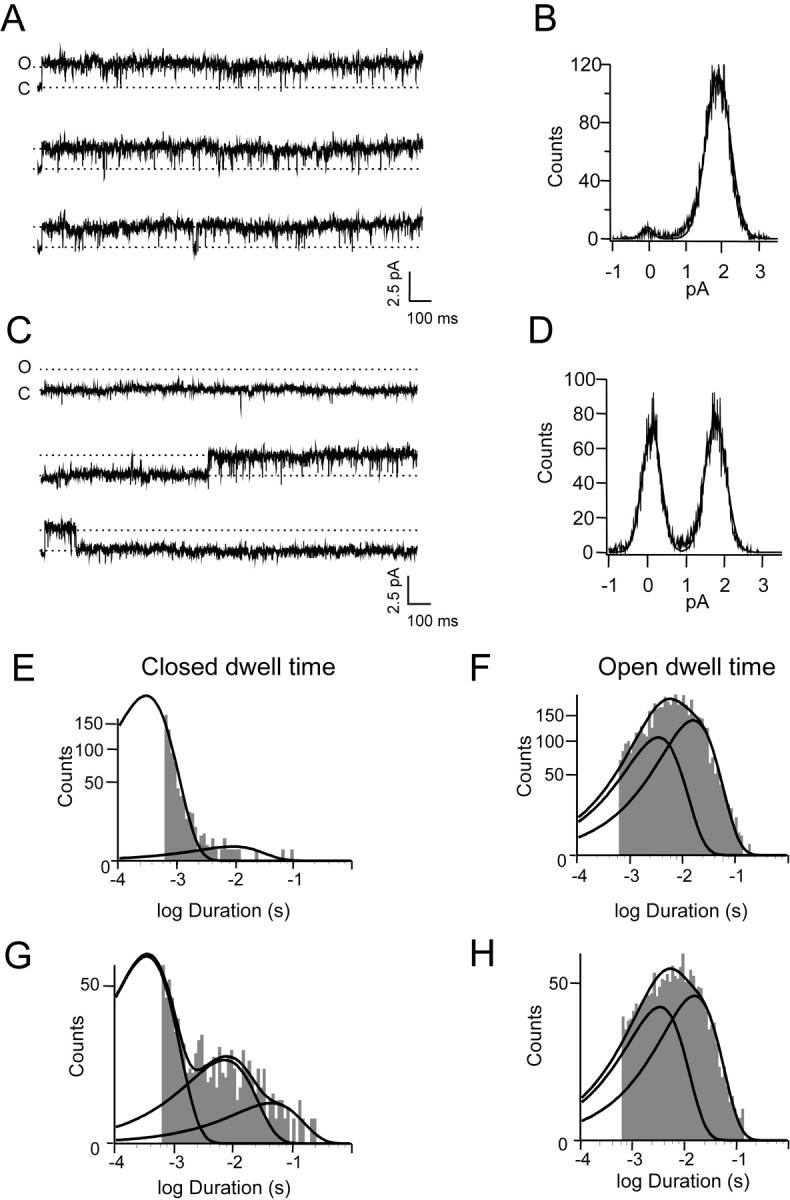
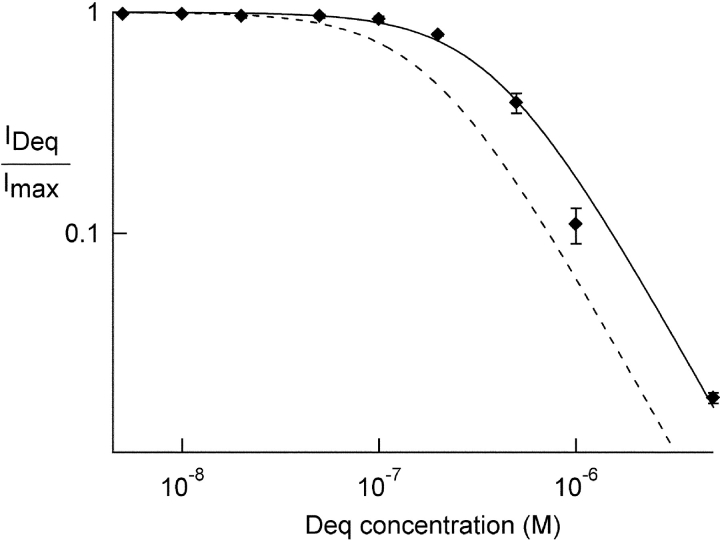
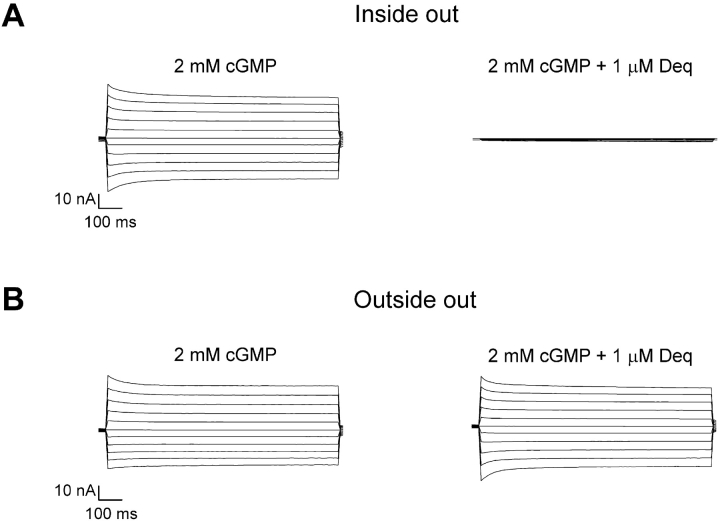
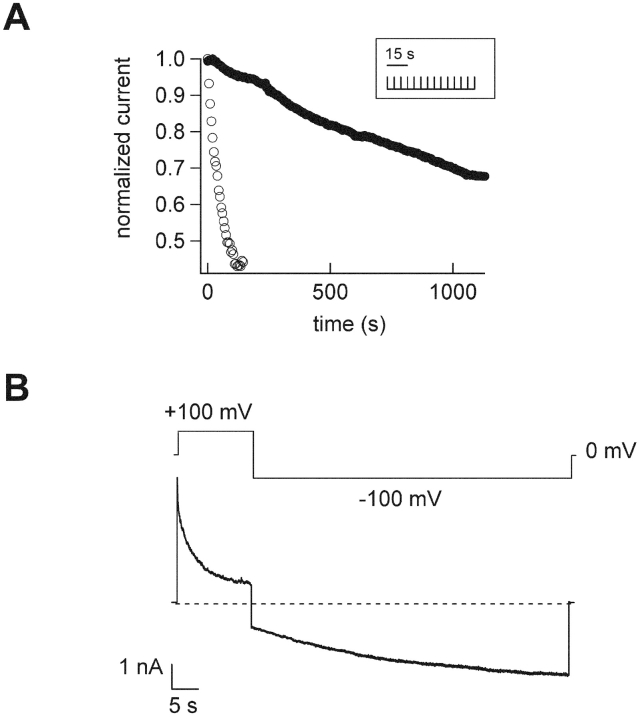
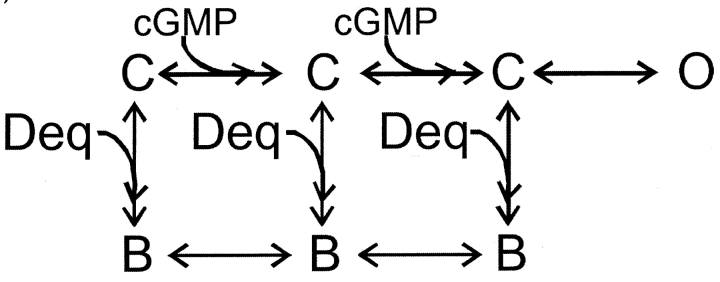
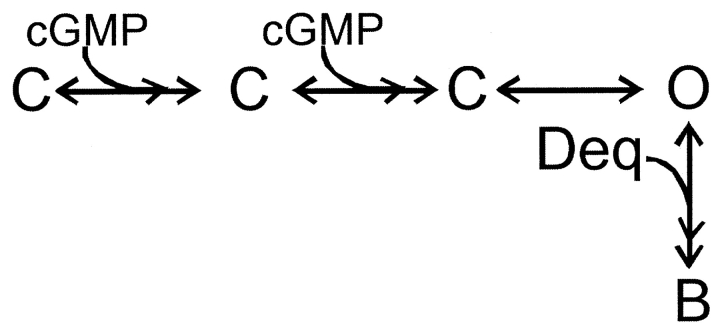
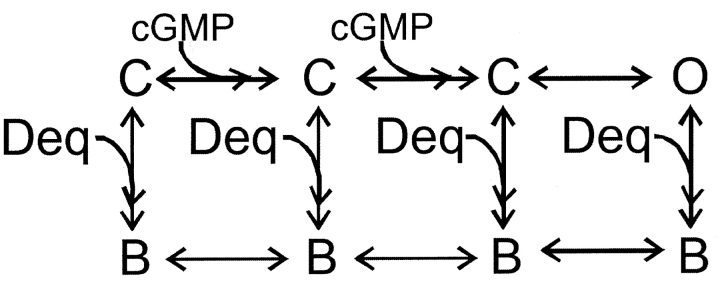
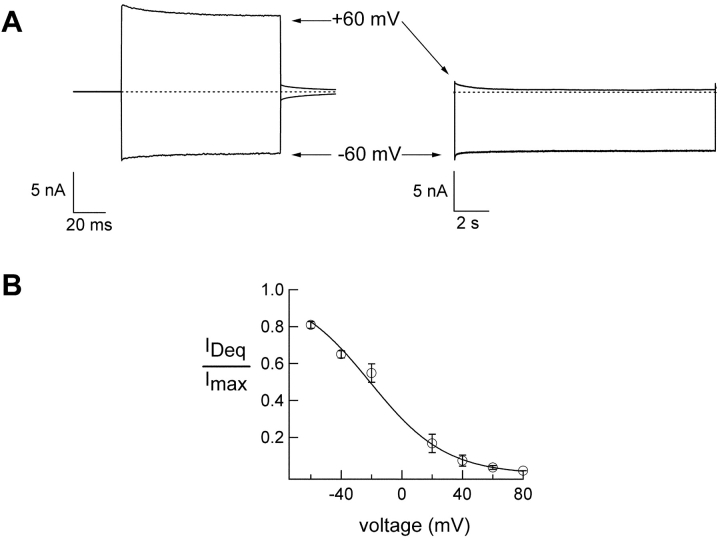
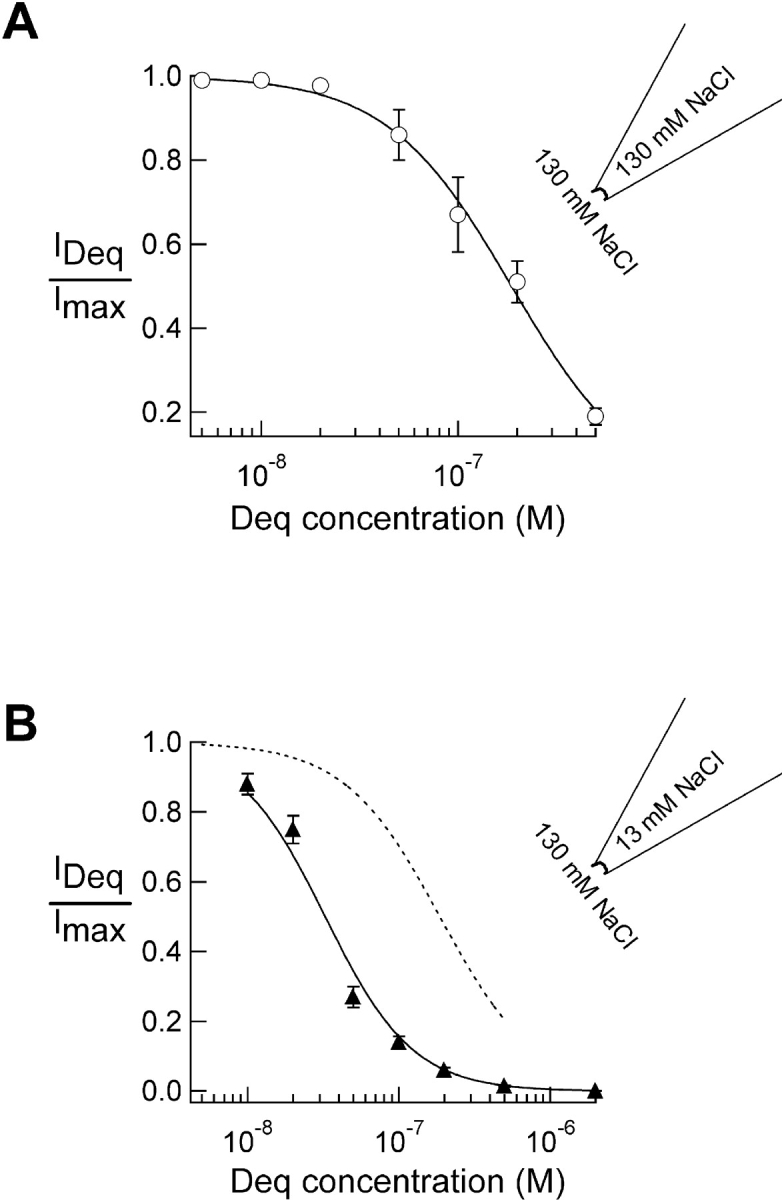
Cyclic nucleotide-gated (CNG) channels have been shown to be blocked by diltiazem, tetracaine, polyamines, toxins, divalent cations, and other compounds. Dequalinium is an organic divalent cation which suppresses the rat small conductance Ca(2+)-activated K(+) channel 2 (rSK2) and the activity of protein kinase C. In this study, we have tested the ability of dequalinium to block CNGA1 channels and heteromeric CNGA1+CNGB1 channels. When applied to the intracellular side of inside-out excised patches from Xenopus oocytes, dequalinium blocks CNGA1 channels with a K(1/2) approximately 190 nM and CNGA1+CNGB1 channels with a K(1/2) approximately 385 nM, at 0 mV. This block occurs in a state-independent fashion, and is voltage dependent with a zdelta approximately 1. Our data also demonstrate that dequalinium interacts with the permeant ion probably because it occupies a binding site in the ion conducting pathway. Dequalinium applied to the extracellular surface also produced block, but with a voltage dependence that suggests it crosses the membrane to block from the inside. We also show that at the single-channel level, dequalinium is a slow blocker that does not change the unitary conductance of CNGA1 channels. Thus, dequalinium should be a useful tool for studying permeation and gating properties of CNG channels.
环核苷酸门控(CNG)通道已被证明可被地尔硫䓬、丁卡因、多胺、毒素、二价阳离子及其他化合物阻断。地喹氯铵是一种有机二价阳离子,可抑制大鼠小电导钙激活钾通道2(rSK2)及蛋白激酶C的活性。在本研究中,我们测试了地喹氯铵阻断CNGA1通道及异源CNGA1+CNGB1通道的能力。将地喹氯铵应用于非洲爪蟾卵母细胞内向外膜片的胞内侧时,在0 mV下,它以约190 nM的半数抑制浓度(K(1/2))阻断CNGA1通道,以约385 nM的K(1/2)阻断CNGA1+CNGB1通道。这种阻断以与状态无关的方式发生,且具有约1的电压依赖性(zdelta)。我们的数据还表明,地喹氯铵可能与通透离子相互作用,因为它占据了离子传导途径中的一个结合位点。应用于细胞外表面的地喹氯铵也会产生阻断,但电压依赖性表明它穿过膜从内部进行阻断。我们还表明,在单通道水平上,地喹氯铵是一种缓慢的阻断剂,不会改变CNGA1通道的单通道电导。因此,地喹氯铵应是研究CNG通道通透和门控特性的有用工具。