Vajkoczy Peter, Blum Sabine, Lamparter Mathias, Mailhammer Reinhard, Erber Ralph, Engelhardt Britta, Vestweber Dietmar, Hatzopoulos Antonis K
Department of Neurosurgery, Klinikum Mannheim, University of Heidelberg, Mannheim, Germany.
J Exp Med. 2003 Jun 16;197(12):1755-65. doi: 10.1084/jem.20021659.
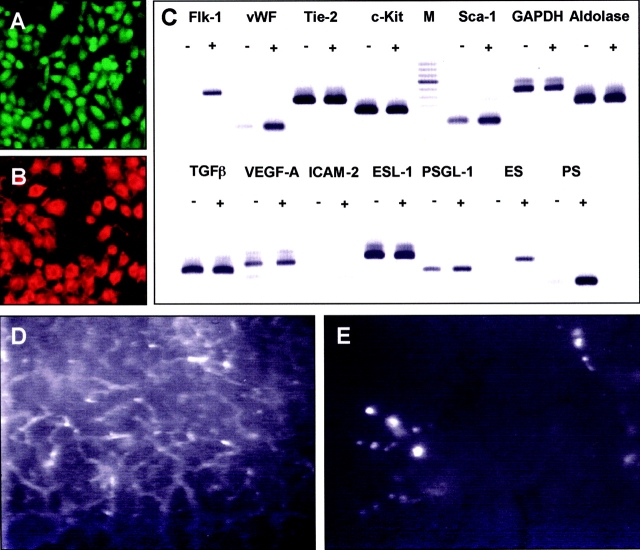
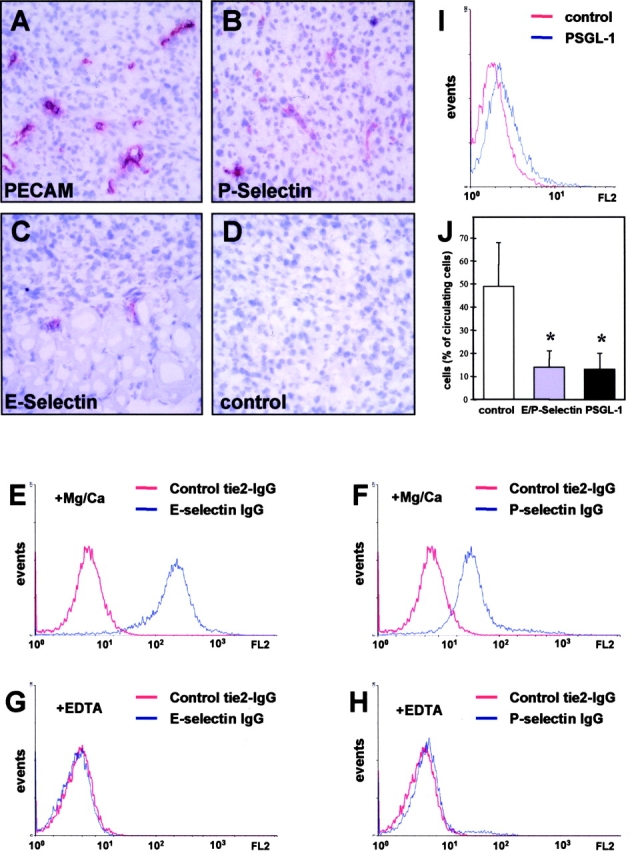
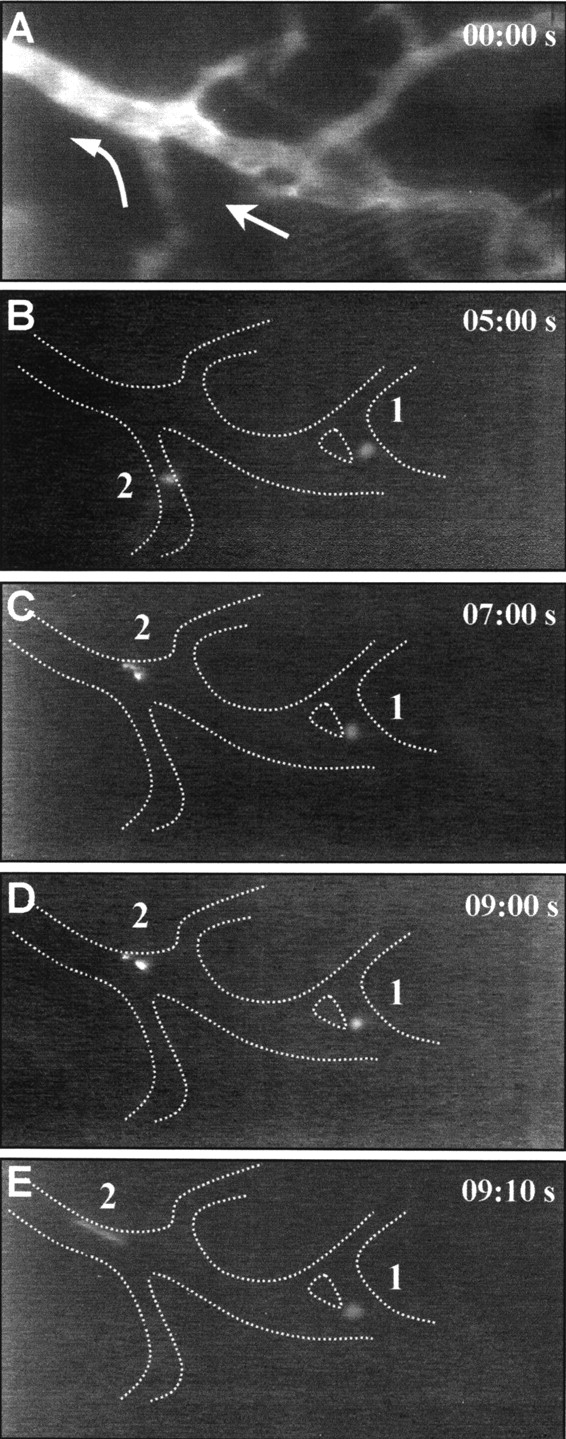
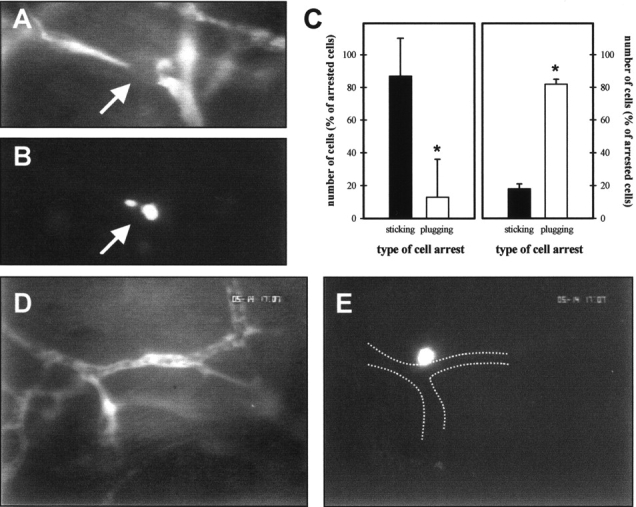
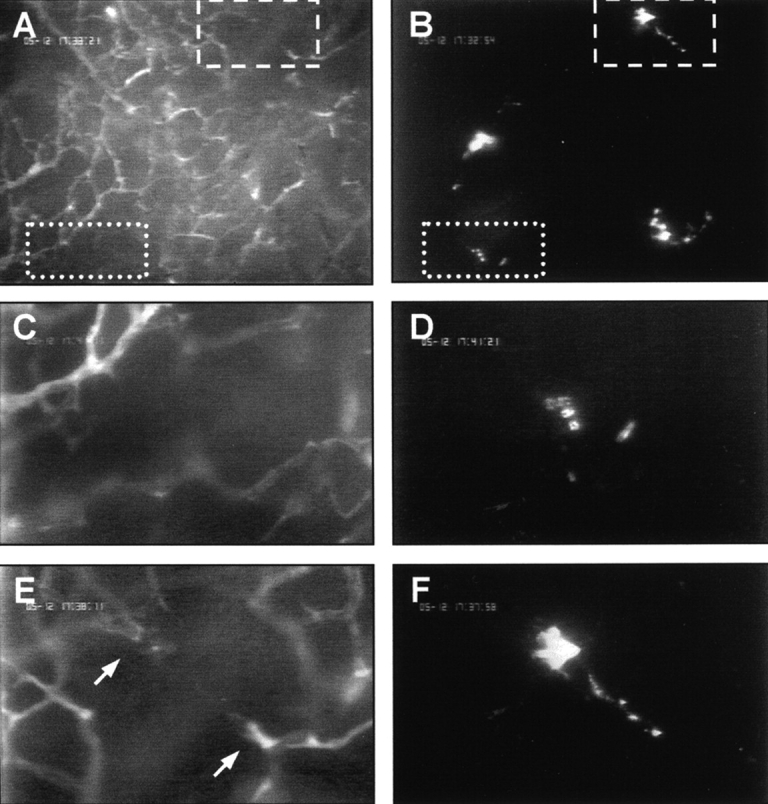
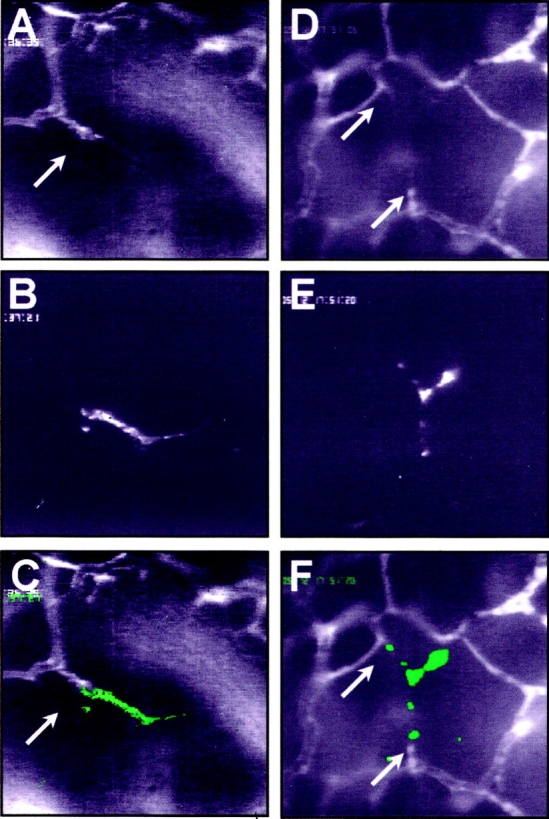
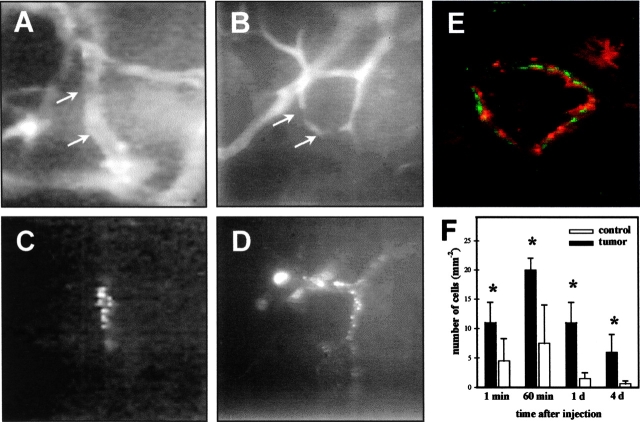
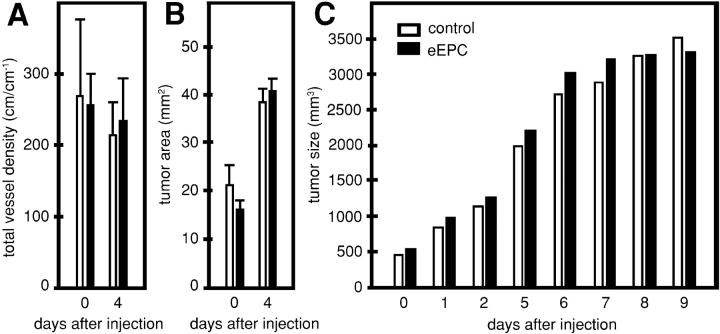
Tissue neovascularization involves recruitment of circulating endothelial progenitor cells that originate in the bone marrow. Here, we show that a class of embryonic endothelial progenitor cells (Tie-2+, c-Kit+, Sca-1+, and Flk-1-/low), which were isolated at E7.5 of mouse development at the onset of vasculogenesis, retain their ability to contribute to tumor angiogenesis in the adult. Using intravital fluorescence videomicroscopy, we further defined the multistep process of embryonic endothelial progenitor cell (eEPC) homing and incorporation. Circulating eEPCs are specifically arrested in "hot spots" within the tumor microvasculature, extravasate into the interstitium, form multicellular clusters, and incorporate into functional vascular networks. Expression analysis and in vivo blocking experiments provide evidence that the initial cell arrest of eEPC homing is mediated by E- and P-selectin and P-selectin glycoprotein ligand 1. This paper provides the first in vivo insights into the mechanisms of endothelial progenitor cell recruitment and, thus, indicates novel ways to interfere with pathological neovascularization.
组织新血管形成涉及募集源自骨髓的循环内皮祖细胞。在此,我们表明一类在小鼠发育血管生成开始时的E7.5期分离得到的胚胎内皮祖细胞(Tie-2+、c-Kit+、Sca-1+和Flk-1-/low),在成年后仍保留其促进肿瘤血管生成的能力。使用活体荧光视频显微镜,我们进一步明确了胚胎内皮祖细胞(eEPC)归巢和整合的多步骤过程。循环中的eEPC特异性地停滞在肿瘤微血管内的“热点”区域,渗出到间质中,形成多细胞簇,并整合到功能性血管网络中。表达分析和体内阻断实验提供了证据,表明eEPC归巢的初始细胞停滞是由E-选择素、P-选择素和P-选择素糖蛋白配体1介导的。本文首次在体内深入了解了内皮祖细胞募集的机制,因此,指出了干扰病理性新血管形成的新方法。