van Buuren Henk R, Rasch Marijke C, Batenburg Piet L, Bolwerk Clemens J M, Nicolai Jan J, van der Werf Sjoerd D J, Scherpenisse Joost, Arends Lidia R, van Hattum Jan, Rauws Erik A J, Schalm Solko W
Department of Gastroenterology and Hepatology, Erasmus MC, University Medical Center Rotterdam, The Netherlands.
BMC Gastroenterol. 2003 Aug 15;3:22. doi: 10.1186/1471-230X-3-22.
Since esophageal variceal bleeding is associated with a high mortality rate, prevention of bleeding might be expected to result in improved survival. The first trials to evaluate prophylactic sclerotherapy found a marked beneficial effect of prophylactic treatment. These results, however, were not generally accepted because of methodological aspects and because the reported incidence of bleeding in control subjects was considered unusually high. The objective of this study was to compare endoscopic sclerotherapy (ES) with nonactive treatment for the primary prophylaxis of esophageal variceal bleeding in patients with cirrhosis.
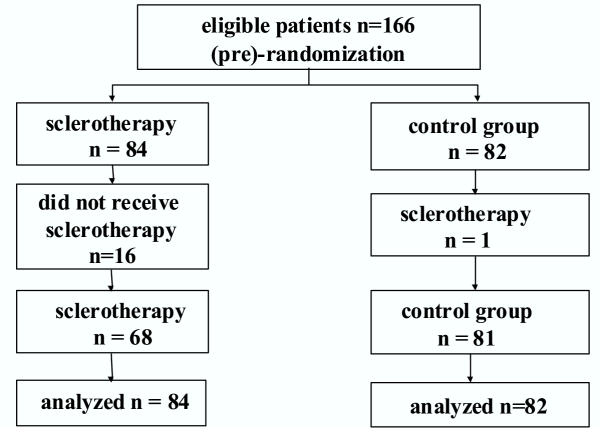
166 patients with esophageal varices grade II, III of IV according to Paquet's classification, with evidence of active or progressive liver disease and without prior variceal bleeding, were randomized to groups receiving ES (n = 84) or no specific treatment (n = 82). Primary end-points were incidence of bleeding and mortality; secondary end-points were complications and costs.
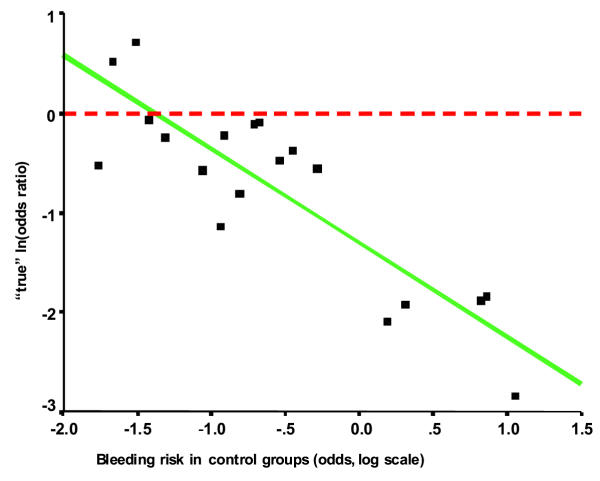
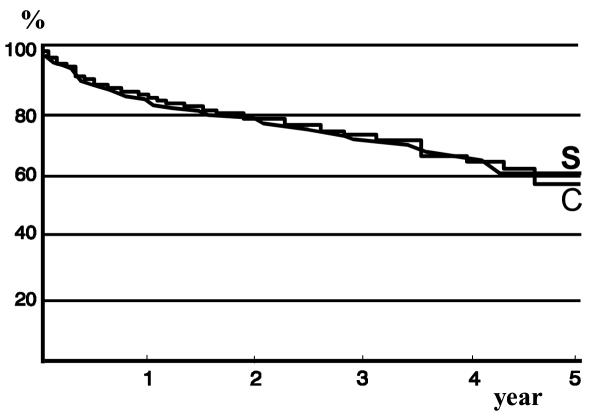
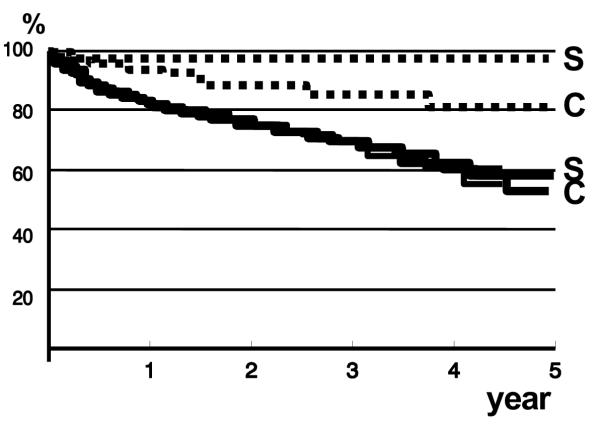
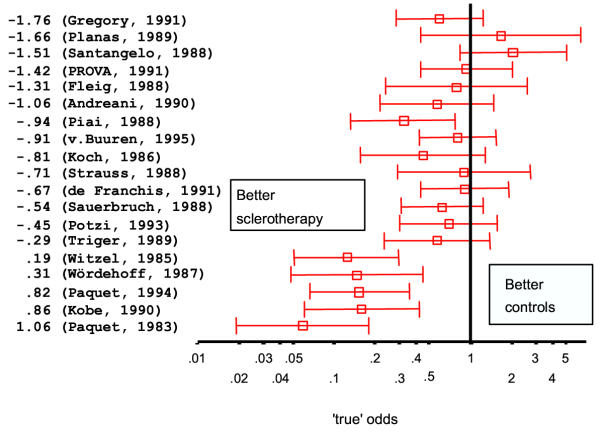
During a mean follow-up of 32 months variceal bleeding occurred in 25% of the patients of the ES group and in 28% of the control group. The incidence of variceal bleeding for the ES and control group was 16% and 16% at 1 year and 33% and 29% at 3 years, respectively. The 1-year survival rate was 87% for the ES group and 84% for the control group; the 3-year survival rate was 62% for each group. In the ES group one death occurred as a direct consequence of variceal bleeding compared to 9 in the other group (p = 0.01, log-rank test). Complications were comparable for the two groups. Health care costs for patients assigned to ES were estimated to be higher. Meta-analysis of a large number of trials showed that the effect of prophylactic sclerotherapy is significantly related to the baseline bleeding risk.
In the present trial, prophylactic sclerotherapy did not reduce the incidence of bleeding from varices in patients with liver cirrhosis and a low to moderate bleeding risk. Although sclerotherapy lowered mortality attributable to variceal bleeding, overall survival was not affected. The effect of prophylactic sclerotherapy seems dependent on the underlying bleeding risk. A beneficial effect can only be expected for patients with a high risk for bleeding.
由于食管静脉曲张破裂出血的死亡率很高,因此预防出血有望提高生存率。最初评估预防性硬化疗法的试验发现预防性治疗具有显著的有益效果。然而,由于方法学方面的原因以及对照受试者中报告的出血发生率被认为异常高,这些结果并未得到普遍认可。本研究的目的是比较内镜下硬化疗法(ES)与非活性治疗对肝硬化患者食管静脉曲张破裂出血的一级预防效果。
166例根据Paquet分类法诊断为II级、III级或IV级食管静脉曲张、有活动性或进行性肝病证据且既往无静脉曲张破裂出血的患者,被随机分为接受ES治疗组(n = 84)或未接受特殊治疗组(n = 82)。主要终点是出血发生率和死亡率;次要终点是并发症和费用。
在平均32个月的随访期间,ES组25%的患者发生了静脉曲张破裂出血,对照组为28%。ES组和对照组静脉曲张破裂出血的发生率在1年时分别为16%和16%,在3年时分别为33%和29%。ES组1年生存率为87%,对照组为84%;两组3年生存率均为62%。ES组有1例死亡直接归因于静脉曲张破裂出血,而另一组有9例(p = 0.01,对数秩检验)。两组并发症相当。接受ES治疗的患者医疗费用估计更高。对大量试验的荟萃分析表明,预防性硬化疗法的效果与基线出血风险显著相关。
在本试验中,预防性硬化疗法并未降低肝硬化且出血风险低至中度患者的静脉曲张破裂出血发生率。尽管硬化疗法降低了静脉曲张破裂出血导致的死亡率,但总体生存率并未受到影响。预防性硬化疗法的效果似乎取决于潜在的出血风险。仅对出血风险高的患者有望产生有益效果。