Prass Konstantin, Meisel Christian, Höflich Conny, Braun Johann, Halle Elke, Wolf Tilo, Ruscher Karsten, Victorov Ilya V, Priller Josef, Dirnagl Ulrich, Volk Hans-Dieter, Meisel Andreas
Department of Experimental Neurology, Charité Hospital, Humboldt University, Schumannstrasse 20-21, D-10098 Berlin, Germany.
J Exp Med. 2003 Sep 1;198(5):725-36. doi: 10.1084/jem.20021098. Epub 2003 Aug 25.
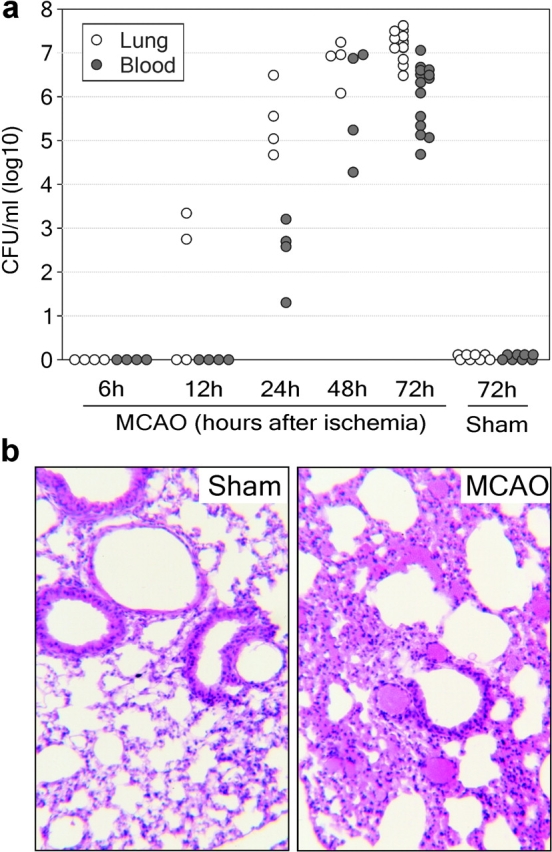
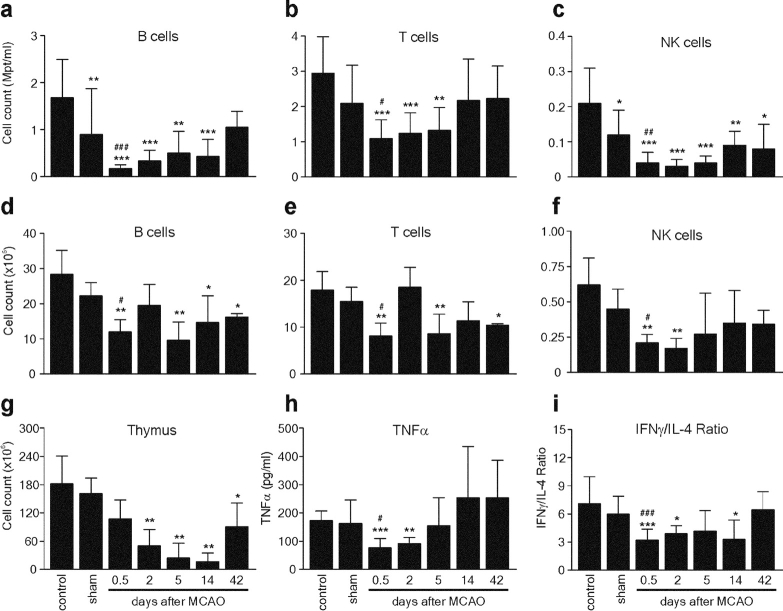
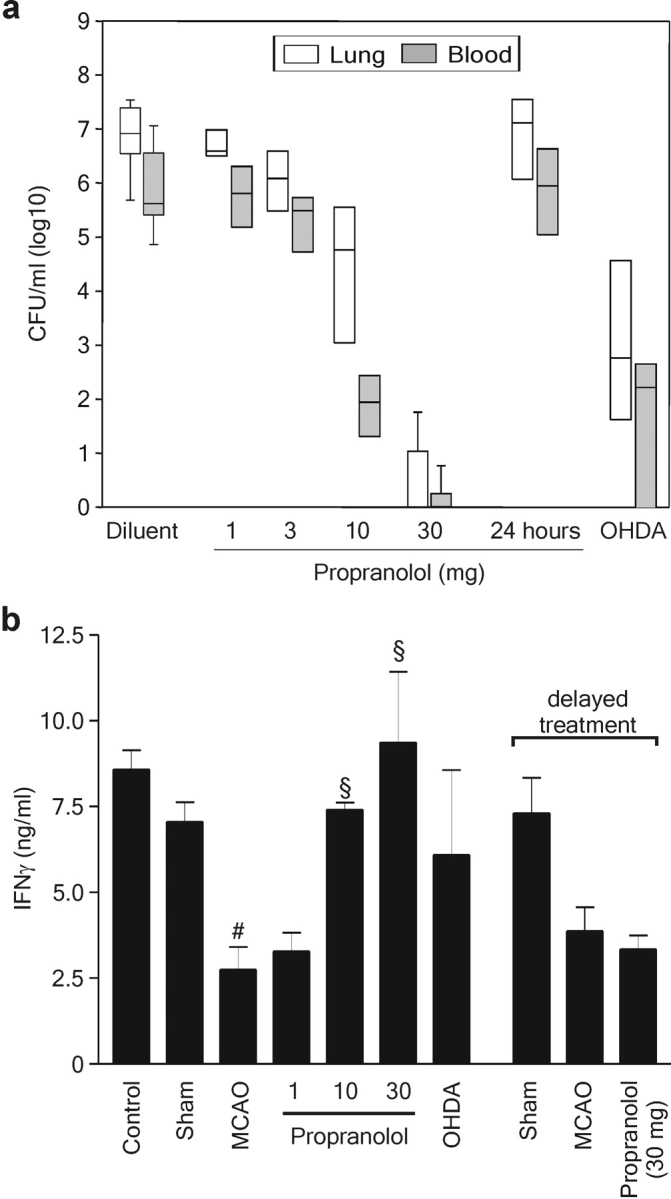
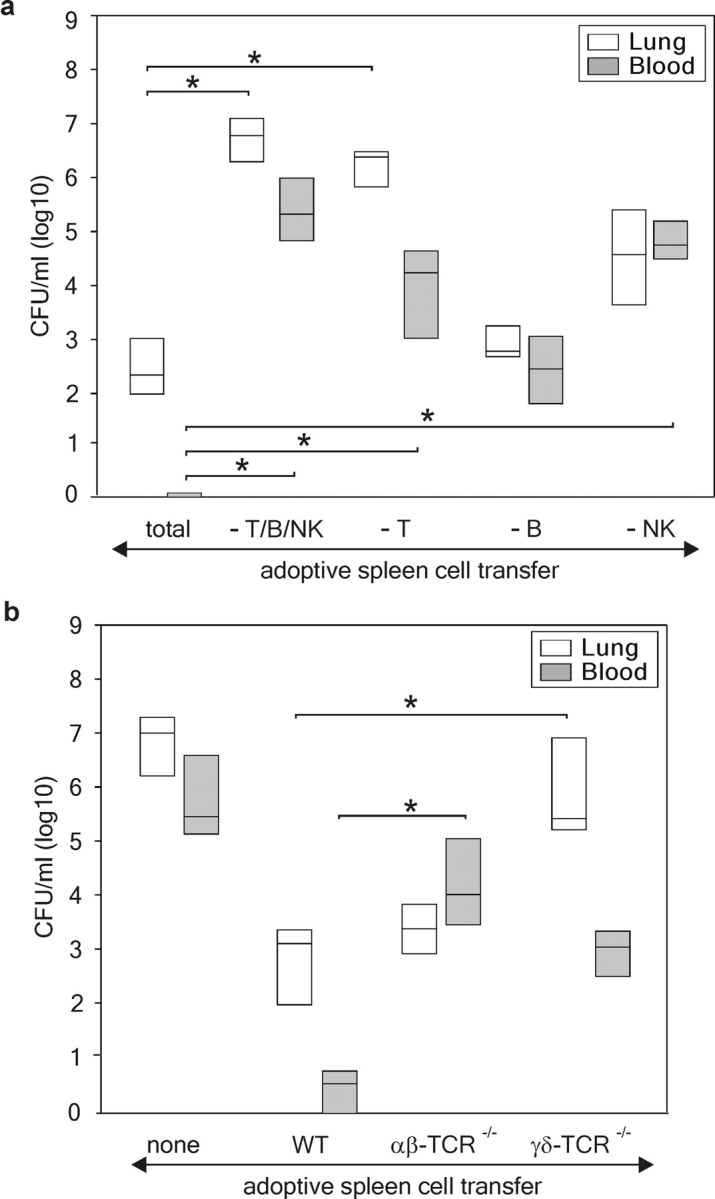
Infections are a leading cause of death in stroke patients. In a mouse model of focal cerebral ischemia, we tested the hypothesis that a stroke-induced immunodeficiency increases the susceptibility to bacterial infections. 3 d after ischemia, all animals developed spontaneous septicemia and pneumonia. Stroke induced an extensive apoptotic loss of lymphocytes and a shift from T helper cell (Th)1 to Th2 cytokine production. Adoptive transfer of T and natural killer cells from wild-type mice, but not from interferon (IFN)-gamma-deficient mice, or administration of IFN-gamma at day 1 after stroke greatly decreased the bacterial burden. Importantly, the defective IFN-gamma response and the occurrence of bacterial infections were prevented by blocking the sympathetic nervous system but not the hypothalamo-pituitary-adrenal axis. Furthermore, administration of the beta-adrenoreceptor blocker propranolol drastically reduced mortality after stroke. These data suggest that a catecholamine-mediated defect in early lymphocyte activation is the key factor in the impaired antibacterial immune response after stroke.
感染是中风患者死亡的主要原因。在局灶性脑缺血小鼠模型中,我们验证了一个假说,即中风诱导的免疫缺陷会增加对细菌感染的易感性。缺血3天后,所有动物均出现自发性败血症和肺炎。中风导致淋巴细胞大量凋亡,并使细胞因子产生从辅助性T细胞(Th)1型向Th2型转变。移植野生型小鼠而非干扰素(IFN)-γ缺陷型小鼠的T细胞和自然杀伤细胞,或在中风后第1天给予IFN-γ,可显著降低细菌负荷。重要的是,通过阻断交感神经系统而非下丘脑-垂体-肾上腺轴可预防IFN-γ反应缺陷和细菌感染的发生。此外,给予β-肾上腺素能受体阻滞剂普萘洛尔可大幅降低中风后的死亡率。这些数据表明,儿茶酚胺介导的早期淋巴细胞激活缺陷是中风后抗菌免疫反应受损的关键因素。