Macdonald Whitney A, Purcell Anthony W, Mifsud Nicole A, Ely Lauren K, Williams David S, Chang Linus, Gorman Jeffrey J, Clements Craig S, Kjer-Nielsen Lars, Koelle David M, Burrows Scott R, Tait Brian D, Holdsworth Rhonda, Brooks Andrew G, Lovrecz George O, Lu Louis, Rossjohn Jamie, McCluskey James
Dept. of Microbiology and Immunology, The University of Melbourne, Parkville, Victoria 3010, Australia.
J Exp Med. 2003 Sep 1;198(5):679-91. doi: 10.1084/jem.20030066. Epub 2003 Aug 25.
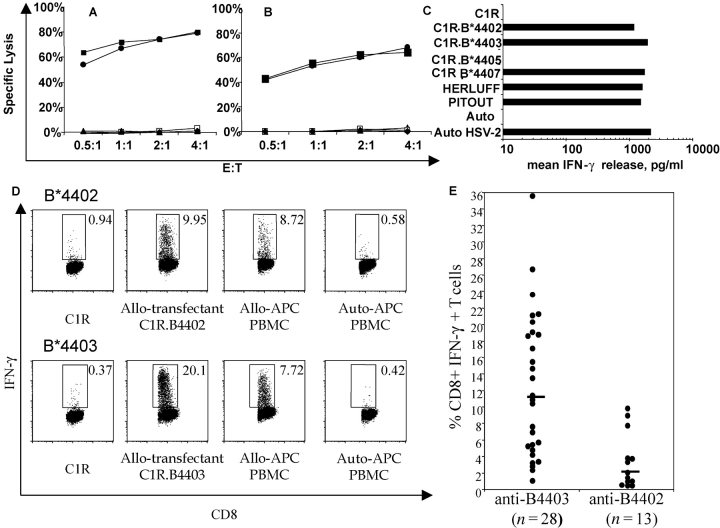
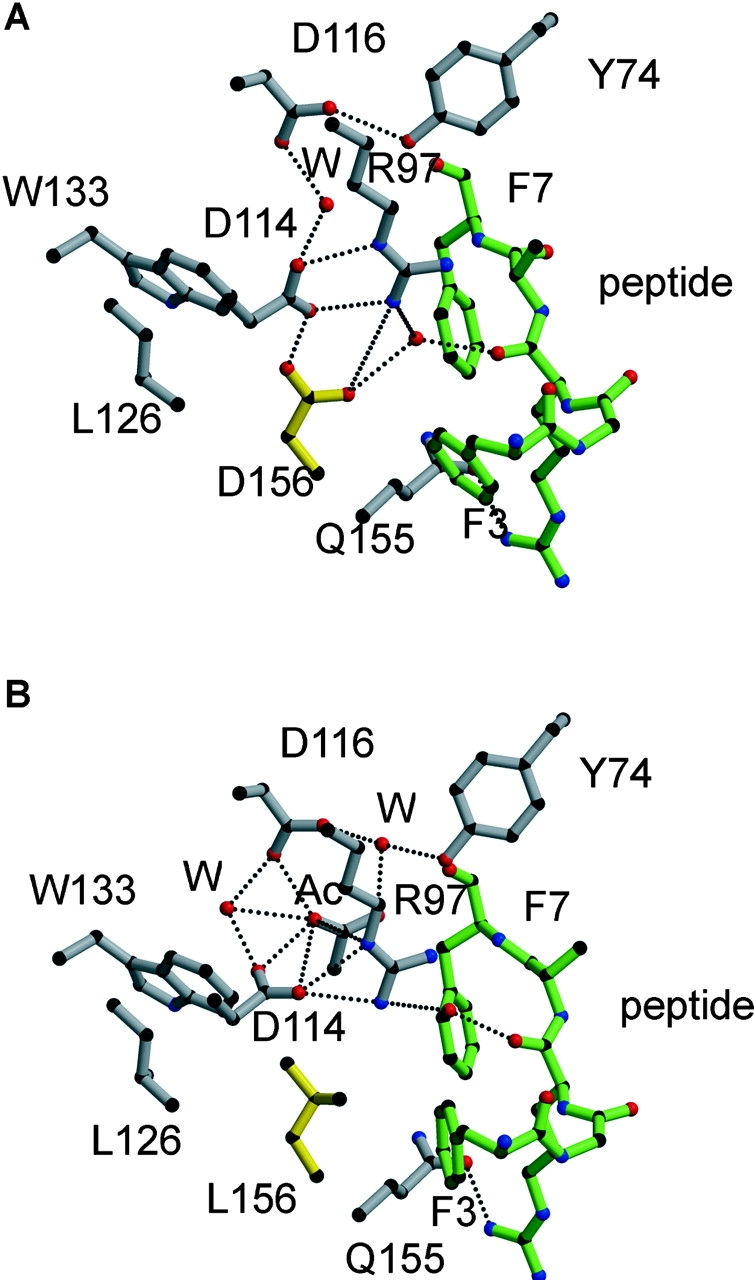
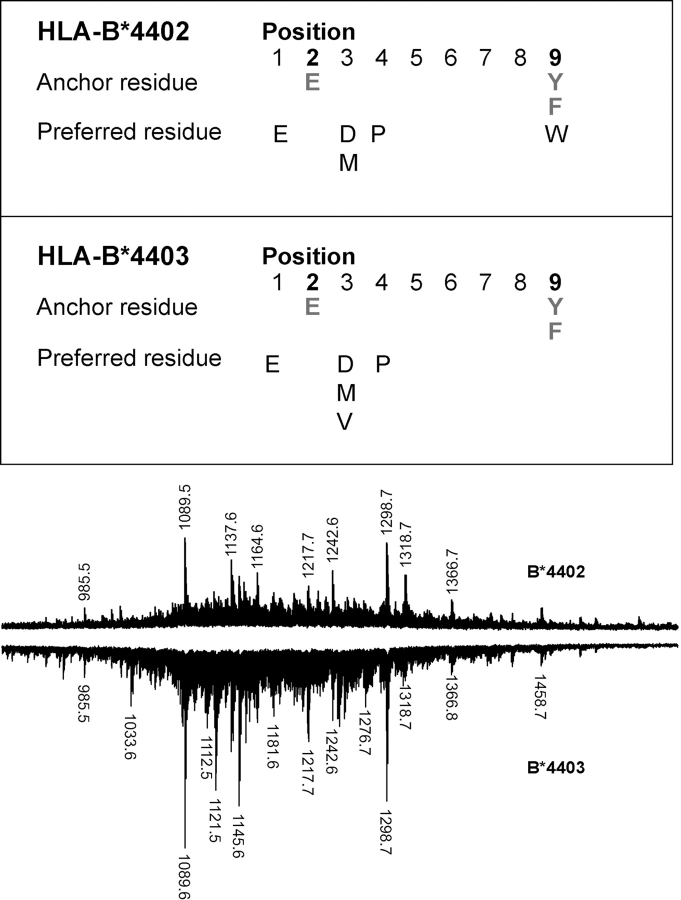
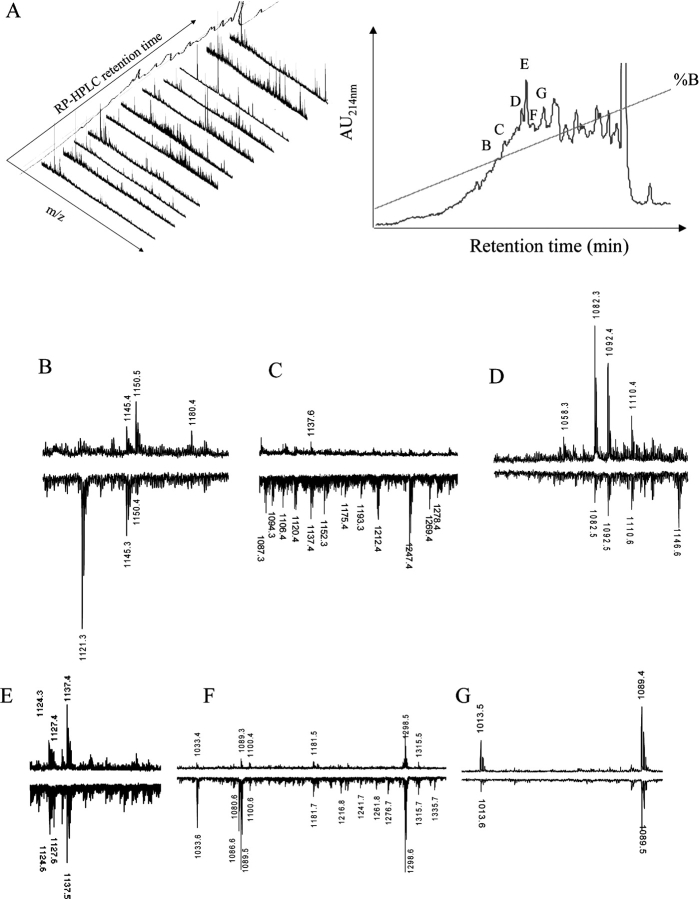
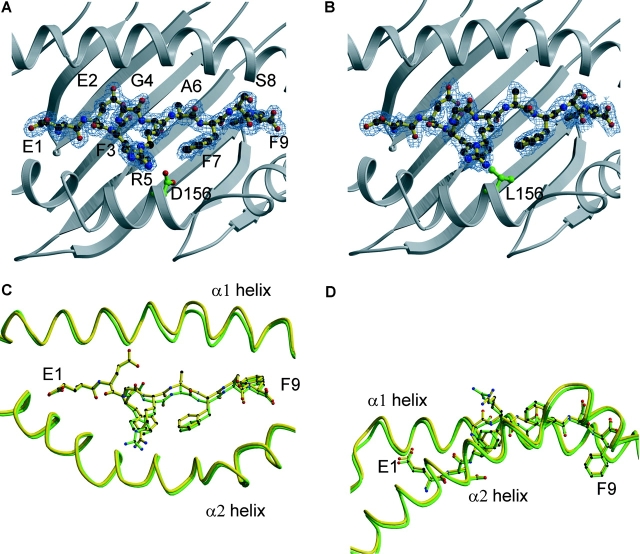
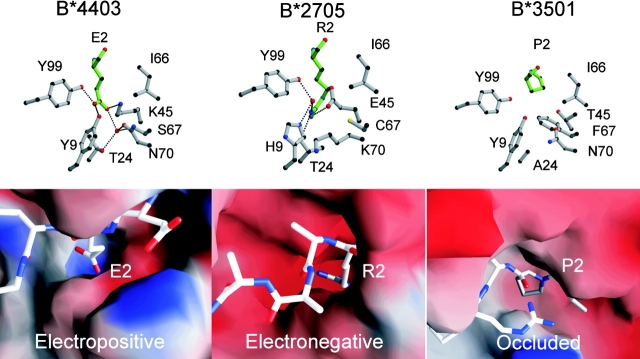
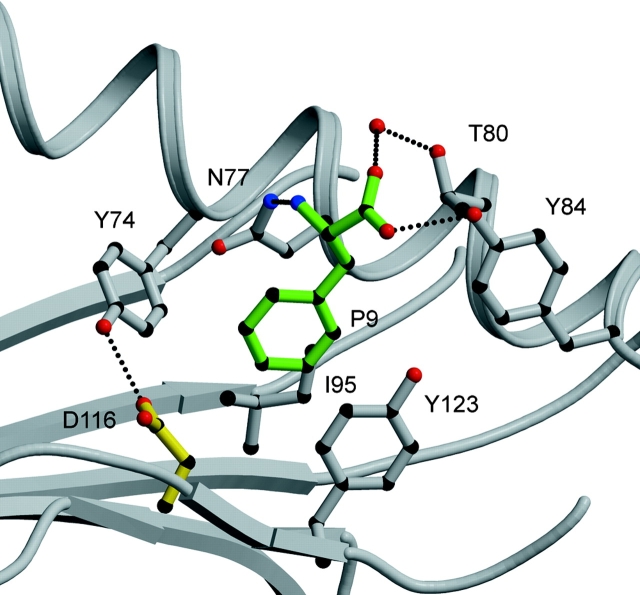
HLA-B4402 and B4403 are naturally occurring MHC class I alleles that are both found at a high frequency in all human populations, and yet they only differ by one residue on the alpha2 helix (B4402 Asp156-->B4403 Leu156). CTLs discriminate between HLA-B4402 and B4403, and these allotypes stimulate strong mutual allogeneic responses reflecting their known barrier to hemopoeitic stem cell transplantation. Although HLA-B4402 and B4403 share >95% of their peptide repertoire, B4403 presents more unique peptides than B4402, consistent with the stronger T cell alloreactivity observed toward B4403 compared with B4402. Crystal structures of B4402 and B4403 show how the polymorphism at position 156 is completely buried and yet alters both the peptide and the heavy chain conformation, relaxing ligand selection by B4403 compared with B4402. Thus, the polymorphism between HLA-B4402 and B4403 modifies both peptide repertoire and T cell recognition, and is reflected in the paradoxically powerful alloreactivity that occurs across this "minimal" mismatch. The findings suggest that these closely related class I genes are maintained in diverse human populations through their differential impact on the selection of peptide ligands and the T cell repertoire.
HLA - B4402和B4403是天然存在的MHC I类等位基因,在所有人类群体中均以高频率出现,但它们在α2螺旋上仅相差一个残基(B4402天冬氨酸156→B4403亮氨酸156)。细胞毒性T淋巴细胞(CTL)能够区分HLA - B4402和B4403,并且这些同种异型会激发强烈的相互同种异体反应,这反映了它们在造血干细胞移植中已知的障碍。尽管HLA - B4402和B4403共享超过95%的肽库,但B4403比B4402呈现出更多独特的肽,这与观察到的针对B4403与B4402相比更强的T细胞同种异体反应性一致。B4402和B4403的晶体结构显示了156位的多态性是如何被完全掩埋的,但却改变了肽和重链的构象,与B4402相比,B4403对配体的选择更为宽松。因此,HLA - B4402和B4403之间的多态性改变了肽库和T细胞识别,并反映在跨越这种“最小”错配时出现的异常强大的同种异体反应性中。这些发现表明,这些密切相关的I类基因通过它们对肽配体选择和T细胞库的不同影响而在不同的人类群体中得以保留。