Sandor Frantisek, Latz Eicke, Re Fabio, Mandell Leisa, Repik Galina, Golenbock Douglas T, Espevik Terje, Kurt-Jones Evelyn A, Finberg Robert W
Department of Medicine, University of Massachusetts Medical Center, Worcester, MA 01605-2324, USA.
J Cell Biol. 2003 Sep 15;162(6):1099-110. doi: 10.1083/jcb.200304093.
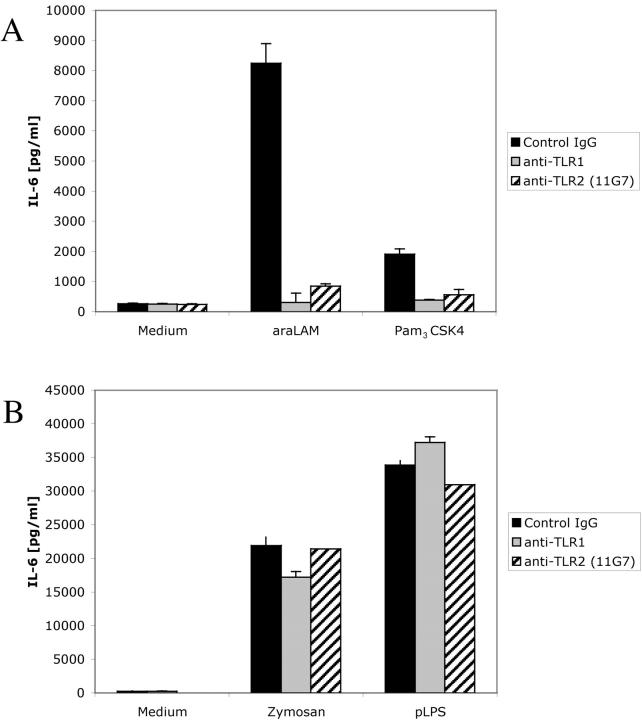
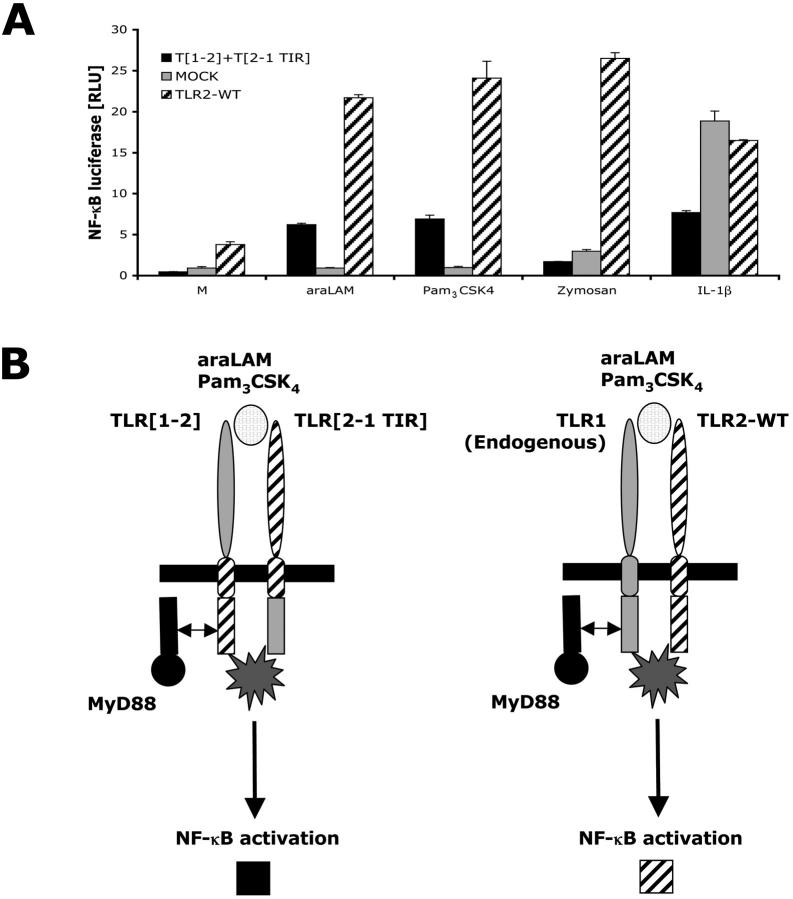
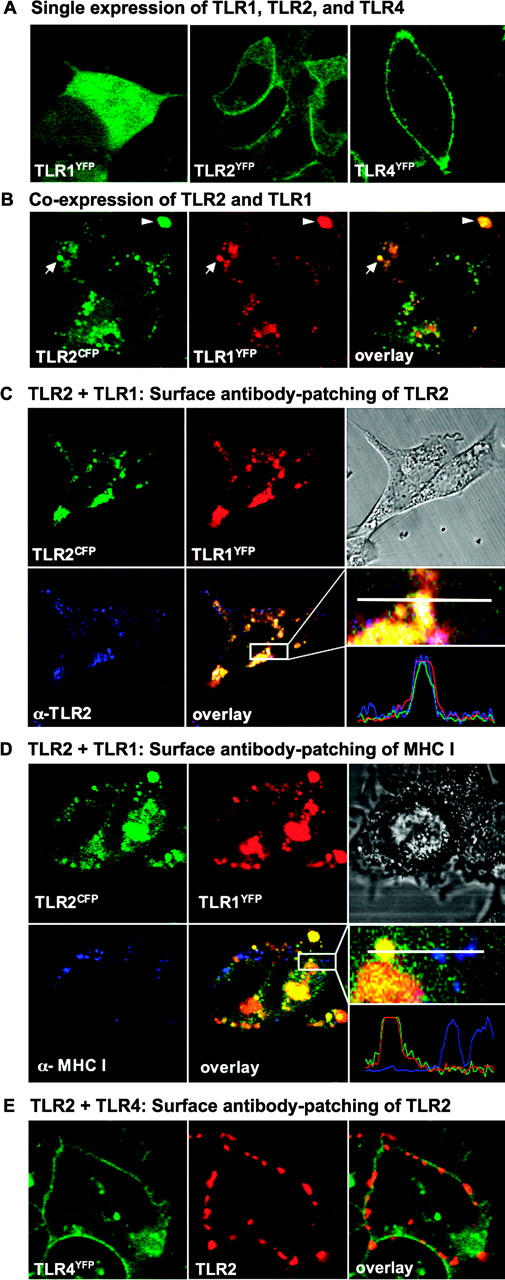
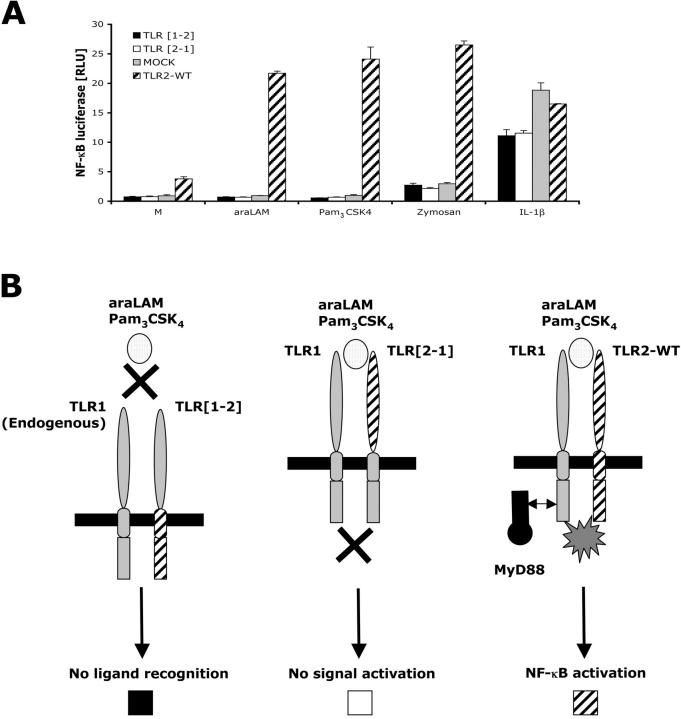
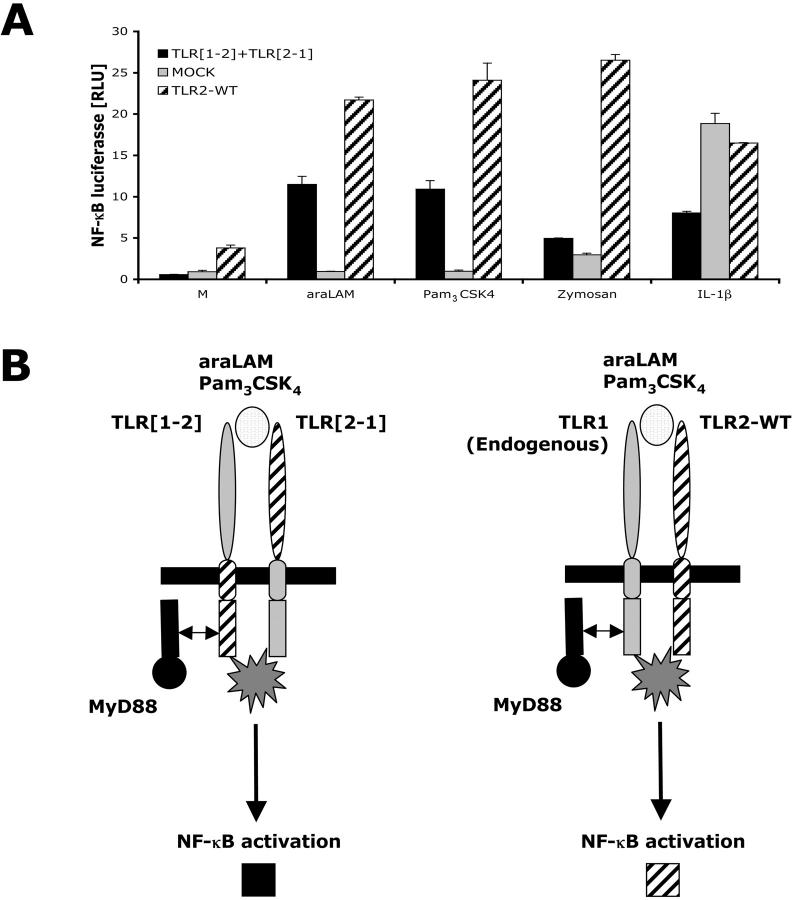
Recognition of ligands by toll-like receptor (TLR) 2 requires interactions with other TLRs. TLRs form a combinatorial repertoire to discriminate between the diverse microbial ligands. Diversity results from extracellular and intracellular interactions of different TLRs. This paper demonstrates that TLR1 and TLR2 are required for ara-lipoarabinomannan- and tripalmitoyl cysteinyl lipopeptide-stimulated cytokine secretion from mononuclear cells. Confocal microscopy revealed that TLR1 and TLR2 cotranslationally form heterodimeric complexes on the cell surface and in the cytosol. Simultaneous cross-linking of both receptors resulted in ligand-independent signal transduction. Using chimeric TLRs, we found that expression of the extracellular domains along with simultaneous expression of the intracellular domains of both TLRs was necessary to achieve functional signaling. The domains from each receptor did not need to be contained within a single contiguous protein. Chimeric TLR analysis further defined the toll/IL-1R domains as the area of crucial intracellular TLR1-TLR2 interaction.
Toll样受体(TLR)2对配体的识别需要与其他TLR相互作用。TLR形成一个组合库来区分不同的微生物配体。多样性源于不同TLR的细胞外和细胞内相互作用。本文证明,单核细胞分泌阿拉伯糖脂阿拉伯甘露聚糖和三棕榈酰半胱氨酰脂肽刺激的细胞因子需要TLR1和TLR2。共聚焦显微镜显示,TLR1和TLR2在细胞表面和细胞质中共翻译形成异二聚体复合物。两种受体的同时交联导致不依赖配体的信号转导。使用嵌合TLR,我们发现两种TLR的细胞外结构域的表达以及细胞内结构域的同时表达对于实现功能性信号传导是必要的。每个受体的结构域不需要包含在单个连续的蛋白质中。嵌合TLR分析进一步将Toll/IL-1R结构域定义为细胞内TLR1-TLR2关键相互作用区域。