Göttlicher M, Widmark E, Li Q, Gustafsson J A
Department of Medical Nutrition, Karolinska Institute, Huddinge, Sweden.
Proc Natl Acad Sci U S A. 1992 May 15;89(10):4653-7. doi: 10.1073/pnas.89.10.4653.
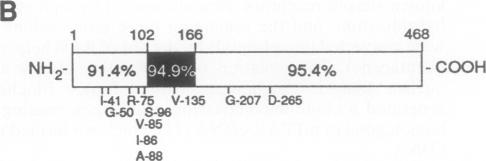
Peroxisome proliferators such as clofibric acid, nafenopin, and WY-14,643 have been shown to activate PPAR (peroxisome proliferator-activated receptor), a member of the steroid nuclear receptor superfamily. We have cloned the cDNA from the rat that is homologous to that from the mouse [Issemann, I. & Green, S. (1990) Nature (London) 347, 645-650], which encodes a 97% similar protein with a particularly well-conserved putative ligand-binding domain. To search for physiologically occurring activators, we established a transcriptional transactivation assay by stably expressing in CHO cells a chimera of rat PPAR and the human glucocorticoid receptor that activates expression of the placental alkaline phosphatase reporter gene under the control of the mouse mammary tumor virus promoter. Testing of compounds related to lipid metabolism or peroxisomal proliferation revealed that 150 microM concentrations of arachidonic or linoleic acid but not of dehydroepiandrosterone, cholesterol, or 25-hydroxy-cholesterol, activate the receptor chimera. In addition, saturated fatty acids induce the reporter gene. Shortening the chain length to n = 6 or introduction of an omega-terminal carboxylic group abolished the activation potential of the fatty acid. In conclusion, the present results indicate that fatty acids can regulate gene expression mediated by a member of the steroid nuclear receptor superfamily.
诸如氯贝酸、萘酚平及WY-14,643等过氧化物酶体增殖剂已被证明可激活PPAR(过氧化物酶体增殖物激活受体),它是类固醇核受体超家族的一员。我们已从大鼠中克隆出与小鼠同源的cDNA[伊瑟曼,I. & 格林,S.(1990年)《自然》(伦敦)347, 645 - 650],该cDNA编码一种相似度达97%的蛋白质,其假定的配体结合域特别保守。为了寻找生理上存在的激活剂,我们通过在CHO细胞中稳定表达大鼠PPAR与人类糖皮质激素受体的嵌合体建立了一种转录反式激活测定法,该嵌合体在小鼠乳腺肿瘤病毒启动子的控制下激活胎盘碱性磷酸酶报告基因的表达。对与脂质代谢或过氧化物酶体增殖相关的化合物进行测试发现,150微摩尔浓度的花生四烯酸或亚油酸可激活受体嵌合体,而脱氢表雄酮、胆固醇或25 - 羟基胆固醇则不能。此外,饱和脂肪酸可诱导报告基因。将链长缩短至n = 6或引入ω - 末端羧基会消除脂肪酸的激活潜能。总之,目前的结果表明脂肪酸可调节由类固醇核受体超家族成员介导的基因表达。