Kohlbrenner W E, Wideburg N, Weigl D, Saldivar A, Chu D T
Anti-Infective Research Division, Abbott Laboratories, Abbott Park, Illinois 60064-3500.
Antimicrob Agents Chemother. 1992 Jan;36(1):81-6. doi: 10.1128/AAC.36.1.81.
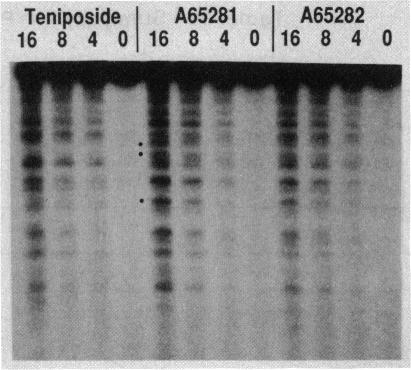
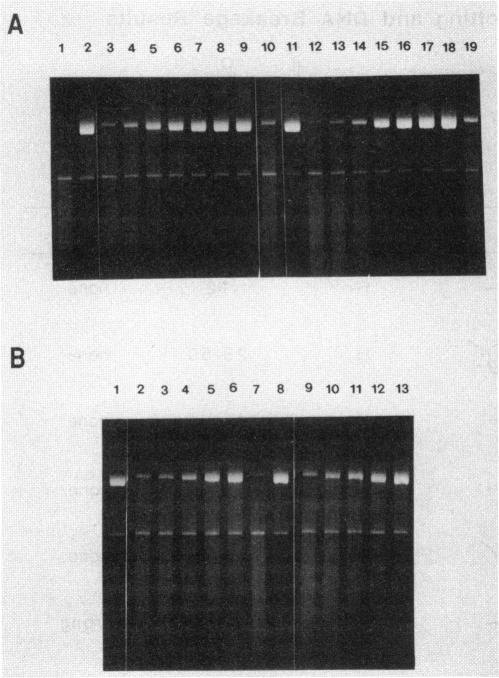
A number of quinolones and related antibacterial compounds were screened for activity against calf thymus topoisomerase II by using the P4 unknotting and DNA breakage assays. Several compounds from different structural classes which inhibited DNA unknotting with 50% inhibitory concentrations ranging from 8 to 25 micrograms/ml were identified. Two experimental isothiazoloquinolones from this group, designated A-65281 and A-65282, were also found to induce considerable DNA breakage mediated by calf thymus topoisomerase II, with 32P-end-labeled pBR322 as the substrate. These compounds were nearly as potent as teniposide, with DNA breakage activity evident at concentrations as low as 4 micrograms/ml. However, some differences in DNA cleavage patterns from those with teniposide were evident. These studies have thus identified a new class of agents which have activity against both bacterial and eukaryotic type II topoisomerases. The implications of these data for the selectivity of topoisomerase-directed compounds and the potential toxicity of such compounds developed as antibacterial agents are discussed.
通过使用P4解结和DNA断裂试验,筛选了多种喹诺酮类及相关抗菌化合物对小牛胸腺拓扑异构酶II的活性。鉴定出了几种来自不同结构类别的化合物,它们抑制DNA解结的50%抑制浓度范围为8至25微克/毫升。该组中的两种实验性异噻唑并喹诺酮,命名为A - 65281和A - 65282,也被发现以32P末端标记的pBR322为底物,可诱导由小牛胸腺拓扑异构酶II介导的大量DNA断裂。这些化合物的效力与替尼泊苷相近,在低至4微克/毫升的浓度下即可显现出DNA断裂活性。然而,与替尼泊苷相比,其DNA切割模式存在一些明显差异。因此,这些研究确定了一类对细菌和真核II型拓扑异构酶均有活性的新型药物。讨论了这些数据对拓扑异构酶导向化合物选择性的影响以及此类作为抗菌剂开发的化合物的潜在毒性。