DUBISKI S, DUDZIAK Z, SKALBA D
Immunology. 1959 Jan;2(1):84-92.
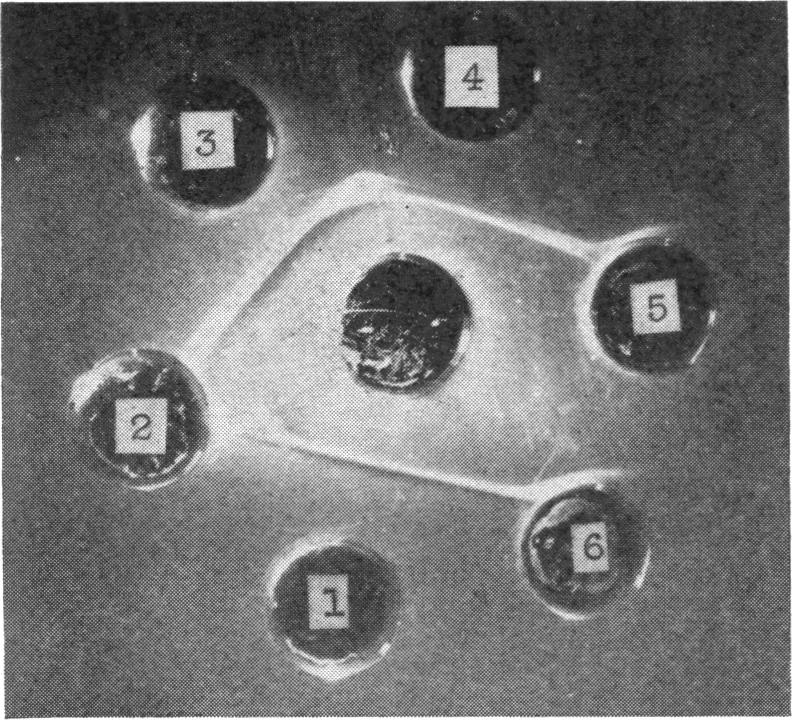
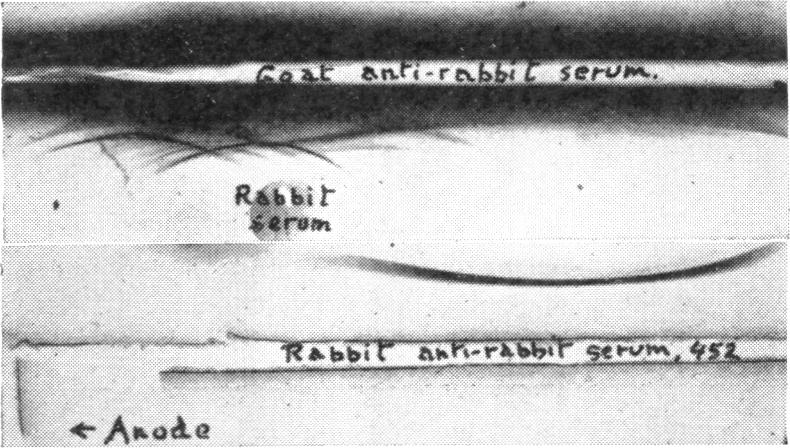
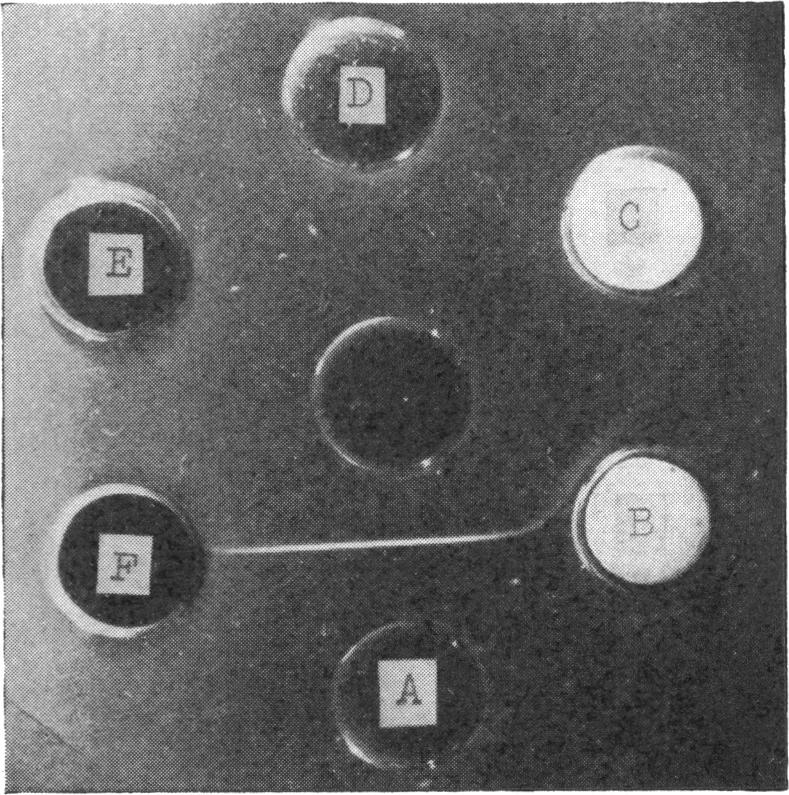
By immunizing rabbits with bacteria agglutinated by corresponding immune rabbit sera group iso-precipitins were obtained. Using the iso-precipitins thus obtained the rabbit sera could be divided into two serum groups: D (a+) and D (a—); for grouping the gel diffusion technique was applied. The serum groups are heritable; probably group D (a+) is inherited as a dominant character. D (a+) mothers can transfer D protein non-genetically. The substance thus obtained is then gradually eliminated from the bloodstream of the young animal. D antigen has γ-globulin electrophoretic mobility as shown by means of immunoelectrophoresis. The incidence of group D (a+) in 92 unrelated rabbits was 27.2 per cent. The authors discuss the relationship between iso-precipitins and anti-antibodies and the practical significance of rabbit serum groups analogous to human Gm serum groups.
通过用相应免疫兔血清凝集的细菌免疫兔子,获得了群体同种沉淀素。利用如此获得的同种沉淀素,兔血清可分为两个血清组:D(a +)和D(a -);采用凝胶扩散技术进行分组。血清组具有遗传性;可能D(a +)组作为显性性状遗传。D(a +)母亲可以非遗传方式传递D蛋白。然后从幼小动物的血液中逐渐清除如此获得的物质。如通过免疫电泳所示,D抗原具有γ-球蛋白电泳迁移率。92只无关兔子中D(a +)组的发生率为27.2%。作者讨论了同种沉淀素与抗抗体之间的关系以及类似于人类Gm血清组的兔血清组的实际意义。