Sherman P A, Dickson M L, Fyfe J A
Experimental Therapy, Wellcome Research Laboratories, Research Triangle Park, North Carolina 27709.
J Virol. 1992 Jun;66(6):3593-601. doi: 10.1128/JVI.66.6.3593-3601.1992.
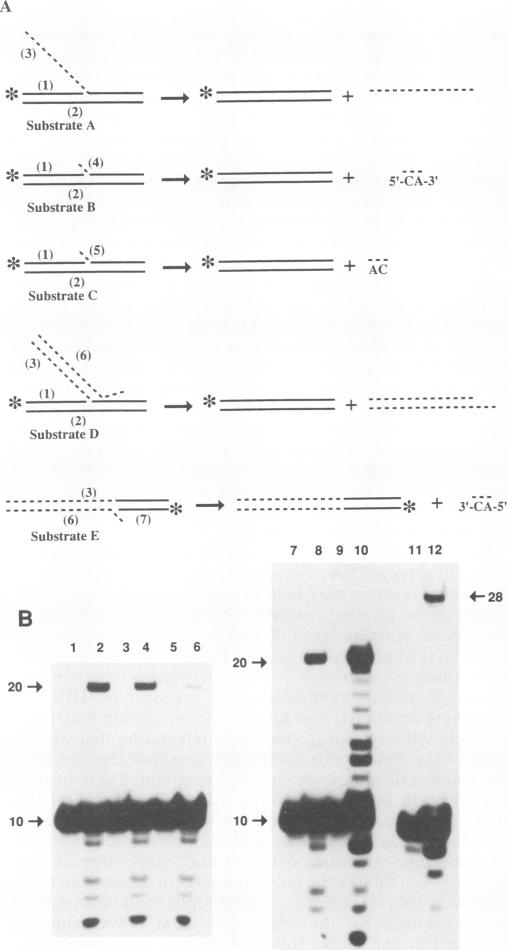
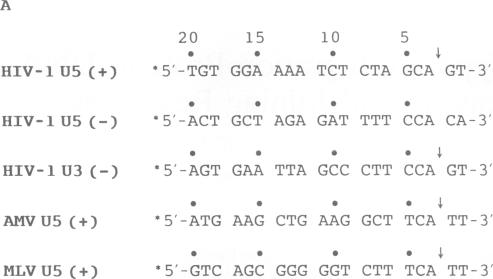
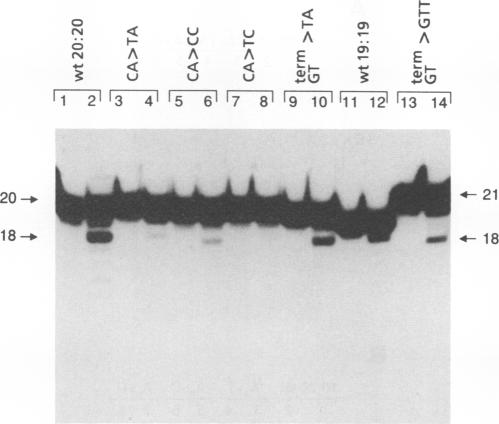
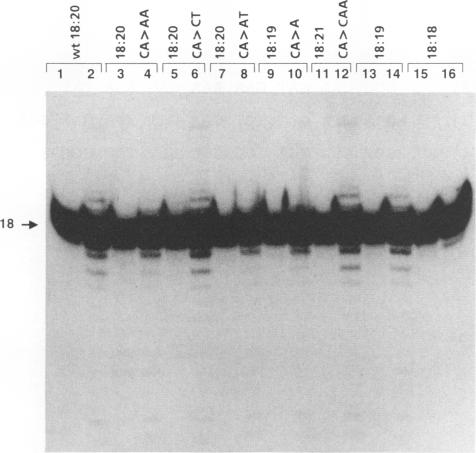
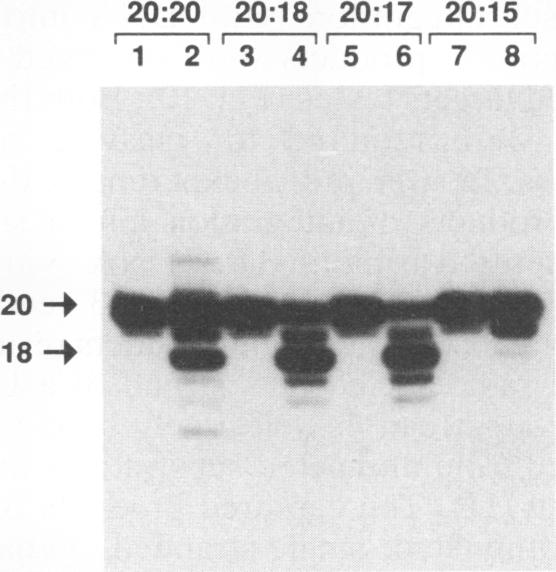
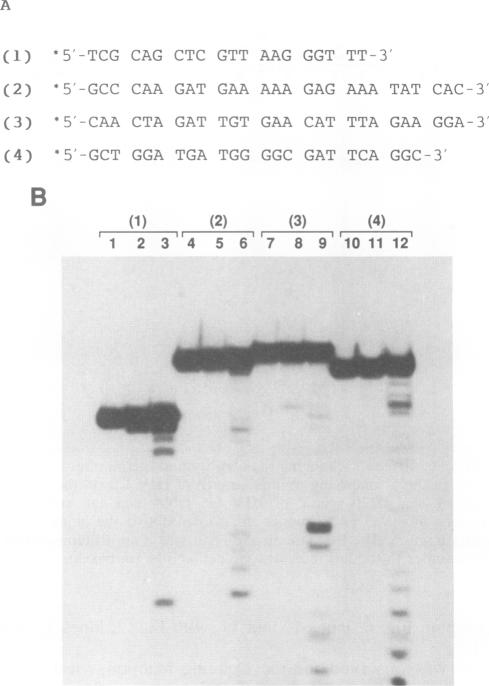
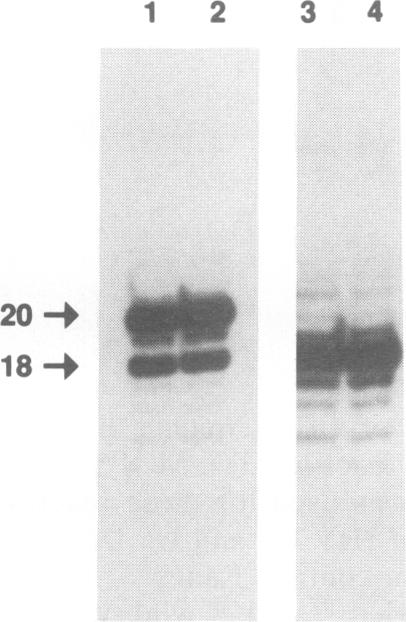
Using purified integration protein (IN) from human immunodeficiency virus (HIV) type 1 and oligonucleotide mimics of viral and target DNA, we have investigated the DNA sequence specificity of the cleaving and joining reactions that take place during retroviral integration. The first reaction in this process is selective endonucleolytic cleaving of the viral DNA terminus that generates a recessed 3' OH group. This 3' OH group is then joined to a 5' phosphoryl group located at a break in the target DNA. We found that the conserved CA located close to the 3' end of the plus strand of the U5 viral terminus (also present on the minus strand of the U3 terminus) was required for both cleaving and joining reactions. Six bases of HIV U5 or U3 DNA at the ends of model substrates were sufficient for nearly maximal levels of selective endonucleolytic cleaving and joining. However, viral sequence elements upstream of the terminal 6 bases could also affect the efficiencies of the cleaving and joining reactions. The penultimate base (C) on the minus strand of HIV U5 was required for optimal joining activity. A synthetic oligonucleotide mimic of the putative in vivo viral "DNA" substrate for HIV IN, a molecule that contained a terminal adenosine 5'-phosphate (rA) on the minus strand, was indistinguishable in the cleaving and joining reactions from the DNA substrate containing deoxyadenosine instead of adenosine 5'-phosphate at the terminal position. Single-stranded DNA served as an in vitro integration target for HIV IN. The DNA sequence specificity of the joining reaction catalyzed in the reverse direction was also investigated.
利用来自1型人类免疫缺陷病毒(HIV)的纯化整合蛋白(IN)以及病毒DNA和靶DNA的寡核苷酸模拟物,我们研究了逆转录病毒整合过程中发生的切割和连接反应的DNA序列特异性。该过程中的第一步反应是病毒DNA末端的选择性内切核酸酶切割,产生一个凹陷的3'羟基基团。然后这个3'羟基基团与位于靶DNA断裂处的5'磷酸基团连接。我们发现,靠近U5病毒末端正链3'端(也存在于U3末端的负链上)的保守CA对于切割和连接反应都是必需的。模型底物末端的HIV U5或U3 DNA的六个碱基足以实现几乎最大水平的选择性内切核酸酶切割和连接。然而,末端6个碱基上游的病毒序列元件也会影响切割和连接反应的效率。HIV U5负链上的倒数第二个碱基(C)是最佳连接活性所必需的。一种模拟HIV IN体内假定病毒“DNA”底物的合成寡核苷酸,该分子在负链上含有一个末端腺苷5'-磷酸(rA),在切割和连接反应中与在末端位置含有脱氧腺苷而非腺苷5'-磷酸的DNA底物没有区别。单链DNA作为HIV IN的体外整合靶标。我们还研究了反向催化的连接反应的DNA序列特异性。