Ueda H, Sun G C, Murata T, Hirose S
Genetic Stock Research Center, National Institute of Genetics, Shizuoka-ken, Japan.
Mol Cell Biol. 1992 Dec;12(12):5667-72. doi: 10.1128/mcb.12.12.5667-5672.1992.
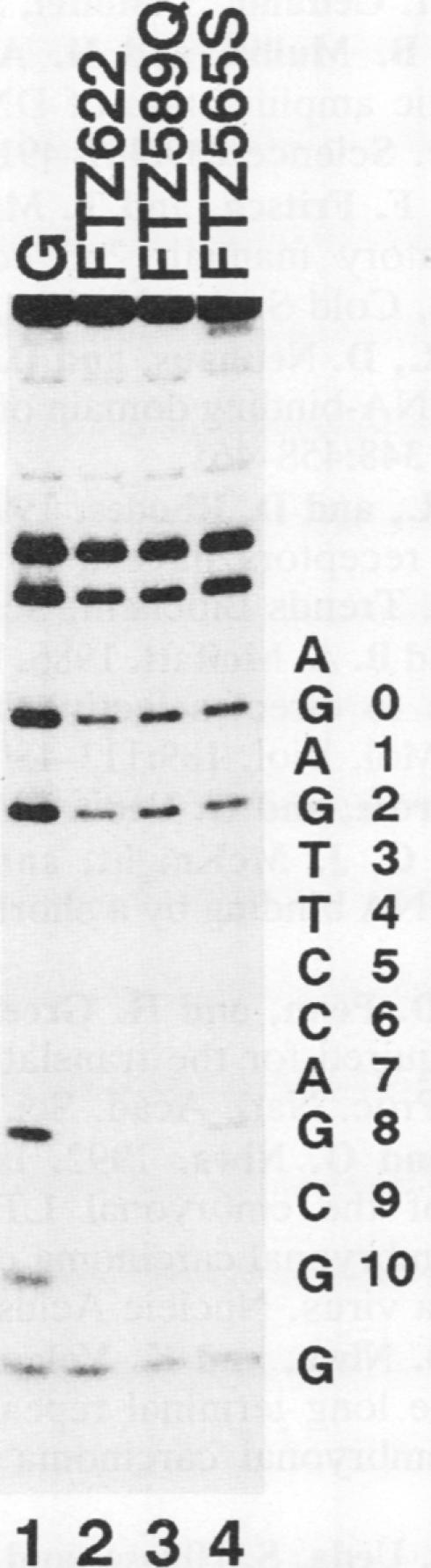
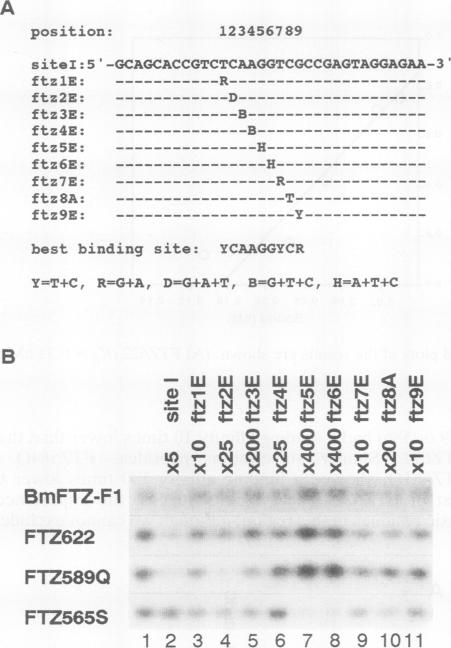
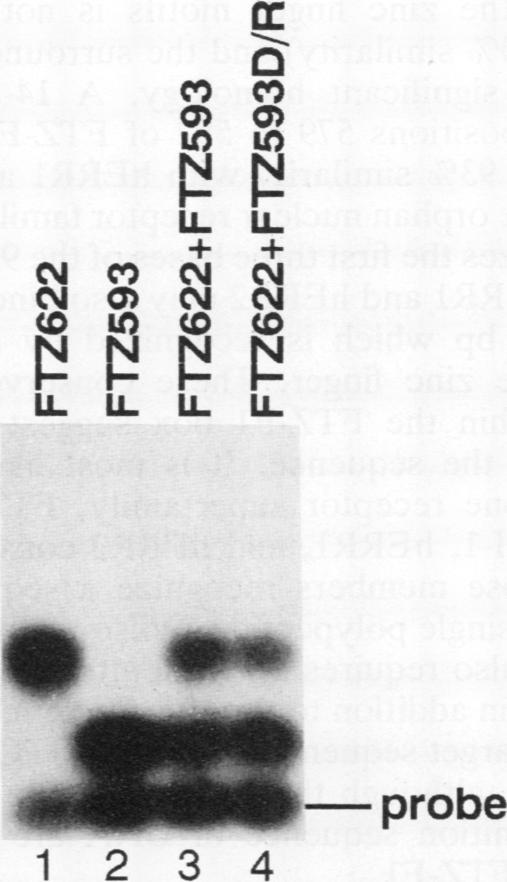
Fruit fly FTZ-F1, silkworm BmFTZ-F1, and mouse embryonal long terminal repeat-binding protein are members of the nuclear hormone receptor superfamily, which recognizes the same sequence, 5'-PyCAAGGPyCPu-3'. Among these proteins, a 30-amino-acid basic region abutting the C-terminal end of the zinc finger motif, designated the FTZ-F1 box, is conserved. Gel mobility shift competition by various mutant peptides of the DNA-binding region revealed that the FTZ-F1 box as well as the zinc finger motif is involved in the high-affinity binding of FTZ-F1 to its target site. Using a gel mobility shift matrix competition assay, we demonstrated that the FTZ-F1 box governs the recognition of the first three bases, while the zinc finger region recognizes the remaining part of the binding sequence. We also showed that the DNA-binding region of FTZ-F1 recognizes and binds to DNA as a monomer. Occurrence of the FTZ-F1 box sequence in other members of the nuclear hormone receptor superfamily raises the possibility that these receptors constitute a unique subfamily which binds to DNA as a monomer.
果蝇FTZ - F1、家蚕BmFTZ - F1和小鼠胚胎长末端重复序列结合蛋白是核激素受体超家族的成员,它们识别相同的序列5'-PyCAAGGPyCPu-3'。在这些蛋白质中,靠近锌指基序C末端的一个30个氨基酸的碱性区域(称为FTZ - F1框)是保守的。DNA结合区域的各种突变肽进行的凝胶迁移率竞争实验表明,FTZ - F1框以及锌指基序都参与了FTZ - F1与其靶位点的高亲和力结合。通过凝胶迁移率矩阵竞争实验,我们证明FTZ - F1框决定了对前三个碱基的识别,而锌指区域识别结合序列的其余部分。我们还表明,FTZ - F1的DNA结合区域以单体形式识别并结合DNA。核激素受体超家族其他成员中FTZ - F1框序列的出现增加了这些受体构成一个独特亚家族的可能性,该亚家族以单体形式结合DNA。