Hoskin P J, Sibtain A, Daley F M, Wilson G D
CR UK Tumour Biology and Radiation Therapy Group, Mount Vernon Cancer Centre, Rickmansworth Road, Northwood, Middlesex HA6 2RN UK.
Br J Cancer. 2003 Oct 6;89(7):1290-7. doi: 10.1038/sj.bjc.6601260.
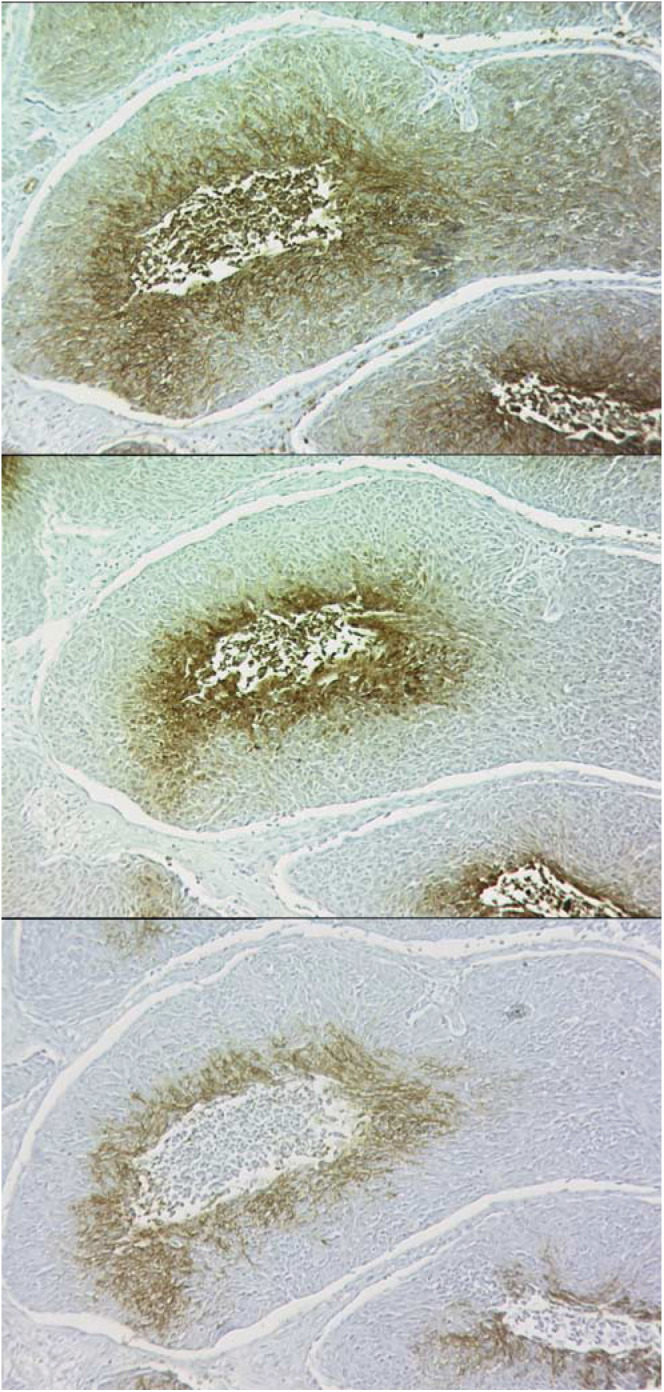
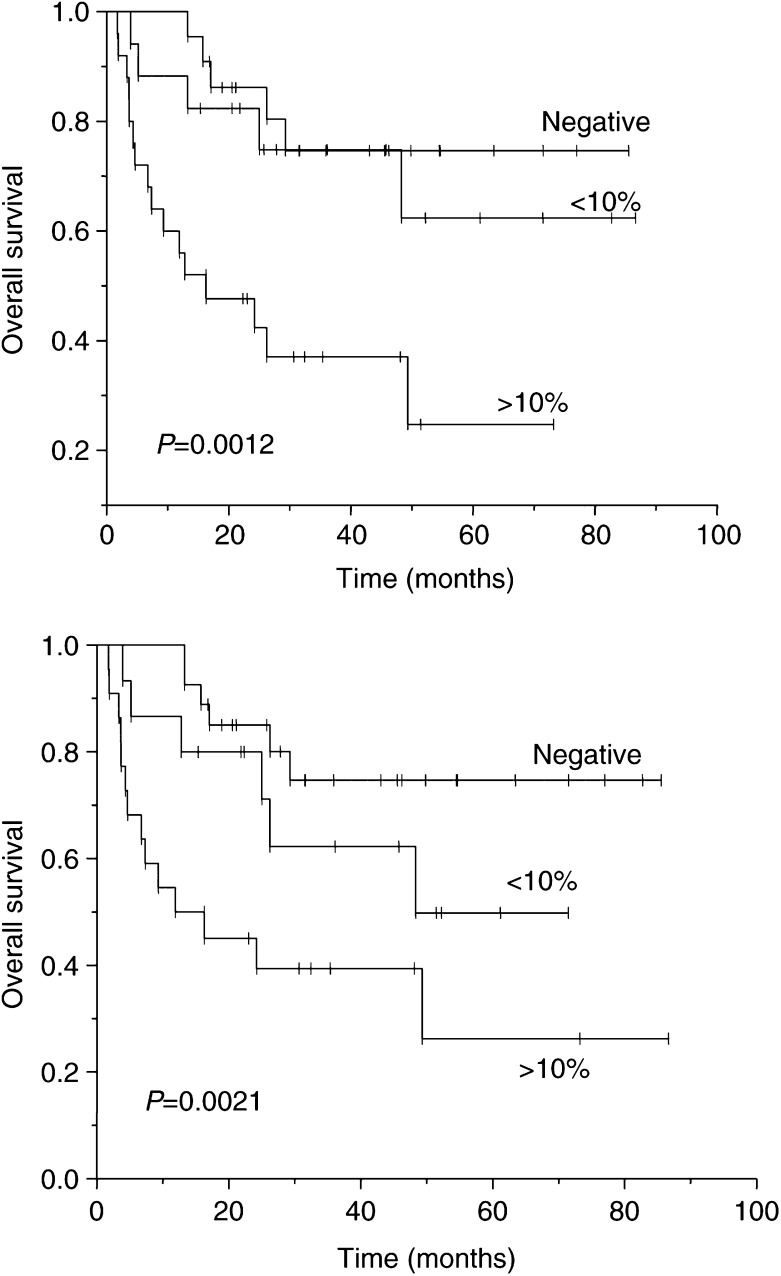
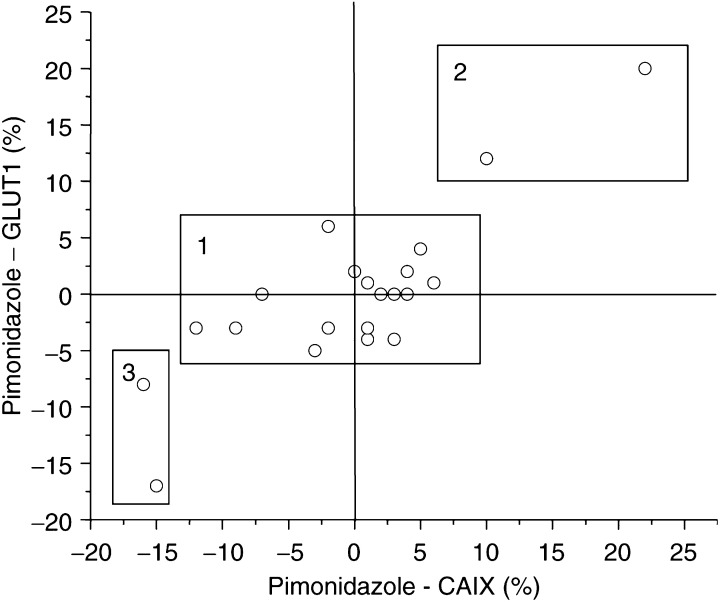
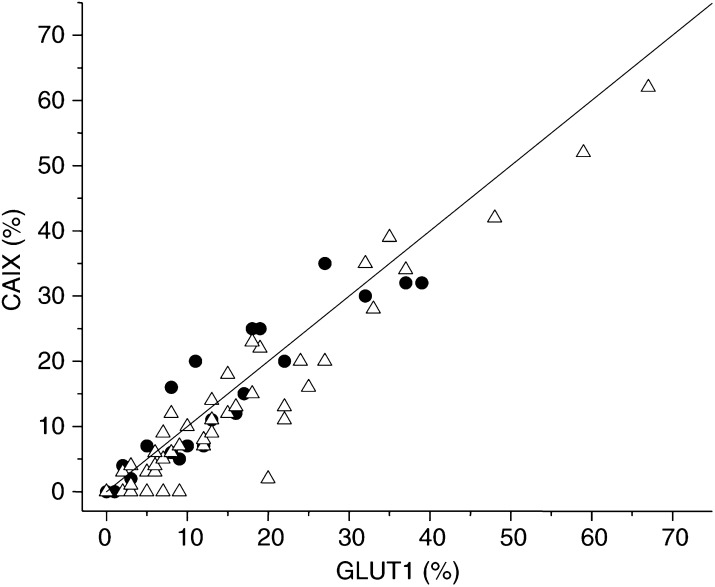
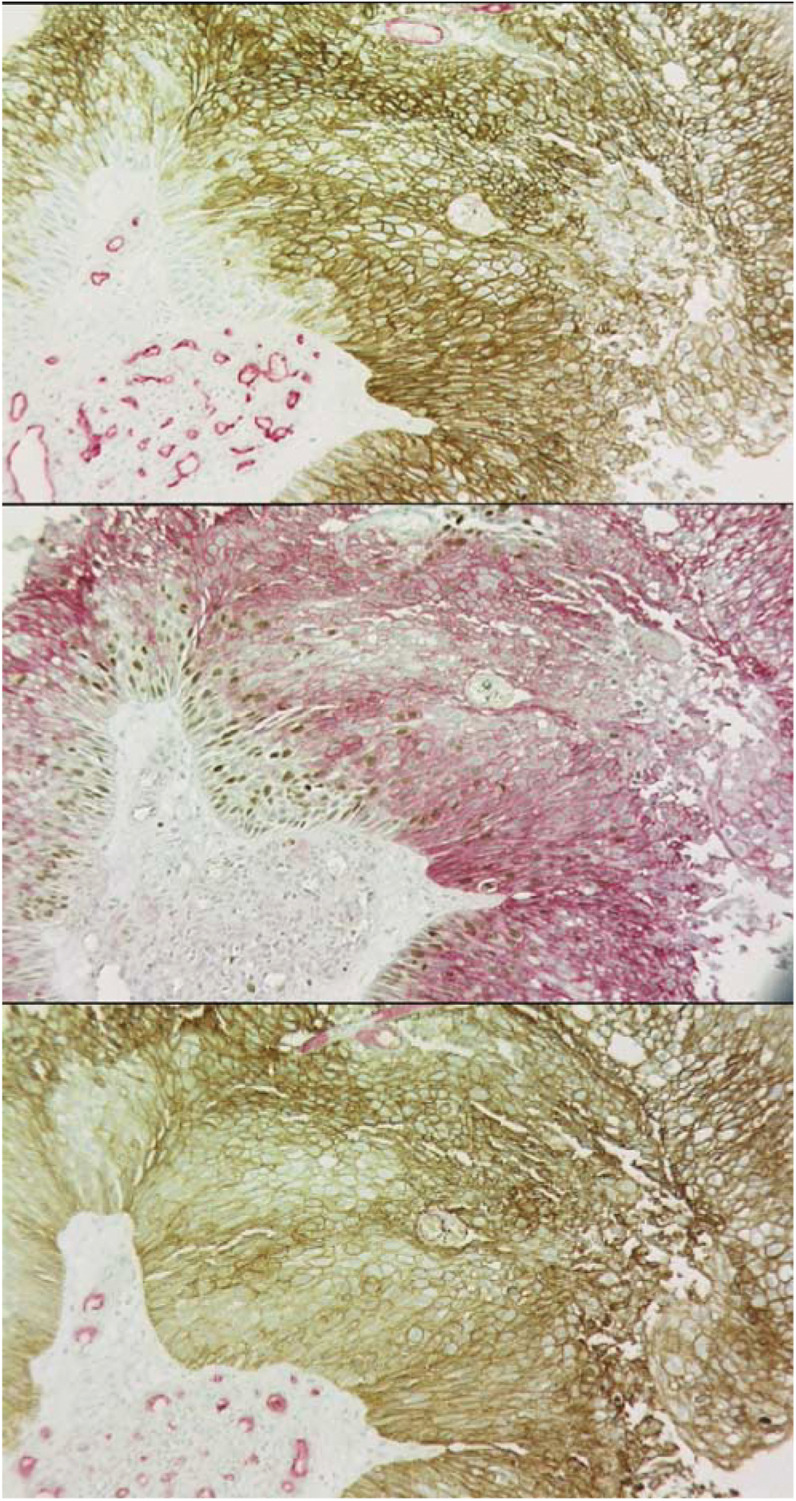
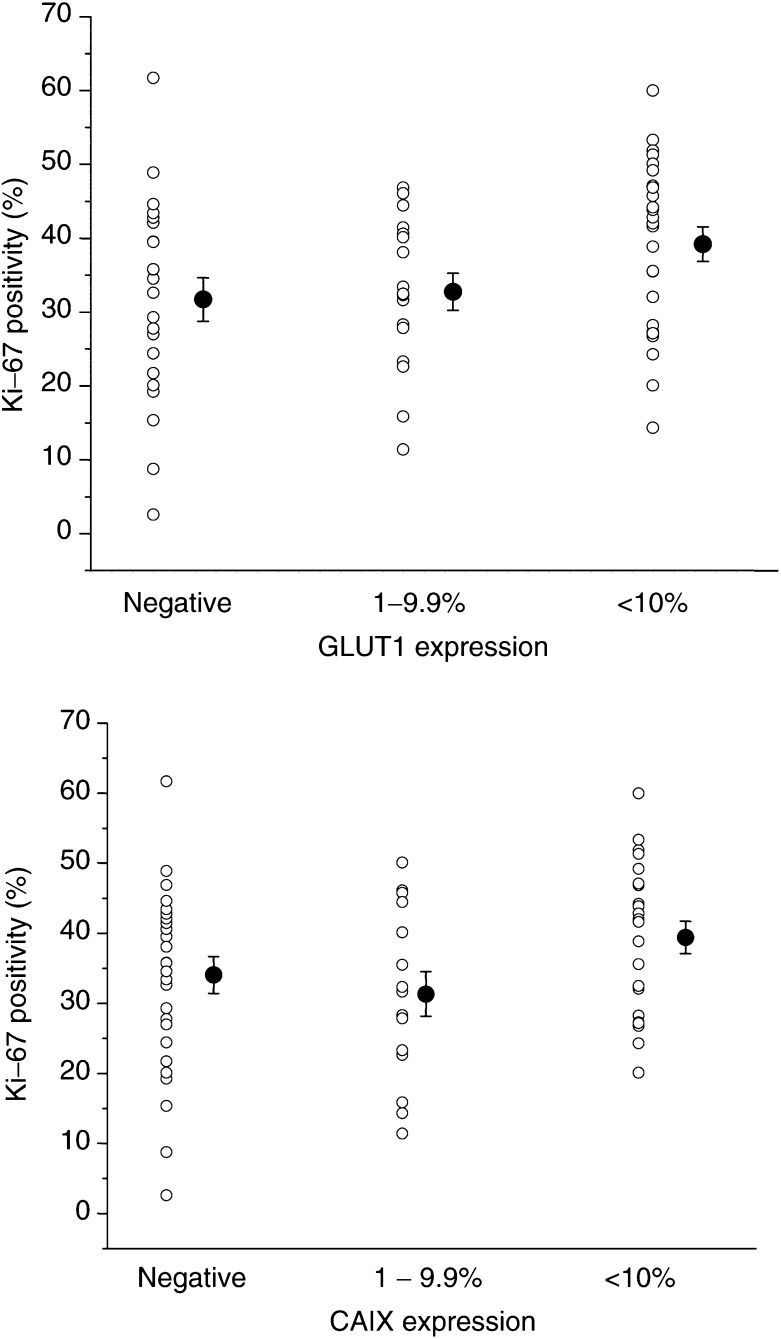
Glucose transporter-1 protein (GLUT1) and carbonic anhydrase IX (CAIX) are regulated by hypoxia inducible factor-1 (HIF-1) and have been studied as putative intrinsic cellular markers for hypoxia. This study directly compares CAIX and GLUT1 with pimonidazole binding in a prospective series of bladder cancer patients and also studies the prognostic significance of the markers, in combination with vascularity and proliferation, in a retrospective series of bladder cancer patients treated in a phase II trial of radical radiotherapy with carbogen and nicotinamide (ARCON). A total of 21 patients with a diagnosis of transitional cell carcinoma of the bladder received 0.5 g m(-2) pimonidazole. Serial tumour sections were stained for pimonidazole, GLUT1 and CAIX and compared. Tissue sections obtained from a series of 64 patients previously treated for invasive bladder cancer using ARCON were stained for GLUT1 and CAIX together with Ki-67 and CD31/34. There was a good geographical colocalisation of both intrinsic markers with pimonidazole and a highly significant agreement in individual patients; correlation coefficients were 0.82 (P=0.0001) for GLUT1 and 0.74 (P<0.0001) for CAIX. In both series of patients, the intrinsic hypoxia markers were highly correlated with each other and a correlation with proliferation was also evident in the retrospective study. In univariate and multivariate analyses, GLUT1 and CAIX were independent predictors for overall and cause specific survival. The hypoxia markers did not predict for local control or metastases-free survival although higher Ki-67 indices showed a trend towards local failure. The data suggest that both hypoxia modification and accelerated treatment may be valid treatment options in bladder cancer.
葡萄糖转运蛋白-1(GLUT1)和碳酸酐酶IX(CAIX)受缺氧诱导因子-1(HIF-1)调控,已作为潜在的缺氧细胞内标志物进行研究。本研究在前瞻性的一系列膀胱癌患者中,直接比较了CAIX和GLUT1与匹莫硝唑结合情况,并在一项用卡波金和烟酰胺进行根治性放疗的II期试验(ARCON)治疗的回顾性膀胱癌患者系列中,研究了这些标志物与血管生成和增殖相结合的预后意义。共有21例诊断为膀胱移行细胞癌的患者接受了0.5 g m(-2)的匹莫硝唑。对肿瘤连续切片进行匹莫硝唑、GLUT1和CAIX染色并比较。从先前使用ARCON治疗浸润性膀胱癌的64例患者系列中获取的组织切片,进行GLUT1和CAIX以及Ki-67和CD31/34染色。两种内源性标志物与匹莫硝唑在空间分布上有良好的共定位,且在个体患者中有高度显著的一致性;GLUT1的相关系数为0.82(P = 0.0001),CAIX的相关系数为0.74(P < 0.0001)。在这两个患者系列中,内源性缺氧标志物之间高度相关,并且在回顾性研究中与增殖也存在相关性。在单变量和多变量分析中,GLUT1和CAIX是总生存和病因特异性生存的独立预测因子。缺氧标志物不能预测局部控制或无转移生存,尽管较高的Ki-67指数显示出局部失败的趋势。数据表明,缺氧修饰和加速治疗可能是膀胱癌有效的治疗选择。