Smartt H J M, Elder D J E, Hicks D J, Williams N A, Paraskeva C
Cancer Research UK Colorectal Tumour Biology Research Group, Department of Pathology and Microbiology, School of Medical Sciences, University of Bristol, University Walk, Bristol BS8 1TD, UK.
Br J Cancer. 2003 Oct 6;89(7):1358-65. doi: 10.1038/sj.bjc.6601266.
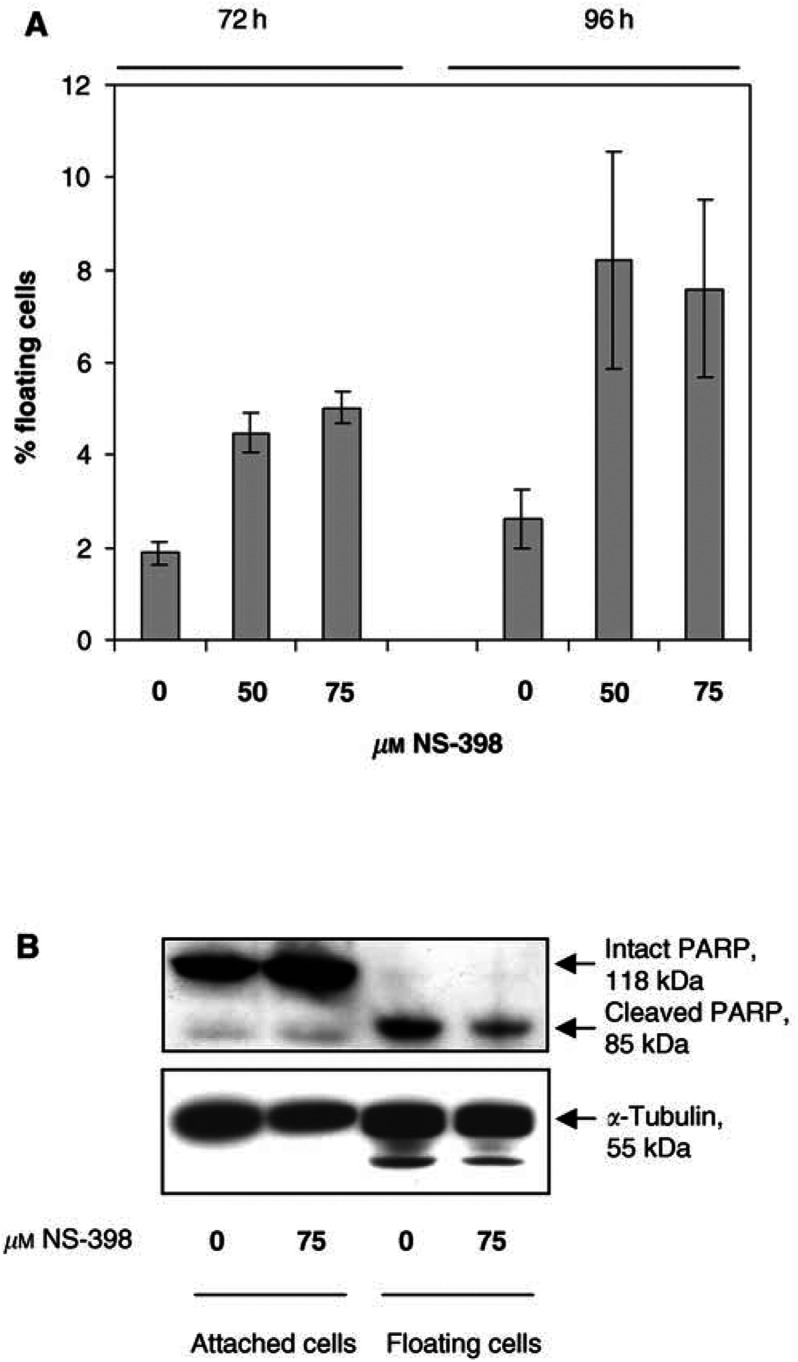
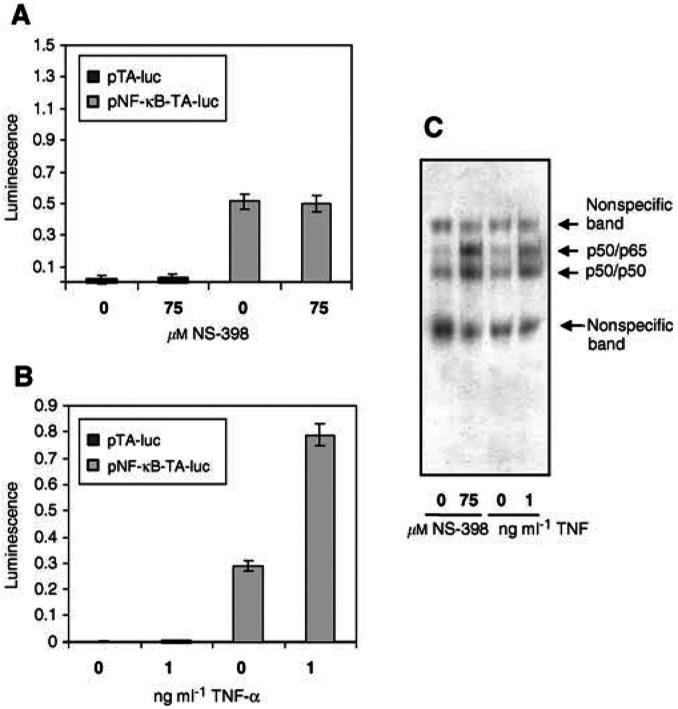
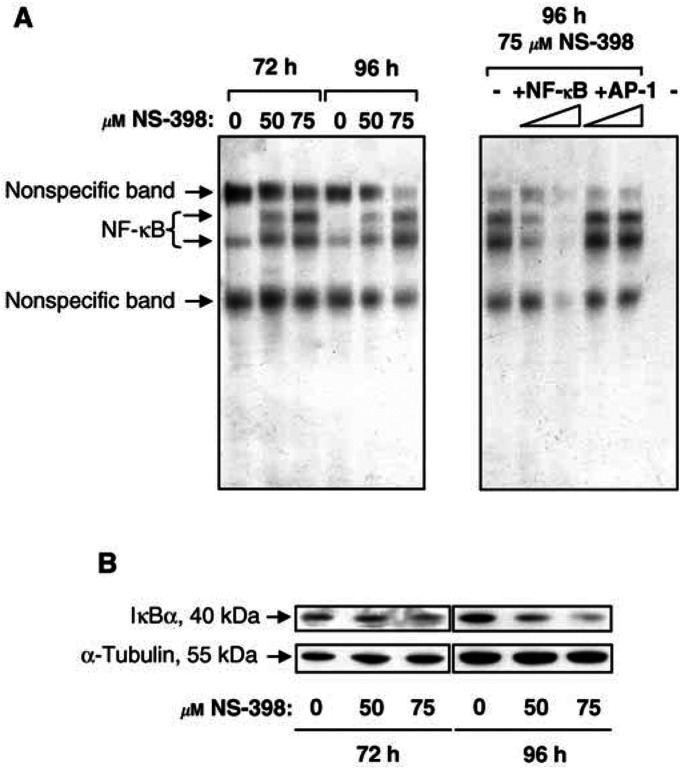
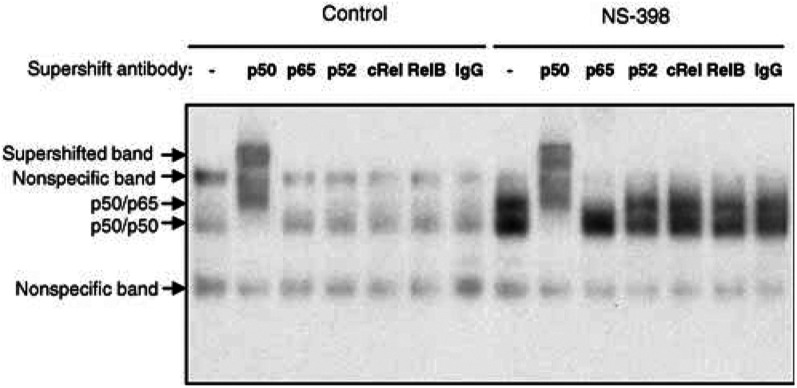
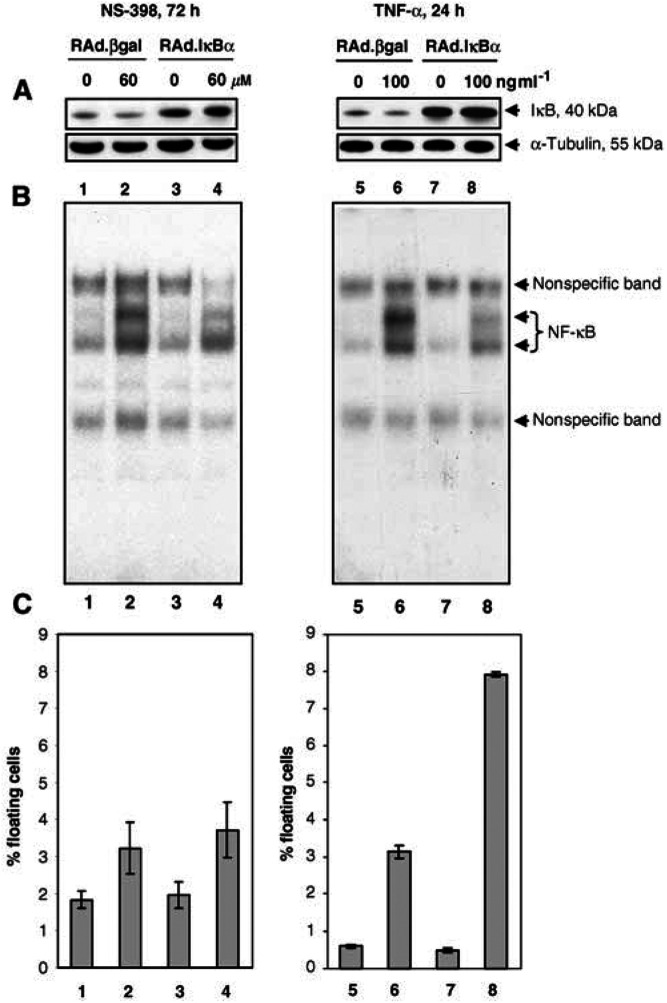
Nonsteroidal anti-inflammatory drugs (NSAIDs) inhibit colorectal neoplasia, an effect that is associated with their ability to induce apoptosis. Although NSAIDs have been reported to inhibit NF-kappaB, more recent studies show activation of NF-kappaB by NSAIDs. NF-kappaB commonly shows antiapoptotic activity and is implicated in the therapeutic resistance of cancer cells. The effects of highly COX-2-selective NSAIDs such as NS-398 on NF-kappaB in colorectal tumour cells have not been reported. Therefore, we addressed whether NF-kappaB has a role in NS-398-induced apoptosis of colorectal cancer cells. Treatment of HT-29 colorectal carcinoma cells with doses of NS-398 (50-75 microM) known to induce apoptosis had no effect on NF-kappaB for up to 48 h. However after 72 and 96 h NF-kappaB DNA-binding activity was increased by NS-398, in parallel with apoptosis induction. NS-398-treated HT-29 cells showed increased p50 homodimer binding and an induction of p50/p65 heterodimers, as demonstrated by supershift assay. However, although NS-398 increased NF-kappaB DNA binding it did not increase NF-kappaB-dependent reporter activity and inhibition of NF-kappaB DNA binding did not enhance NS-398-induced apoptosis. This indicates that NF-kappaB activated by NS-398 is transcriptionally inactive and is an encouraging result for the use of COX-2-selective NSAIDs not only in chemoprevention but also as novel therapies for colon cancer.
非甾体抗炎药(NSAIDs)可抑制结直肠肿瘤形成,这种作用与其诱导细胞凋亡的能力有关。尽管已有报道称NSAIDs可抑制核因子κB(NF-κB),但最近的研究表明NSAIDs可激活NF-κB。NF-κB通常表现出抗凋亡活性,并与癌细胞的治疗耐药性有关。高度选择性环氧化酶-2(COX-2)的NSAIDs如NS-398对结直肠肿瘤细胞中NF-κB的影响尚未见报道。因此,我们探讨了NF-κB在NS-398诱导的结直肠癌细胞凋亡中是否起作用。用已知可诱导凋亡的剂量(50-75微摩尔)的NS-398处理HT-29结直肠癌细胞,在长达48小时内对NF-κB没有影响。然而,在72小时和96小时后,NS-398增加了NF-κB的DNA结合活性,同时诱导了细胞凋亡。超迁移分析表明,NS-398处理的HT-29细胞显示p50同型二聚体结合增加以及p50/p65异型二聚体的诱导。然而,尽管NS-398增加了NF-κB的DNA结合,但它并没有增加NF-κB依赖性报告基因活性,并且抑制NF-κB的DNA结合并没有增强NS-398诱导的细胞凋亡。这表明NS-398激活的NF-κB在转录上是无活性的,这对于使用COX-2选择性NSAIDs不仅用于化学预防而且作为结肠癌的新疗法来说是一个令人鼓舞的结果。