Amedei Amedeo, Bergman Mathijs P, Appelmelk Ben J, Azzurri Annalisa, Benagiano Marisa, Tamburini Carlo, van der Zee Ruurd, Telford John L, Vandenbroucke-Grauls Christina M J E, D'Elios Mario M, Del Prete Gianfranco
Department of Internal Medicine, Viale Morgagni 85, 50134 Florence, Italy.
J Exp Med. 2003 Oct 20;198(8):1147-56. doi: 10.1084/jem.20030530.
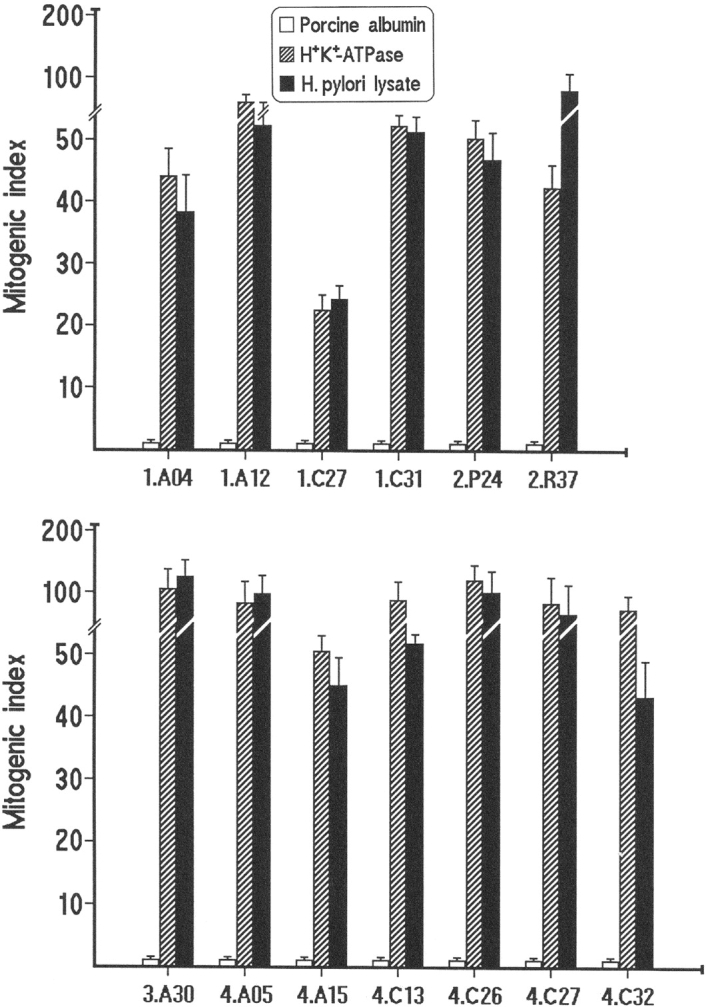
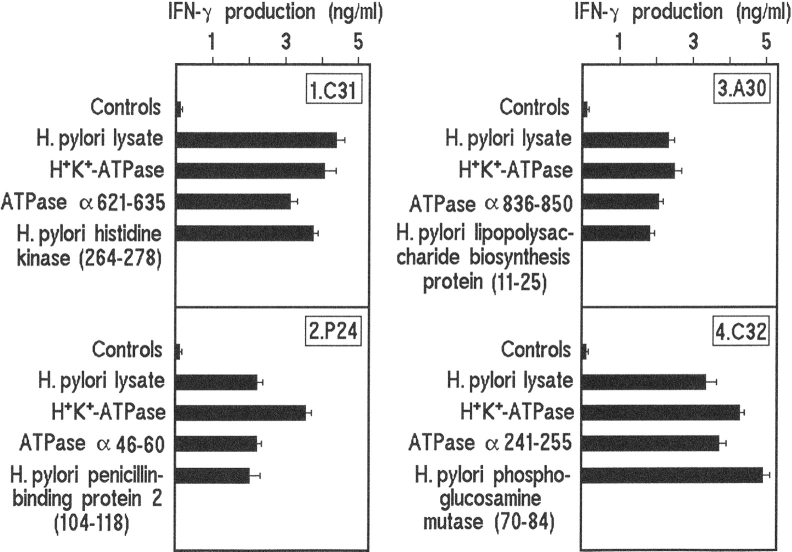
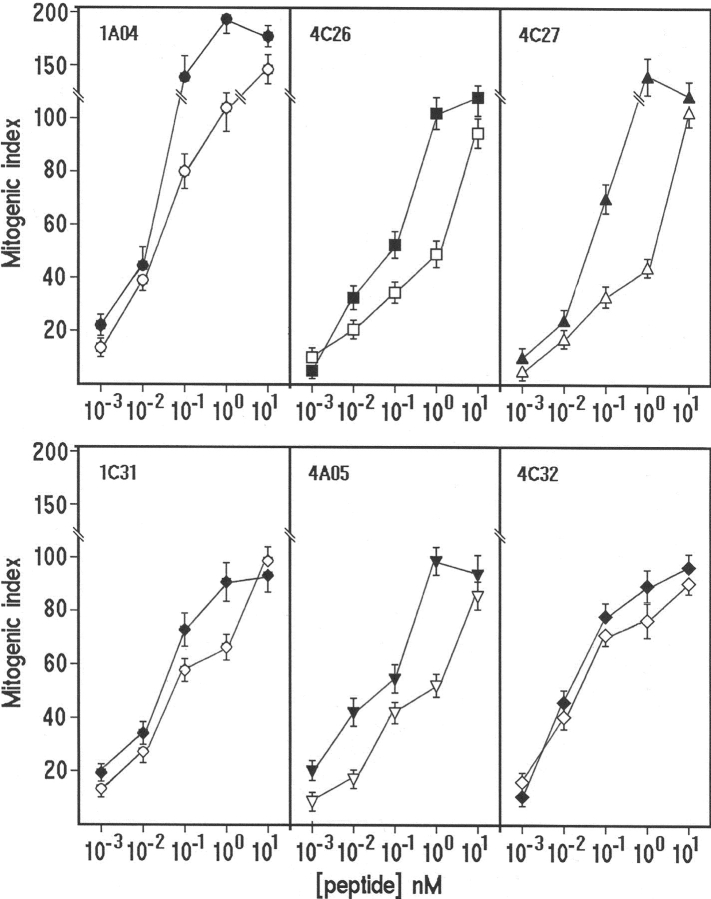
Autoimmune gastritis and Helicobacter pylori-associated gastric atrophy develop through similar mechanisms involving the proton pump H+,K+-adenosine triphosphatase as autoantigen. Here, we report that H. pylori-infected patients with gastric autoimmunity harbor in vivo-activated gastric CD4+ T cells that recognize both H+, K+-adenosine triphosphatase and H. pylori antigens. We characterized the submolecular specificity of such gastric T cells and identified cross-reactive epitopes from nine H. pylori proteins. Cross-reactive H. pylori peptides induced T cell proliferation and expression of T helper type 1 functions. We suggest that in genetically susceptible individuals, H. pylori infection can activate cross-reactive gastric T cells leading to gastric autoimmunity via molecular mimicry.
自身免疫性胃炎和幽门螺杆菌相关的胃萎缩通过涉及质子泵H⁺,K⁺ - 腺苷三磷酸酶作为自身抗原的相似机制发展而来。在此,我们报告幽门螺杆菌感染的胃自身免疫患者体内存在活化的胃CD4⁺ T细胞,这些细胞可识别H⁺,K⁺ - 腺苷三磷酸酶和幽门螺杆菌抗原。我们对这类胃T细胞的亚分子特异性进行了表征,并从九种幽门螺杆菌蛋白中鉴定出交叉反应性表位。交叉反应性幽门螺杆菌肽诱导T细胞增殖并表达1型辅助性T细胞功能。我们认为,在遗传易感个体中,幽门螺杆菌感染可通过分子模拟激活交叉反应性胃T细胞,从而导致胃自身免疫。