Krispel Claudia M, Chen Ching-Kang, Simon Melvin I, Burns Marie E
Center for Neuroscience, University of California, Davis, 1544 Newton Court, Davis, CA 95616, USA.
J Gen Physiol. 2003 Dec;122(6):703-12. doi: 10.1085/jgp.200308938. Epub 2003 Nov 10.
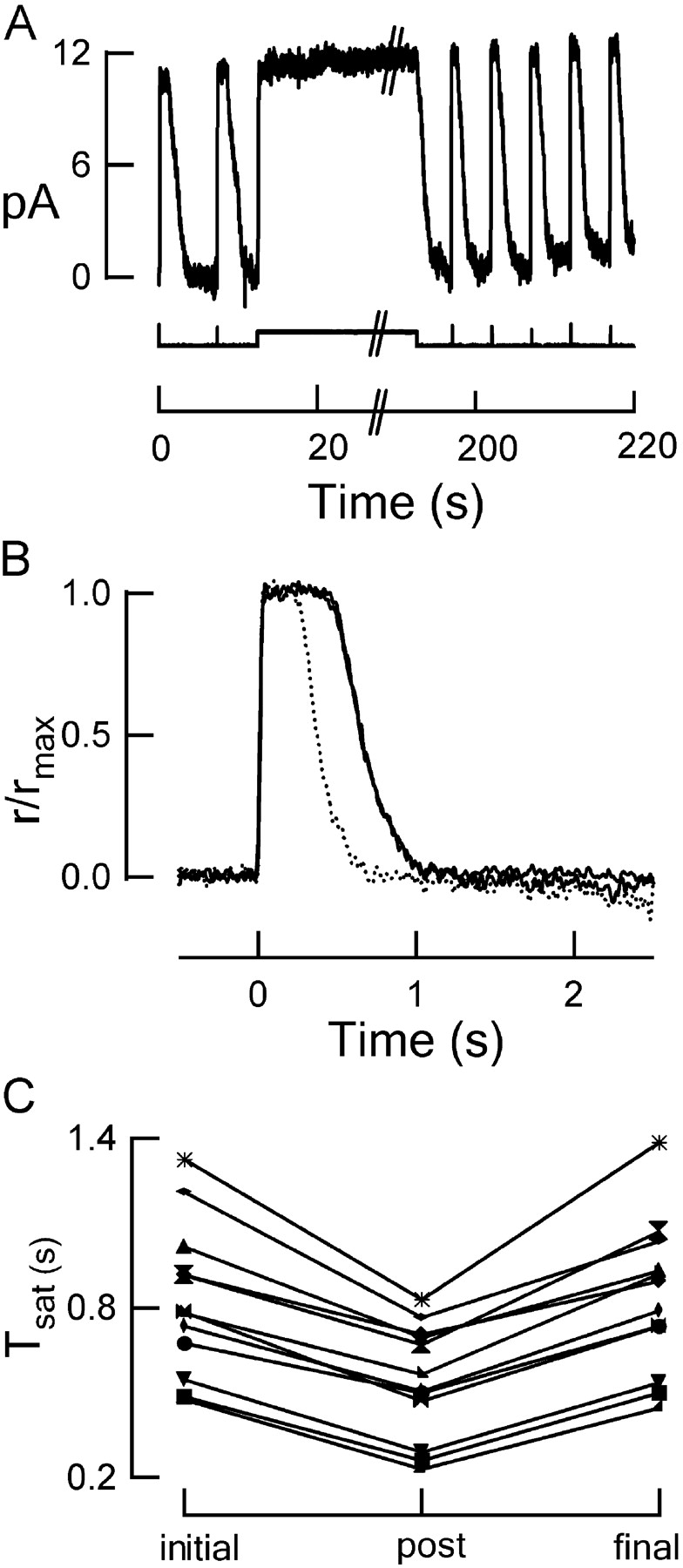
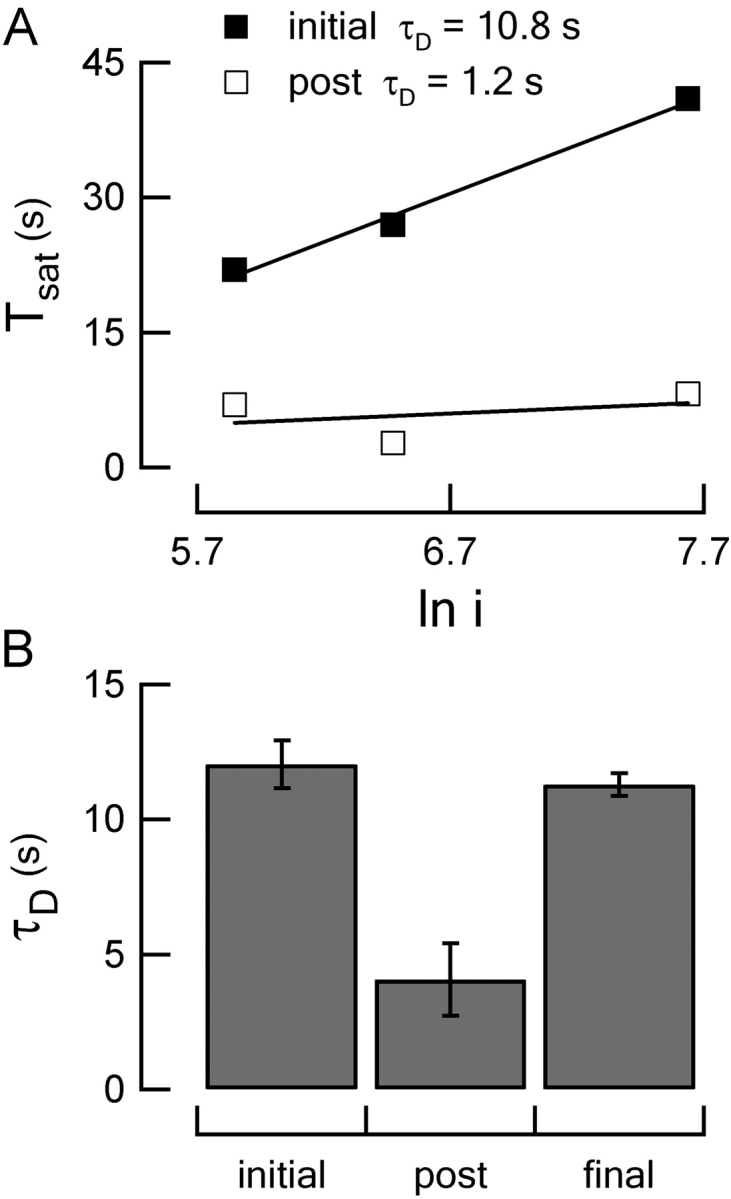
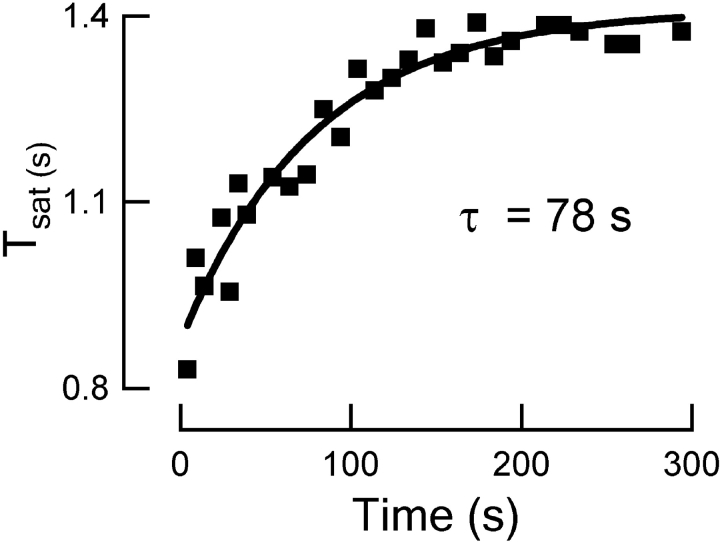
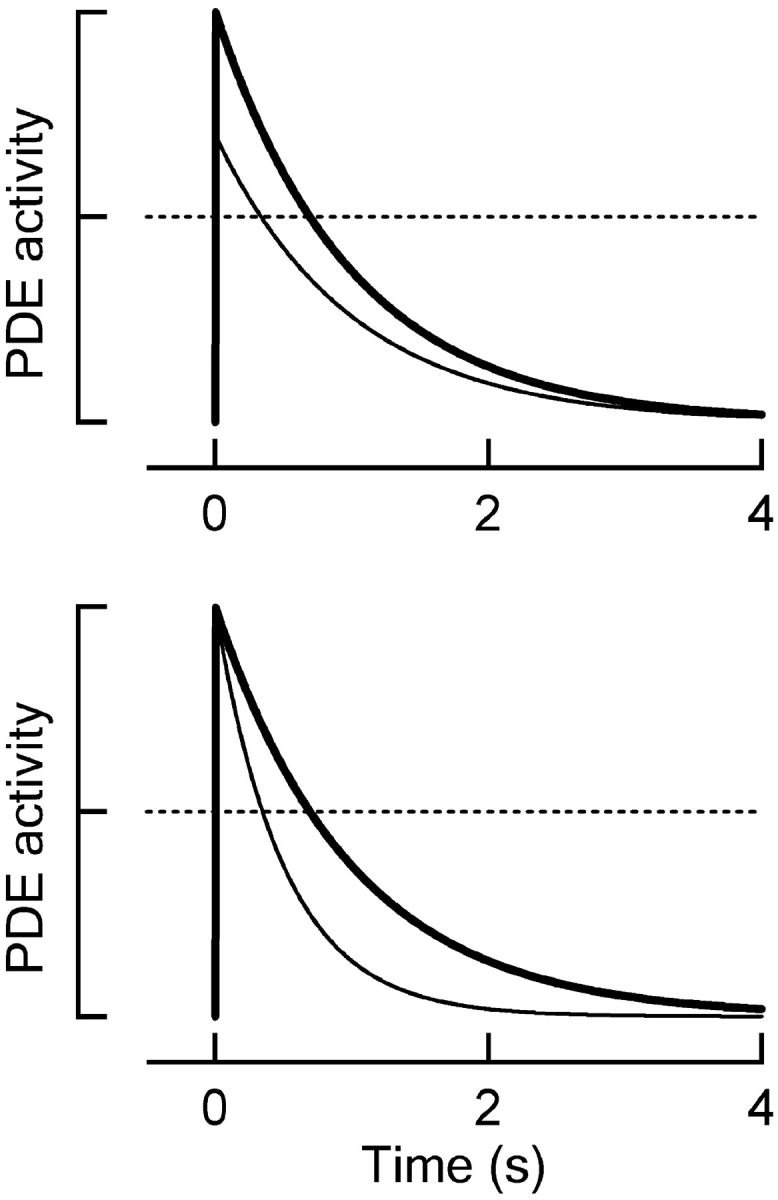
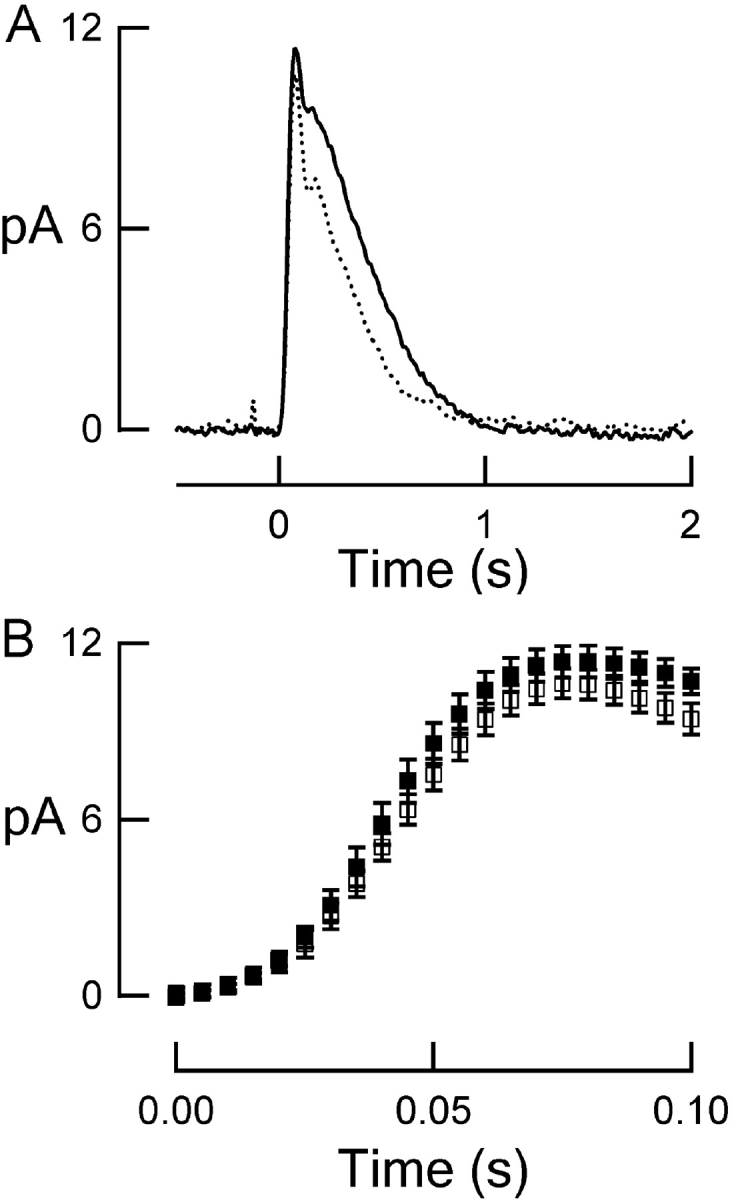
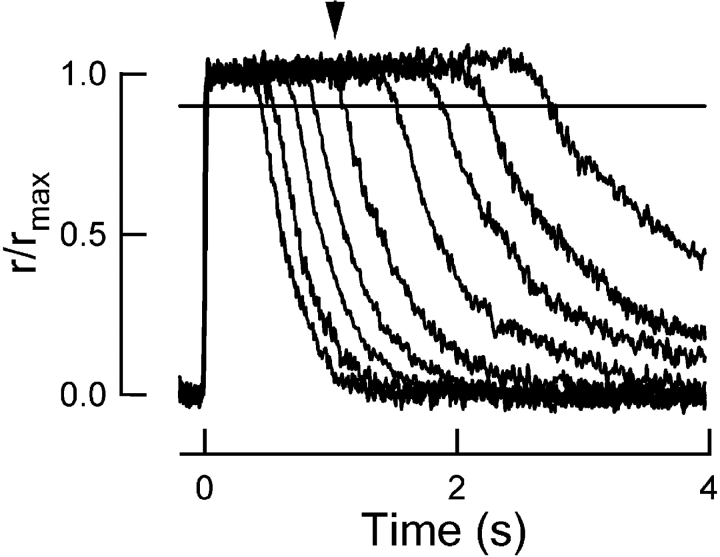
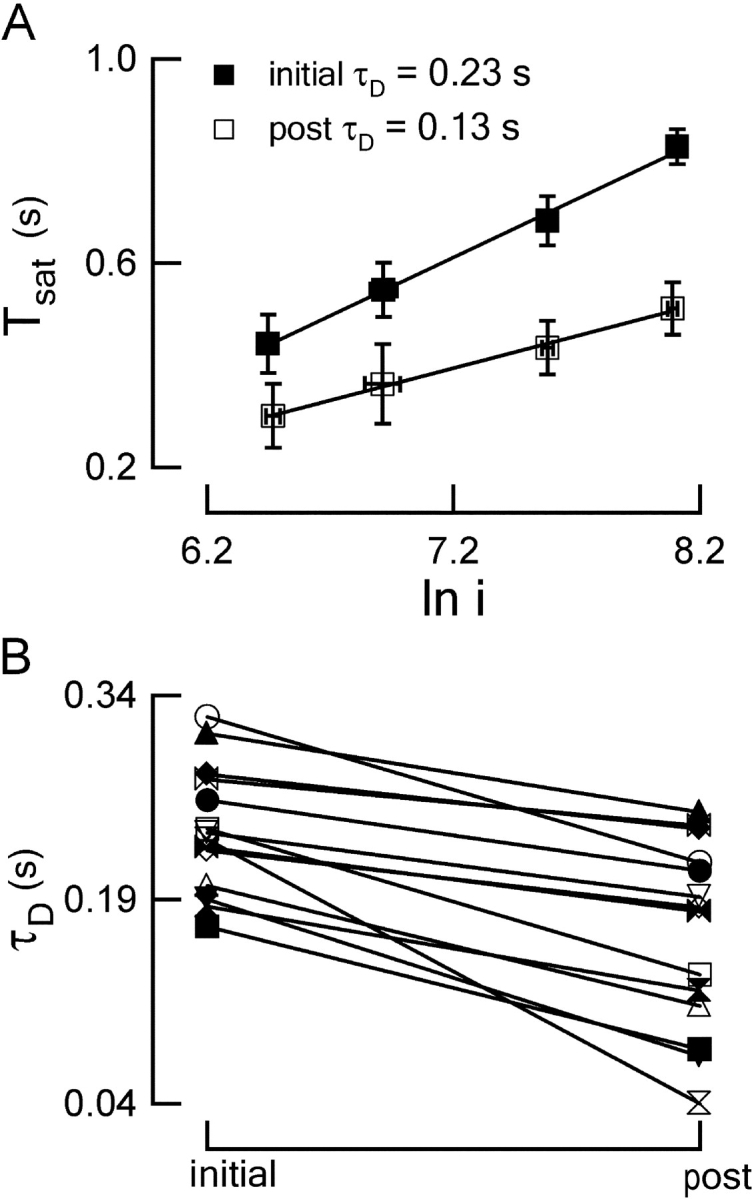
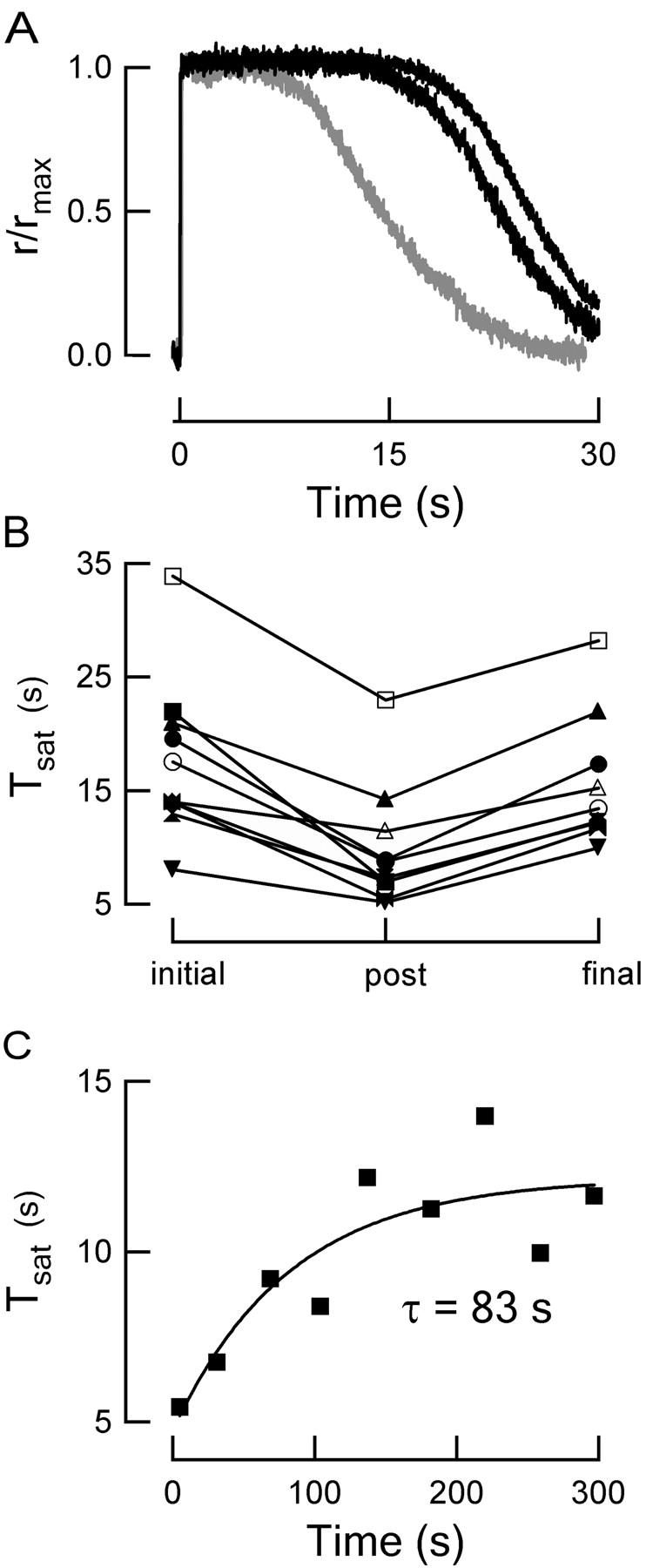
Photoreceptors of the retina adapt to ambient light in a manner that allows them to detect changes in illumination over an enormous range of intensities. We have discovered a novel form of adaptation in mouse rods that persists long after the light has been extinguished and the rod's circulating dark current has returned. Electrophysiological recordings from individual rods showed that the time that a bright flash response remained in saturation was significantly shorter if the rod had been previously exposed to bright light. This persistent adaptation did not decrease the rate of rise of the response and therefore cannot be attributed to a decrease in the gain of transduction. Instead, this adaptation was accompanied by a marked speeding of the recovery of the response, suggesting that the step that rate-limits recovery had been accelerated. Experiments on knockout rods in which the identity of the rate-limiting step is known suggest that this adaptive acceleration results from a speeding of G protein/effector deactivation.
视网膜的光感受器以一种能让它们在极大强度范围内检测光照变化的方式适应环境光。我们在小鼠视杆细胞中发现了一种新型适应形式,在光熄灭且视杆细胞循环暗电流恢复后仍会持续很长时间。对单个视杆细胞的电生理记录表明,如果视杆细胞先前暴露于强光下,明亮闪光反应保持饱和的时间会显著缩短。这种持续的适应并没有降低反应的上升速率,因此不能归因于转导增益的降低。相反,这种适应伴随着反应恢复的显著加速,这表明限制恢复速率的步骤已经加快。对已知限速步骤身份的基因敲除视杆细胞进行的实验表明,这种适应性加速是由G蛋白/效应器失活的加速导致的。