Oehler M K, Fischer D C, Orlowska-Volk M, Herrle F, Kieback D G, Rees M C P, Bicknell R
Molecular Angiogenesis Laboratory, Cancer Research UK, Weatherall Institute of Molecular Medicine, University of Oxford, Oxford OX3 9DS, UK.
Br J Cancer. 2003 Nov 17;89(10):1927-33. doi: 10.1038/sj.bjc.6601397.
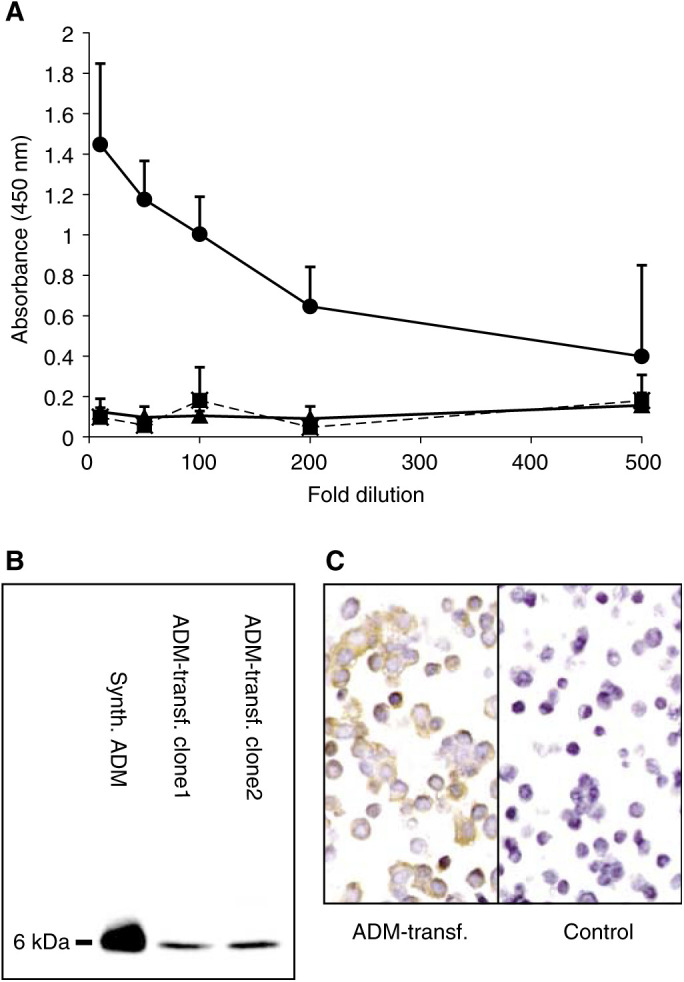
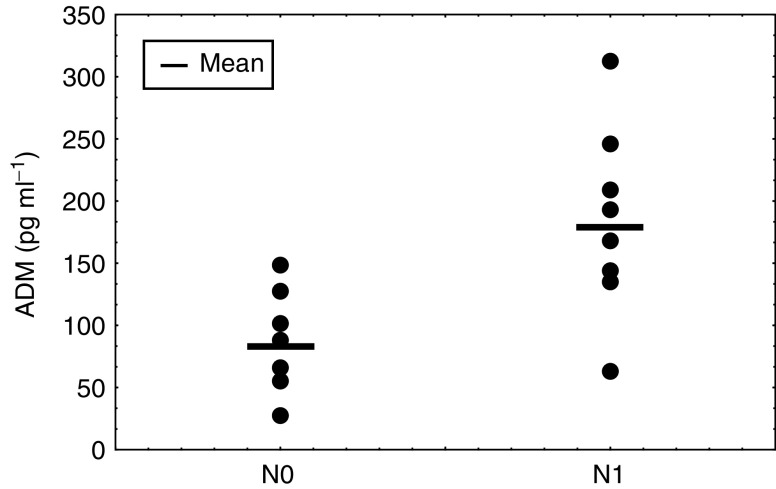
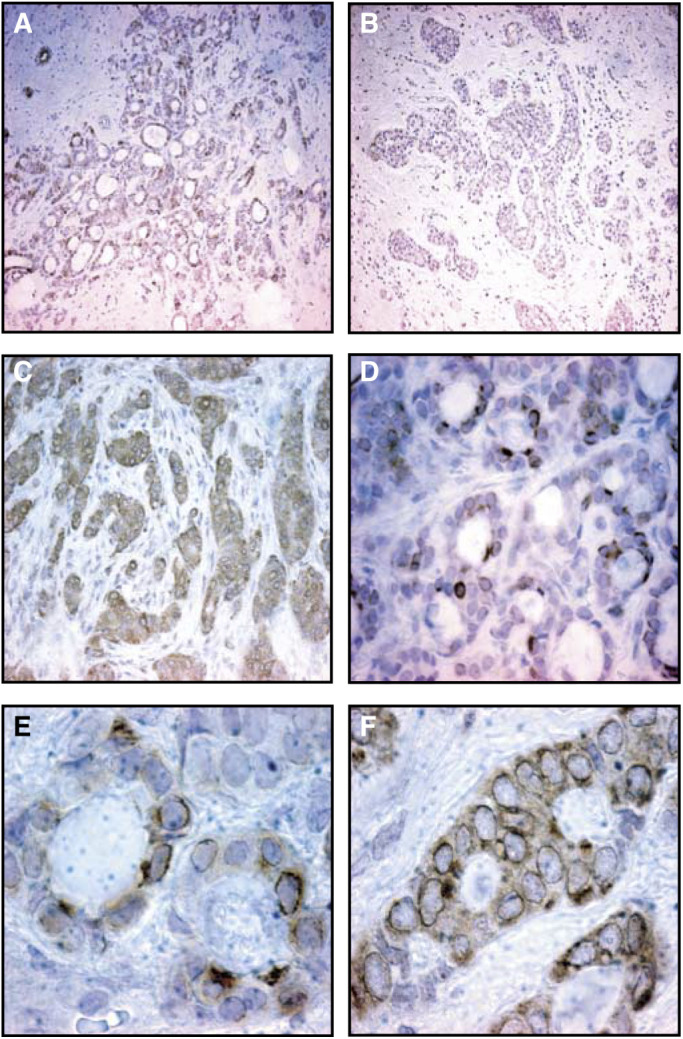
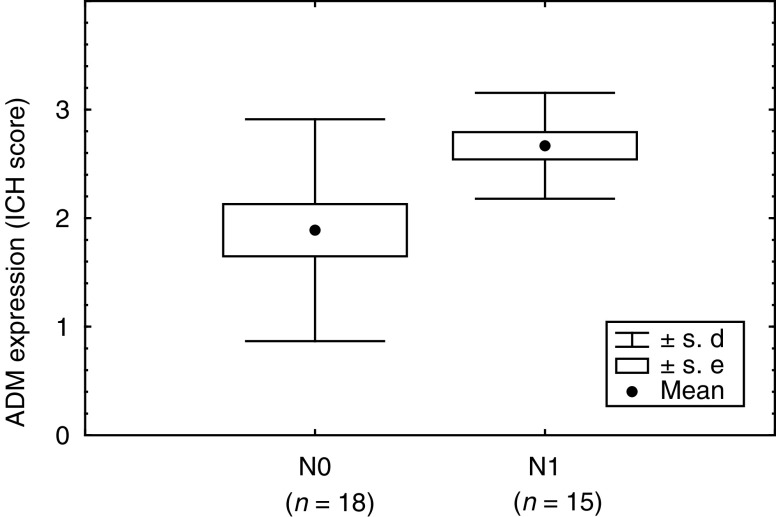
Adrenomedullin (ADM) is an angiogenic factor that has also been shown to be a mitogen and a hypoxia survival factor for tumour cells. These properties point to ADM as a potential promoter of human malignancies, but little data are available concerning the expression of ADM in human breast cancer. In the present work, we have examined ADM peptide expression in a series of malignant breast tumours by immunohistochemistry using a newly developed anti-ADM monoclonal antibody. In addition, ADM plasma concentrations in breast cancer patients and healthy controls were determined by radioimmunoassay. Of the examined breast cancer samples, 27/33 (82%) showed a moderate to strong staining intensity. ADM-peptide expression in breast tumours was significantly correlated with axillary lymph node metastasis (P=0.030). Analysis of ADM plasma concentrations showed no significant difference between the circulating ADM levels of breast cancer patients and healthy controls. However, a significant positive correlation was found between tumour size and plasma ADM levels (r=0.641, P=0.017). Moreover, ADM levels in breast cancer patients correlated with the presence of lymph node metastasis (P=0.002). In conclusion, we have shown for the first time that ADM peptide is widely expressed in breast cancer and that the degree of expression is associated with lymph node metastasis. ADM peptide in plasma of breast cancer patients reflects the size of the primary tumour, but is unlikely to be a useful tumour marker for the detection of breast cancer. Plasma ADM might represent an independent predictor of lymph node metastasis. The clinical implications of these findings remain to be evaluated.
肾上腺髓质素(ADM)是一种血管生成因子,也已被证明是肿瘤细胞的促有丝分裂原和缺氧存活因子。这些特性表明ADM可能是人类恶性肿瘤的潜在促进因子,但关于ADM在人类乳腺癌中的表达数据很少。在本研究中,我们使用新开发的抗ADM单克隆抗体,通过免疫组织化学检测了一系列恶性乳腺肿瘤中ADM肽的表达。此外,通过放射免疫测定法测定了乳腺癌患者和健康对照者血浆中的ADM浓度。在所检测的乳腺癌样本中,27/33(82%)显示出中度至强染色强度。乳腺肿瘤中ADM肽的表达与腋窝淋巴结转移显著相关(P=0.030)。对ADM血浆浓度的分析表明,乳腺癌患者和健康对照者的循环ADM水平之间没有显著差异。然而,发现肿瘤大小与血浆ADM水平之间存在显著正相关(r=0.641,P=0.017)。此外,乳腺癌患者的ADM水平与淋巴结转移的存在相关(P=0.002)。总之,我们首次表明ADM肽在乳腺癌中广泛表达,且表达程度与淋巴结转移相关。乳腺癌患者血浆中的ADM肽反映了原发性肿瘤的大小,但不太可能成为检测乳腺癌的有用肿瘤标志物。血浆ADM可能代表淋巴结转移的独立预测指标。这些发现的临床意义仍有待评估。