
在猕猴中使用小分子CCR5抑制剂治疗猿猴免疫缺陷病毒感染或预防猿猴-人类免疫缺陷病毒感染。
Use of a small molecule CCR5 inhibitor in macaques to treat simian immunodeficiency virus infection or prevent simian-human immunodeficiency virus infection.
作者信息
Veazey Ronald S, Klasse Per Johan, Ketas Thomas J, Reeves Jacqueline D, Piatak Michael, Kunstman Kevin, Kuhmann Shawn E, Marx Preston A, Lifson Jeffrey D, Dufour Jason, Mefford Megan, Pandrea Ivona, Wolinsky Steven M, Doms Robert W, DeMartino Julie A, Siciliano Salvatore J, Lyons Kathy, Springer Martin S, Moore John P
机构信息
Joan and Sanford I. Weill Medical College of Cornell University, Dept. of Microbiology and Immunology, 1300 York Ave., W-805, New York, NY 10021, USA.
出版信息
J Exp Med. 2003 Nov 17;198(10):1551-62. doi: 10.1084/jem.20031266.
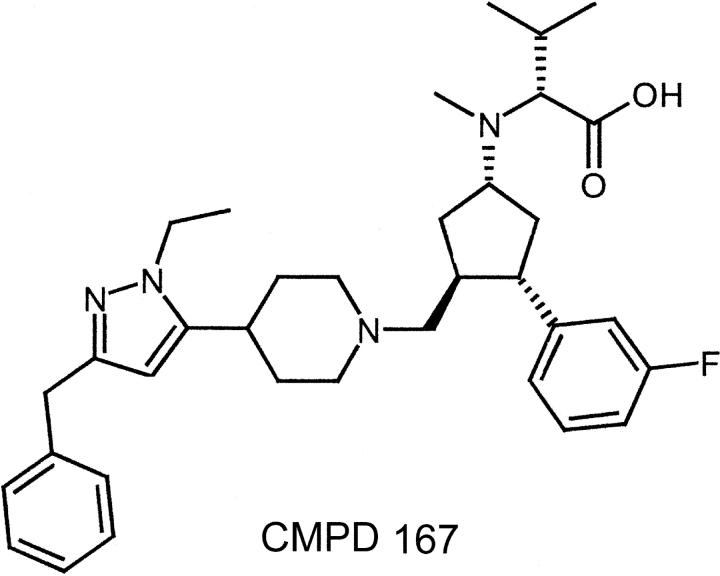
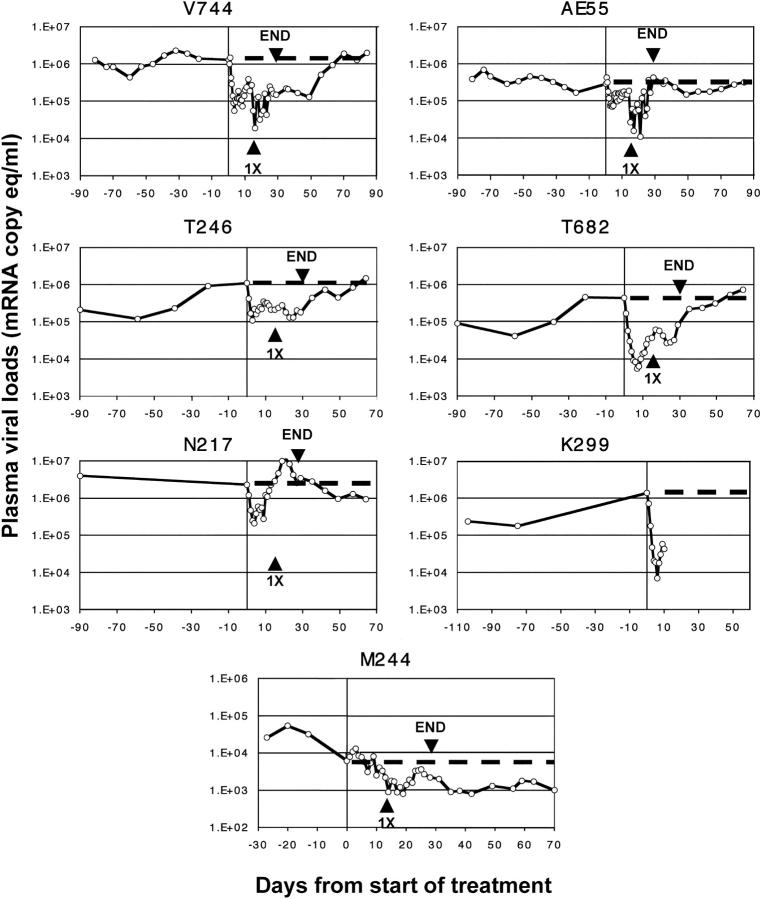
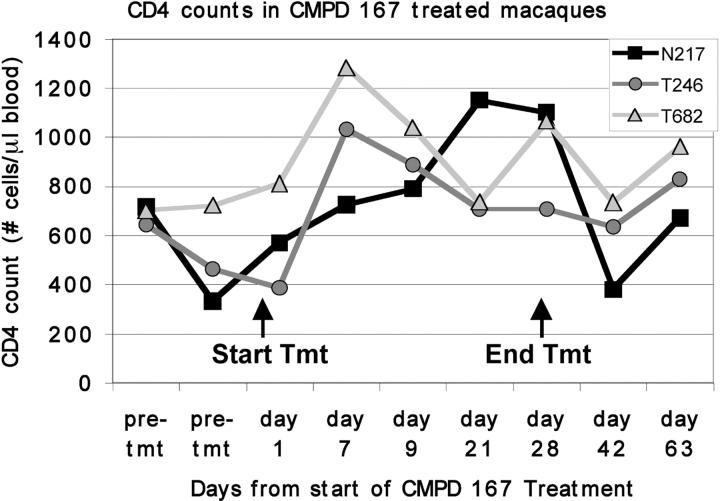
Human immunodeficiency virus type 1 (HIV-1) fuses with cells after sequential interactions between its envelope glycoproteins, CD4 and a coreceptor, usually CC chemokine receptor 5 (CCR5) or CXC receptor 4 (CXCR4). CMPD 167 is a CCR5-specific small molecule with potent antiviral activity in vitro. We show that CMPD 167 caused a rapid and substantial (4-200-fold) decrease in plasma viremia in six rhesus macaques chronically infected with simian immunodeficiency virus (SIV) strains SIVmac251 or SIVB670, but not in an animal infected with the X4 simian-human immunodeficiency virus (SHIV), SHIV-89.6P. In three of the SIV-infected animals, viremia reduction was sustained. In one, there was a rapid, but partial, rebound and in another, there was a rapid and complete rebound. There was a substantial delay (>21 d) between the end of therapy and the onset of full viremia rebound in two animals. We also evaluated whether vaginal administration of gel-formulated CMPD 167 could prevent vaginal transmission of the R5 virus, SHIV-162P4. Complete protection occurred in only 2 of 11 animals, but early viral replication was significantly less in the 11 CMPD 167-recipients than in 9 controls receiving carrier gel. These findings support the development of small molecule CCR5 inhibitors as antiviral therapies, and possibly as components of a topical microbicide to prevent HIV-1 sexual transmission.
1型人类免疫缺陷病毒(HIV-1)的包膜糖蛋白与细胞表面的CD4及共受体(通常为CC趋化因子受体5(CCR5)或CXC趋化因子受体4(CXCR4))依次相互作用后,HIV-1便可与细胞发生融合。CMPD 167是一种对CCR5具有特异性的小分子化合物,在体外具有强大的抗病毒活性。我们发现,CMPD 167可使6只长期感染猿猴免疫缺陷病毒(SIV)毒株SIVmac251或SIVB670的恒河猴的血浆病毒血症迅速大幅降低(降低4至200倍),但对感染X4型猿猴-人类免疫缺陷病毒(SHIV)SHIV-89.6P的动物则无此效果。在3只感染SIV的动物中,病毒血症的降低得以持续。在1只动物中,病毒血症迅速出现部分反弹;在另1只动物中,病毒血症迅速完全反弹。在2只动物中,治疗结束至病毒血症完全反弹之间出现了显著延迟(>21天)。我们还评估了阴道给予凝胶剂型的CMPD 167是否能够预防R5病毒SHIV-162P4的阴道传播。在11只动物中,只有2只得到了完全保护,但在接受CMPD 167的11只动物中,早期病毒复制明显少于接受载体凝胶的9只对照动物。这些发现支持将小分子CCR5抑制剂开发为抗病毒疗法,并可能作为局部杀菌剂的成分用于预防HIV-1的性传播。

 Zotero 插件