Ostermeyer Anne G, Ramcharan Lynne T, Zeng Youchun, Lublin Douglas M, Brown Deborah A
Department of Biochemistry and Cell Biology, State University of New York at Stony Brook, Stony Brook, NY 11794-5215, USA.
J Cell Biol. 2004 Jan 5;164(1):69-78. doi: 10.1083/jcb.200303037.
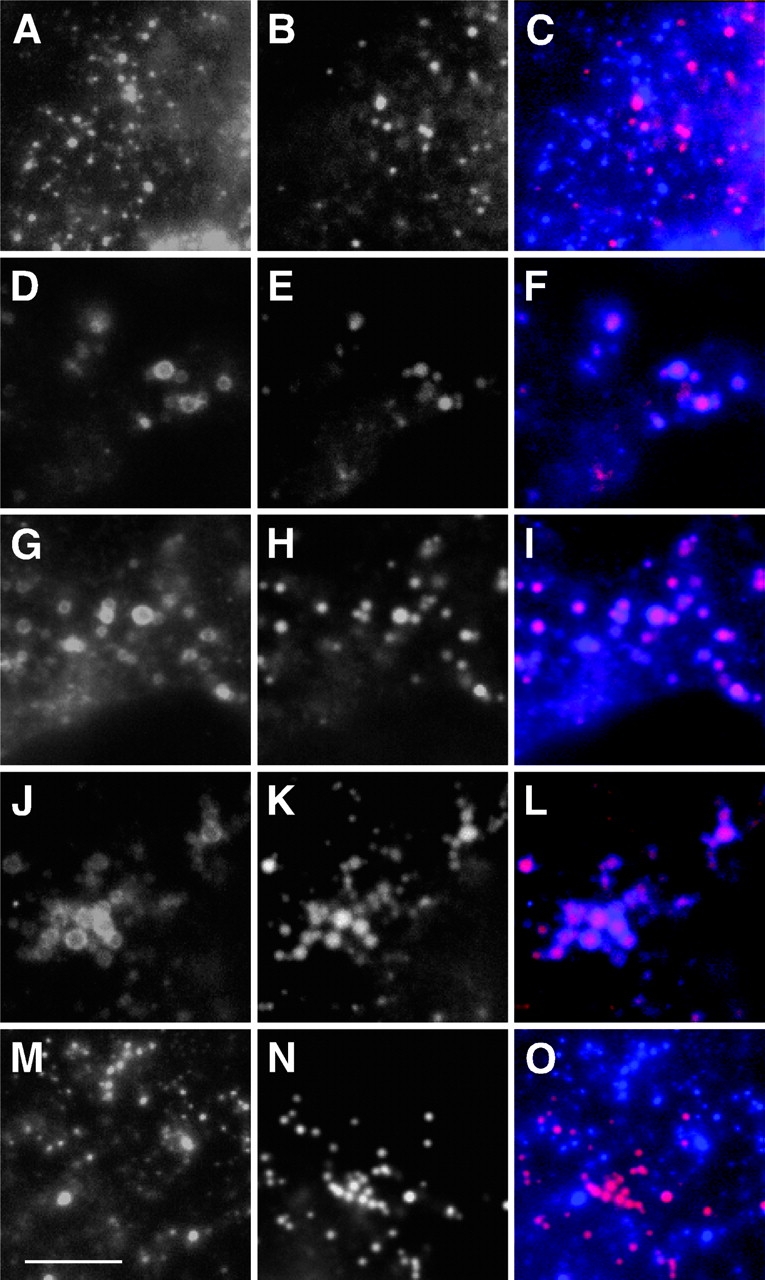
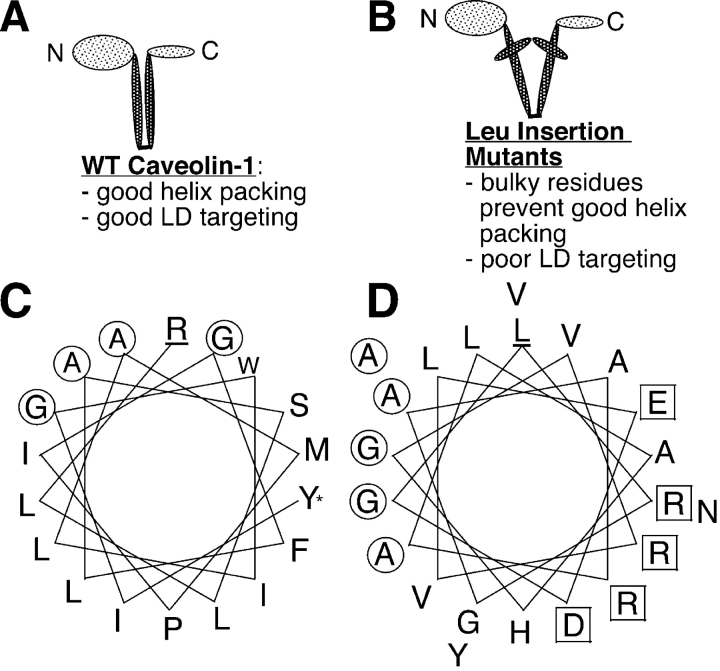
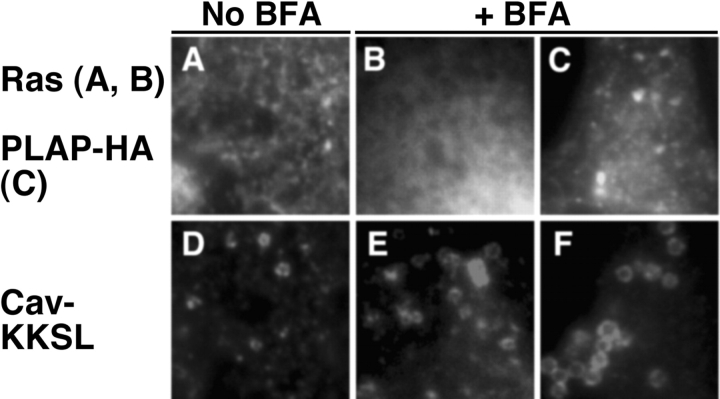
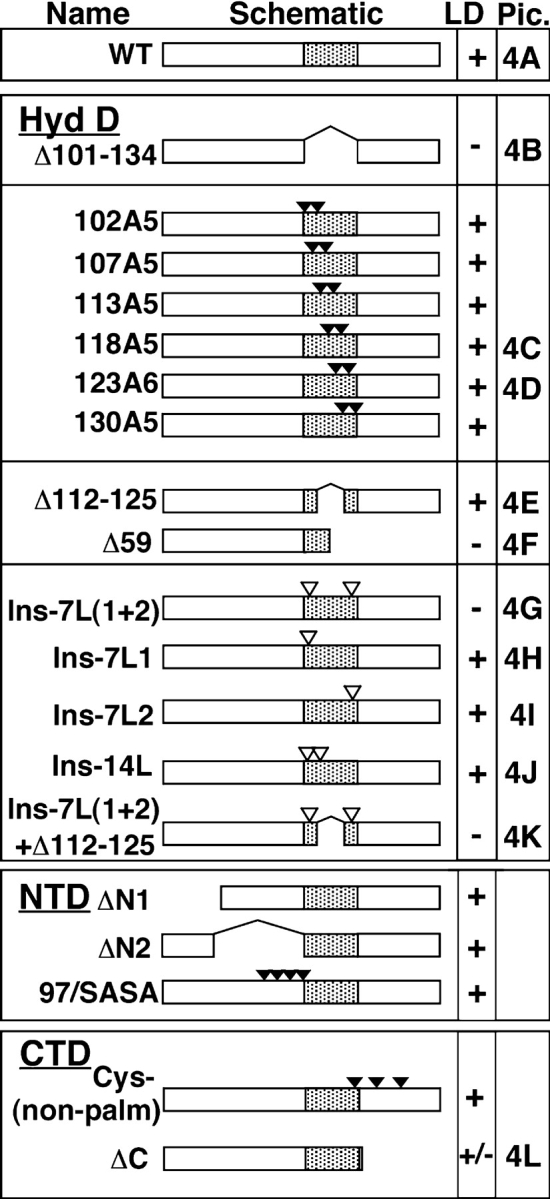
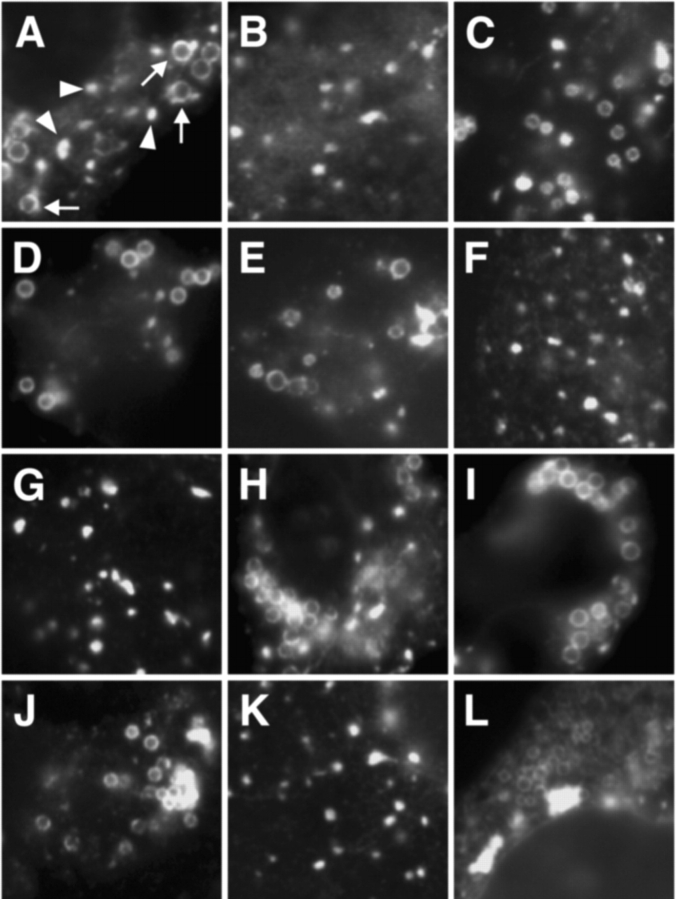
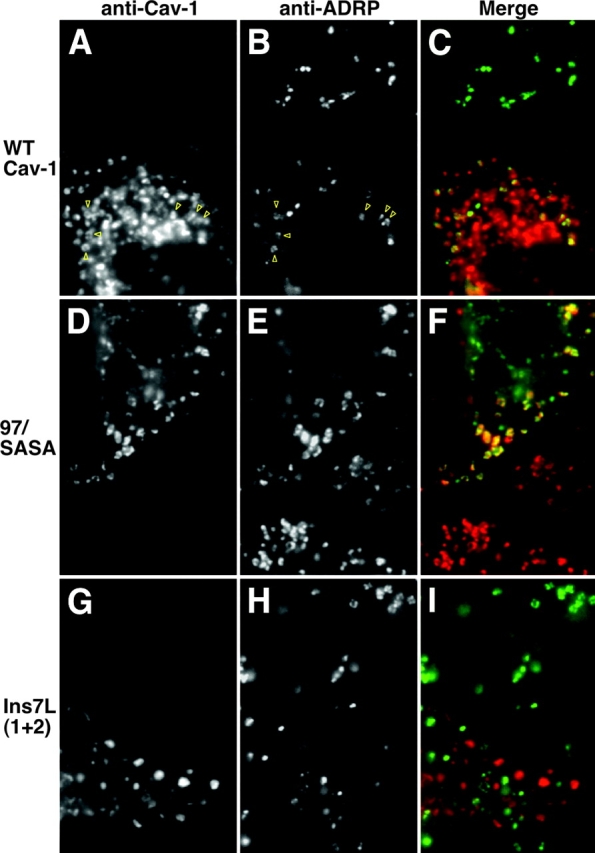
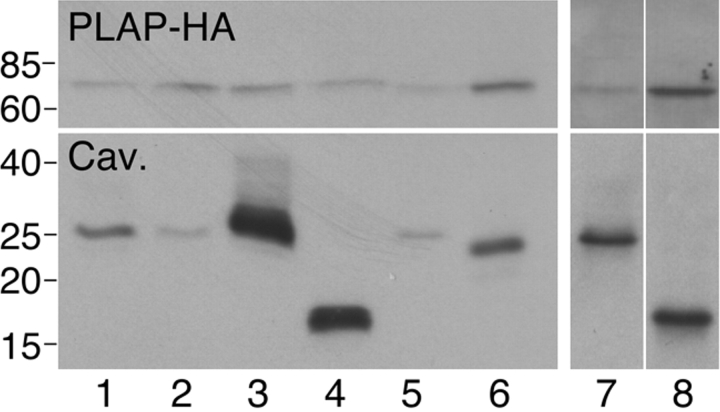
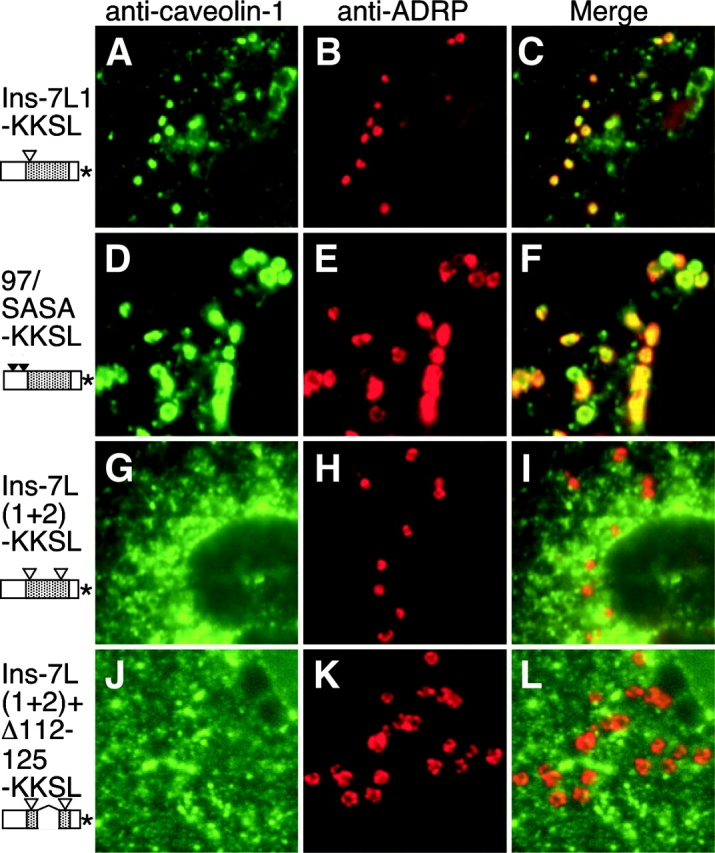
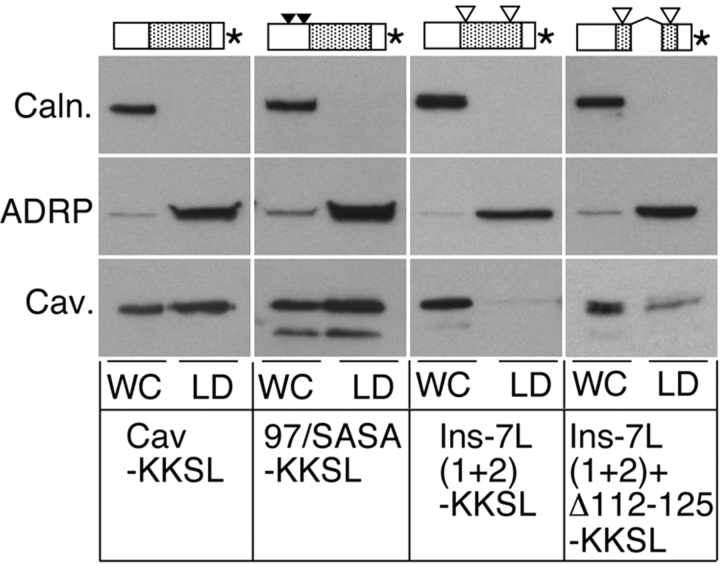
Although caveolins normally reside in caveolae, they can accumulate on the surface of cytoplasmic lipid droplets (LDs). Here, we first provided support for our model that overaccumulation of caveolins in the endoplasmic reticulum (ER) diverts the proteins to nascent LDs budding from the ER. Next, we found that a mutant H-Ras, present on the cytoplasmic surface of the ER but lacking a hydrophobic peptide domain, did not accumulate on LDs. We used the fact that wild-type caveolin-1 accumulates in LDs after brefeldin A treatment or when linked to an ER retrieval motif to search for mutants defective in LD targeting. The hydrophobic domain, but no specific sequence therein, was required for LD targeting of caveolin-1. Certain Leu insertions blocked LD targeting, independently of hydrophobic domain length, but dependent on their position in the domain. We propose that proper packing of putative hydrophobic helices may be required for LD targeting of caveolin-1.
虽然小窝蛋白通常存在于小窝中,但它们可以在内质网(ER)衍生的细胞质脂滴(LDs)表面聚集。在此,我们首先为我们的模型提供了支持,即小窝蛋白在内质网中的过度积累会将这些蛋白质转移到从内质网出芽的新生脂滴上。接下来,我们发现存在于内质网细胞质表面但缺乏疏水肽结构域的突变型H-Ras不会在内质网上积累。我们利用野生型小窝蛋白-1在布雷菲德菌素A处理后或与内质网回收基序连接时会在内质网上积累这一事实,来寻找在内质网靶向中存在缺陷的突变体。小窝蛋白-1的内质网靶向需要疏水结构域,但其中没有特定序列。某些亮氨酸插入会阻断内质网靶向,这与疏水结构域长度无关,但取决于它们在结构域中的位置。我们提出,小窝蛋白-1的内质网靶向可能需要假定的疏水螺旋的正确堆积。