
逆转录病毒限制基因Fv1氨基末端结构域与鼠白血病病毒衣壳蛋白的一致性结构模型。
Consensus structural models for the amino terminal domain of the retrovirus restriction gene Fv1 and the murine leukaemia virus capsid proteins.
作者信息
Taylor William R, Stoye Jonathan P
机构信息
Division of Mathematical Biology, National Institute for Medical Research, The Ridgeway, Mill Hill, London NW7 1AA, UK.
出版信息
BMC Struct Biol. 2004 Jan 12;4:1. doi: 10.1186/1472-6807-4-1.
BACKGROUND
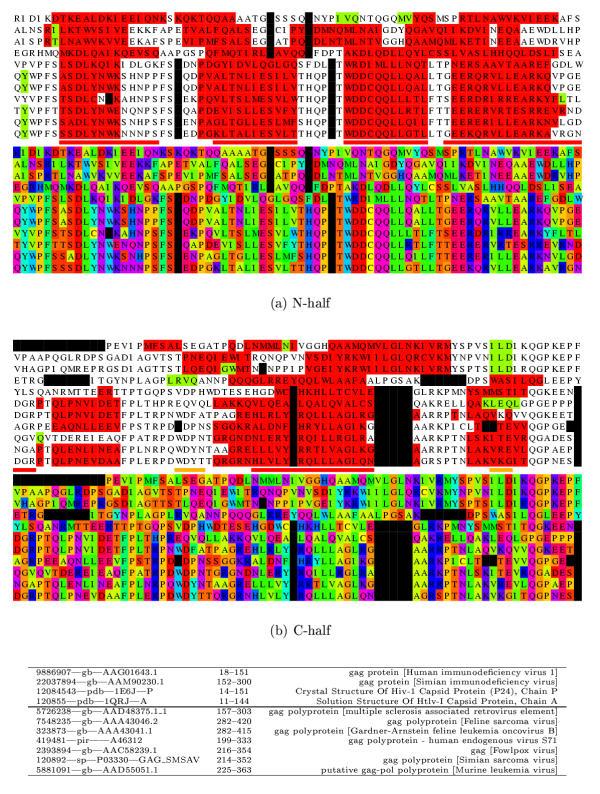
The mouse Fv1 (friend virus) susceptibility gene inhibits the development of the murine leukaemia virus (MLV) by interacting with its capsid (CA) protein. As no structures are available for these proteins we have constructed molecular models based on distant sequence similarity to other retroviral capsid proteins.
RESULTS
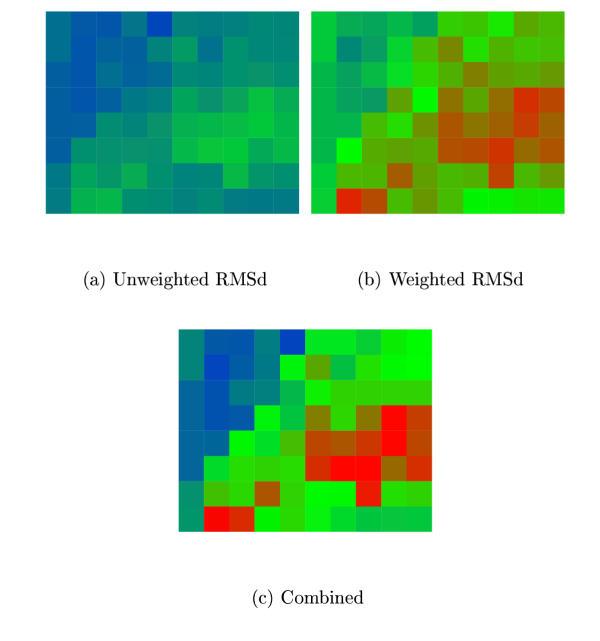
Molecular models were constructed for the amino terminal domains of the probable capsid-like structure for the mouse Fv1 gene product and the capsid protein of the MLV. The models were based on sequence alignments with a variety of other retrovirus capsid proteins. As the sequence similarity of these proteins with MLV and especially Fv1 is very distant, a threading method was employed that incorporates predicted secondary structure and multiple sequence information. The resulting models were compared with equivalent models constructed using the sequences of the capsid proteins of known structure.
CONCLUSIONS
These comparisons suggested that the MLV model should be accurate in the core but with significant uncertainty in the loop regions. The Fv1 model may have some additional errors in the core packing of its helices but the resulting model gave some support to the hypothesis that it adopts a capsid-like structure.
背景
小鼠Fv1(Friend病毒)易感基因通过与鼠白血病病毒(MLV)的衣壳(CA)蛋白相互作用来抑制其发展。由于这些蛋白质没有可用的结构,我们基于与其他逆转录病毒衣壳蛋白的远缘序列相似性构建了分子模型。
结果
为小鼠Fv1基因产物可能的衣壳样结构的氨基末端结构域和MLV的衣壳蛋白构建了分子模型。这些模型基于与多种其他逆转录病毒衣壳蛋白的序列比对。由于这些蛋白质与MLV尤其是Fv1的序列相似性非常远,因此采用了一种结合预测二级结构和多序列信息的穿线法。将所得模型与使用已知结构的衣壳蛋白序列构建的等效模型进行比较。
结论
这些比较表明,MLV模型在核心部分应该是准确的,但在环区存在显著的不确定性。Fv1模型在其螺旋的核心堆积中可能存在一些额外的误差,但所得模型为其采用衣壳样结构的假设提供了一些支持。



 Zotero 插件