Orban P C, Chui D, Marth J D
Biomedical Research Centre, University of British Columbia, Vancouver, Canada.
Proc Natl Acad Sci U S A. 1992 Aug 1;89(15):6861-5. doi: 10.1073/pnas.89.15.6861.
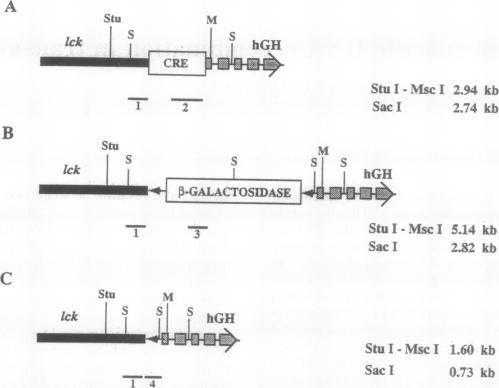
We have developed a method of specifically modifying the mammalian genome in vivo. This procedure comprises heritable tissue-specific and site-specific DNA recombination as a function of recombinase expression in transgenic mice. Transgenes encoding the bacteriophage P1 Cre recombinase and the loxP-flanked beta-galactosidase gene were used to generate transgenic mice. Genomic DNA from doubly transgenic mice exhibited tissue-specific DNA recombination as a result of Cre expression. Further characterization revealed that this process was highly efficient at distinct chromosomal integration sites. These studies also imply that Cre-mediated recombination provides a heritable marker for mitoses following the loss of Cre expression. This transgene-recombination system permits unique approaches to in vivo studies of gene function within experimentally defined spatial and temporal boundaries.
我们已经开发出一种在体内特异性修饰哺乳动物基因组的方法。该程序包括作为转基因小鼠中重组酶表达功能的可遗传组织特异性和位点特异性DNA重组。编码噬菌体P1 Cre重组酶和loxP侧翼β-半乳糖苷酶基因的转基因用于生成转基因小鼠。由于Cre表达,双转基因小鼠的基因组DNA表现出组织特异性DNA重组。进一步的表征表明,该过程在不同的染色体整合位点非常高效。这些研究还表明,Cre介导的重组为Cre表达缺失后的有丝分裂提供了一个可遗传的标记。这种转基因重组系统允许在实验确定的空间和时间界限内对基因功能进行体内研究的独特方法。