Preisinger Christian, Short Benjamin, De Corte Veerle, Bruyneel Erik, Haas Alexander, Kopajtich Robert, Gettemans Jan, Barr Francis A
Max-Planck-Institute of Biochemistry, Am Klopferspitz 18, Martinsried, 82152 Germany.
J Cell Biol. 2004 Mar 29;164(7):1009-20. doi: 10.1083/jcb.200310061. Epub 2004 Mar 22.
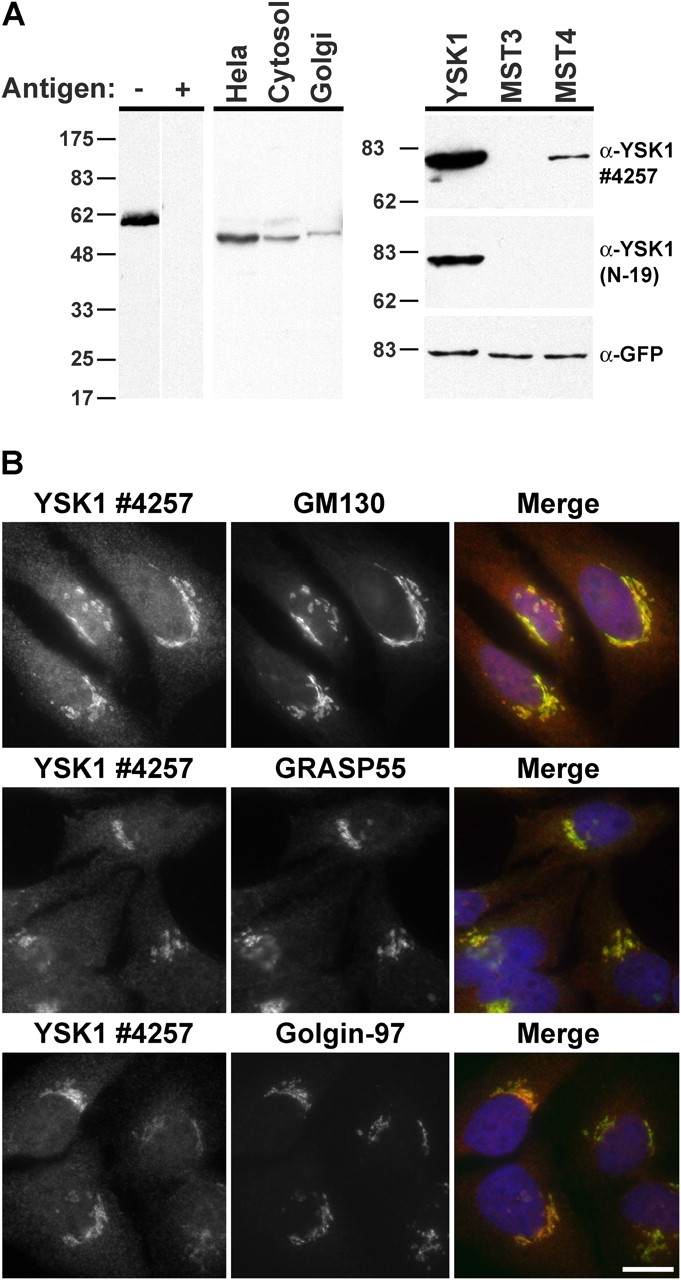
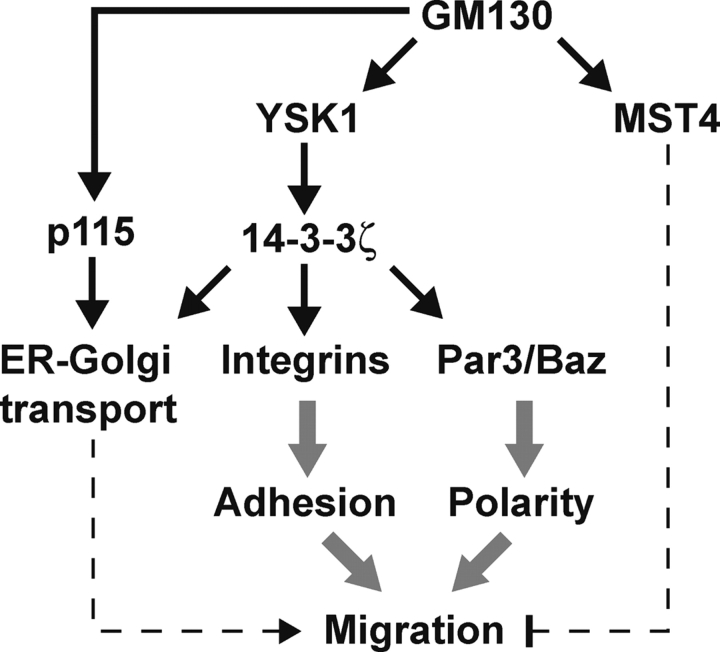
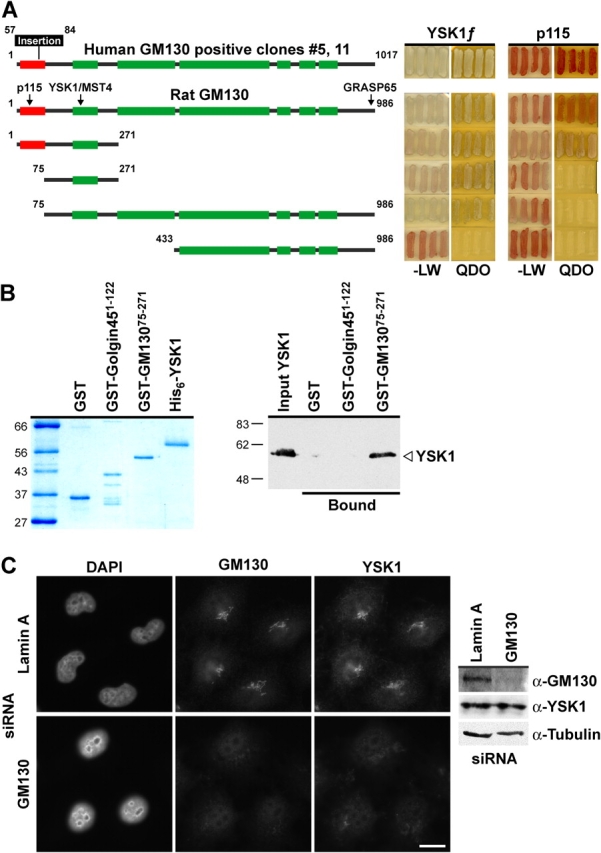
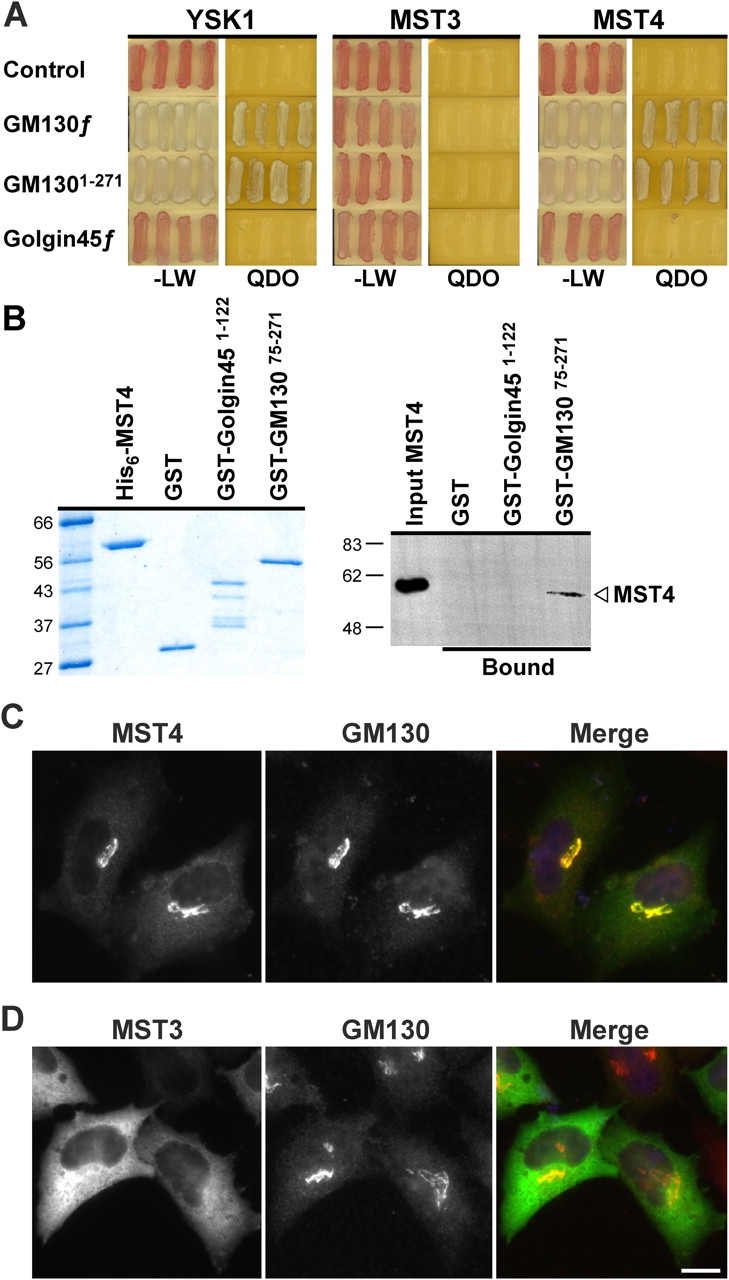
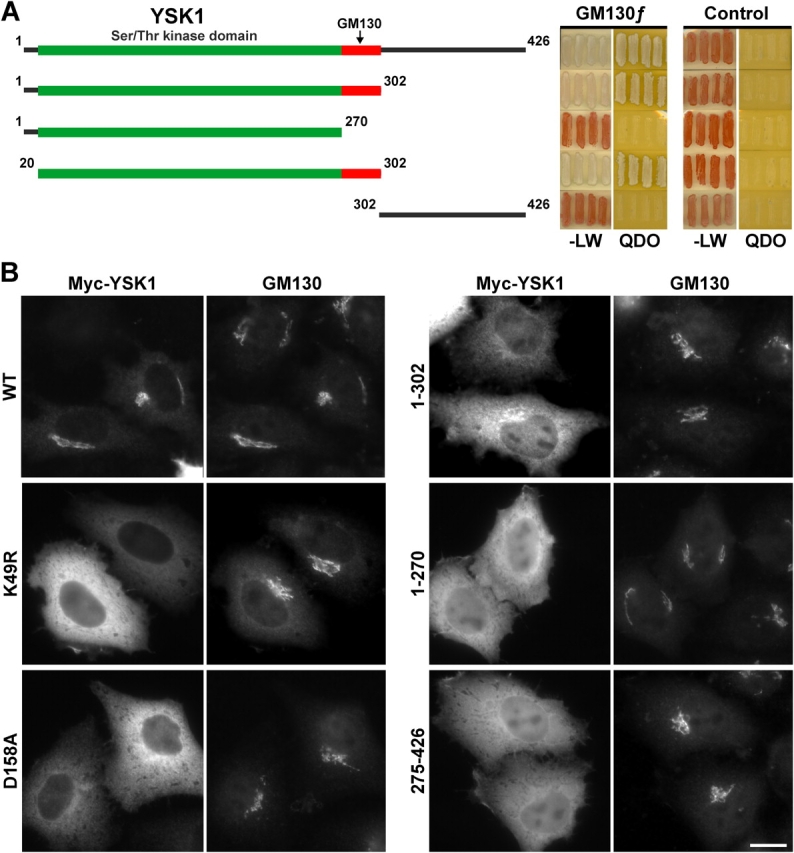
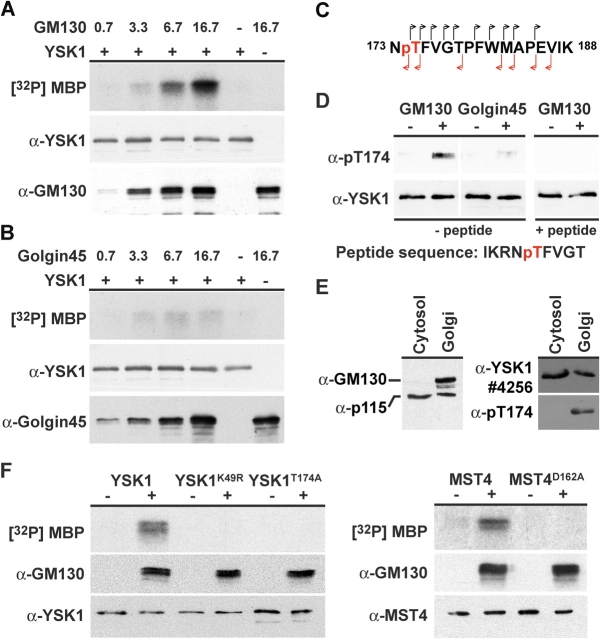
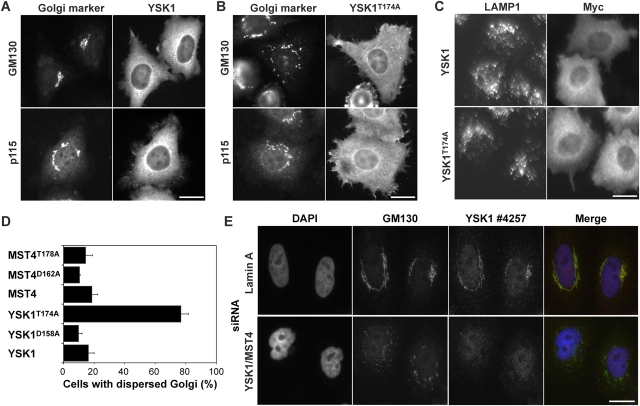
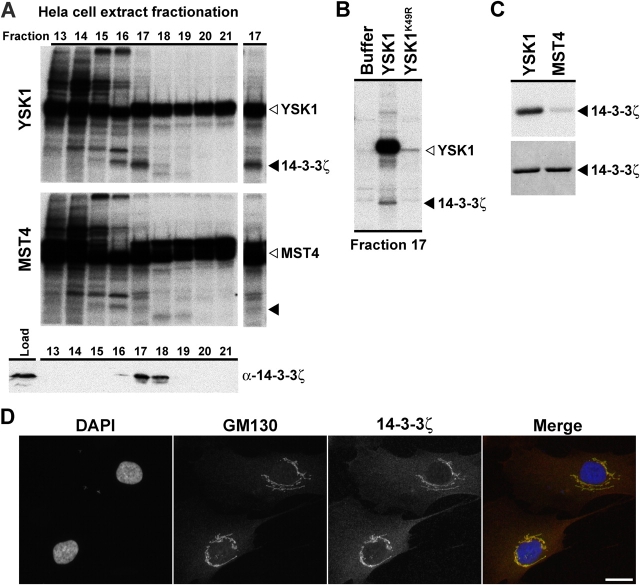
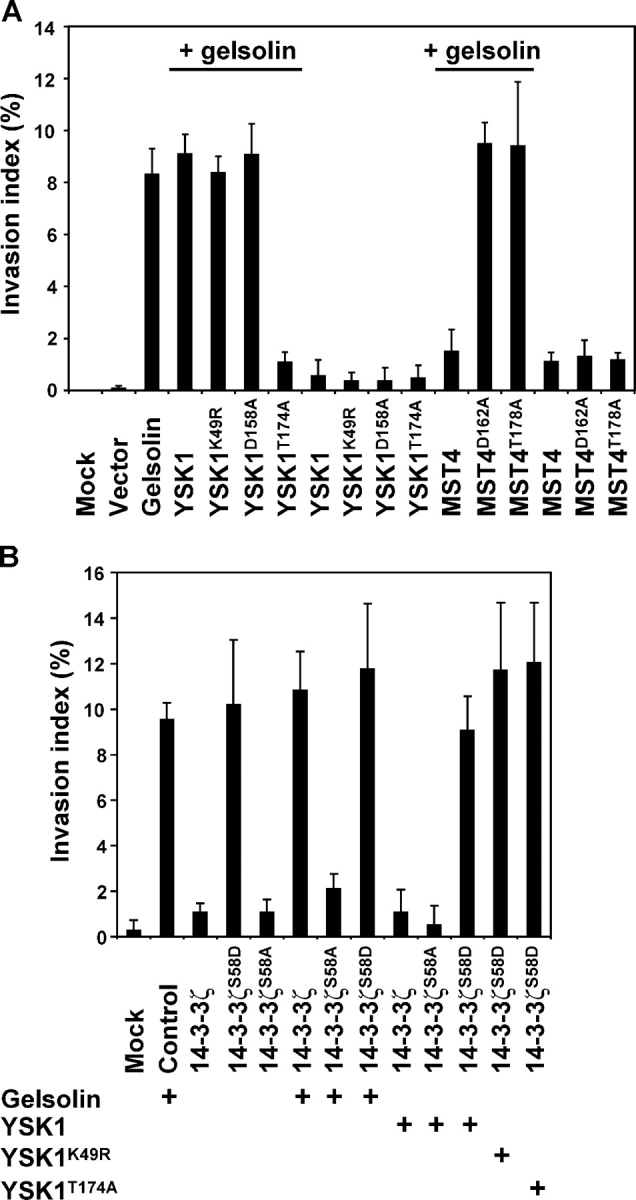
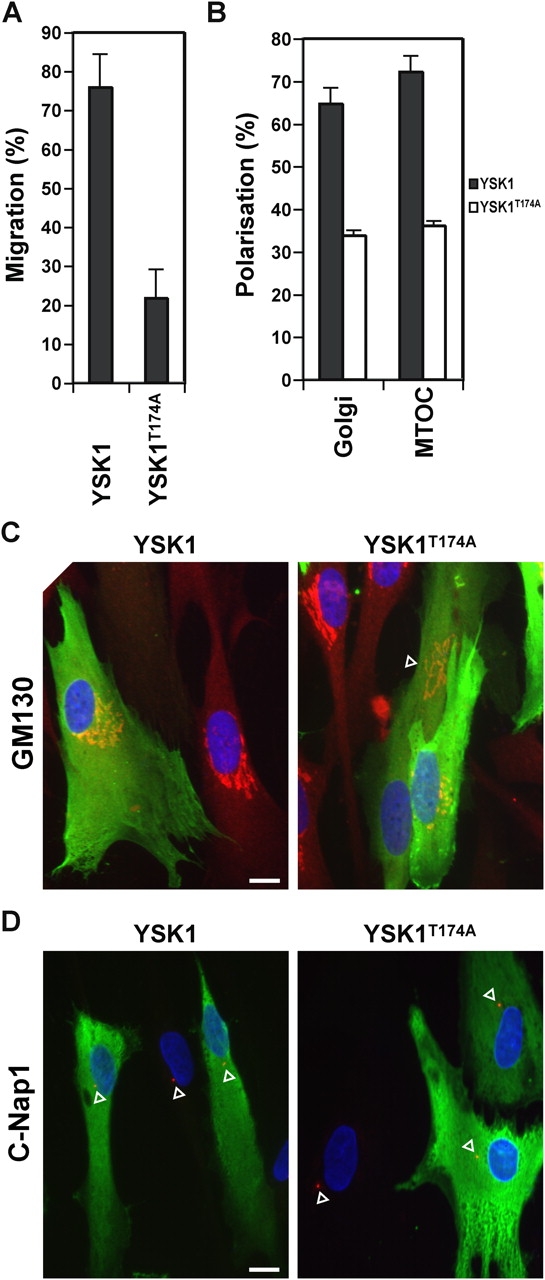
The Golgi apparatus has long been suggested to be important for directing secretion to specific sites on the plasma membrane in response to extracellular signaling events. However, the mechanisms by which signaling events are coordinated with Golgi apparatus function remain poorly understood. Here, we identify a scaffolding function for the Golgi matrix protein GM130 that sheds light on how such signaling events may be regulated. We show that the mammalian Ste20 kinases YSK1 and MST4 target to the Golgi apparatus via the Golgi matrix protein GM130. In addition, GM130 binding activates these kinases by promoting autophosphorylation of a conserved threonine within the T-loop. Interference with YSK1 function perturbs perinuclear Golgi organization, cell migration, and invasion into type I collagen. A biochemical screen identifies 14-3-3zeta as a specific substrate for YSK1 that localizes to the Golgi apparatus, and potentially links YSK1 signaling at the Golgi apparatus with protein transport events, cell adhesion, and polarity complexes important for cell migration.
长期以来,人们一直认为高尔基体对于响应细胞外信号事件将分泌物导向质膜上的特定位点很重要。然而,信号事件与高尔基体功能如何协调的机制仍知之甚少。在这里,我们确定了高尔基体基质蛋白GM130的支架功能,这为这类信号事件如何受到调控提供了线索。我们发现,哺乳动物的Ste20激酶YSK1和MST4通过高尔基体基质蛋白GM130靶向高尔基体。此外,GM130结合通过促进T环内保守苏氨酸的自磷酸化来激活这些激酶。干扰YSK1功能会扰乱核周高尔基体组织、细胞迁移以及对I型胶原的侵袭。一项生化筛选确定14-3-3ζ是YSK1定位于高尔基体的一种特异性底物,并可能将高尔基体处的YSK1信号与蛋白质转运事件、细胞黏附以及对细胞迁移很重要的极性复合体联系起来。