Klett Eric L, Lu Kangmo, Kosters Astrid, Vink Edwin, Lee Mi-Hye, Altenburg Michael, Shefer Sarah, Batta Ashok K, Yu Hongwei, Chen Jianliang, Klein Richard, Looije Norbert, Oude-Elferink Ronald, Groen Albert K, Maeda Nobuyo, Salen Gerald, Patel Shailendra B
Division of Endocrinology, Diabetes and Medical Genetics, Medical University of South Carolina, Charleston, SC 29403, USA.
BMC Med. 2004 Mar 24;2:5. doi: 10.1186/1741-7015-2-5.
Mutations in either of two genes comprising the STSL locus, ATP-binding cassette (ABC)-transporters ABCG5 (encoding sterolin-1) and ABCG8 (encoding sterolin-2), result in sitosterolemia, a rare autosomal recessive disorder of sterol trafficking characterized by increased plasma plant sterol levels. Based upon the genetics of sitosterolemia, ABCG5/sterolin-1 and ABCG8/sterolin-2 are hypothesized to function as obligate heterodimers. No phenotypic difference has yet been described in humans with complete defects in either ABCG5 or ABCG8. These proteins, based upon the defects in humans, are responsible for regulating dietary sterol entry and biliary sterol secretion.
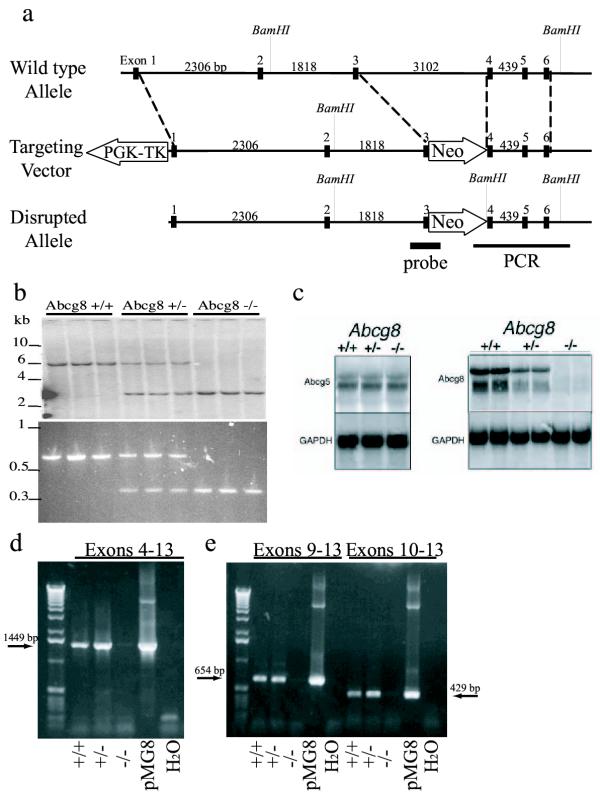
In order to mimic the human disease, we created, by a targeted disruption, a mouse model of sitosterolemia resulting in Abcg8/sterolin-2 deficiency alone. Homozygous knockout mice are viable and exhibit sitosterolemia.
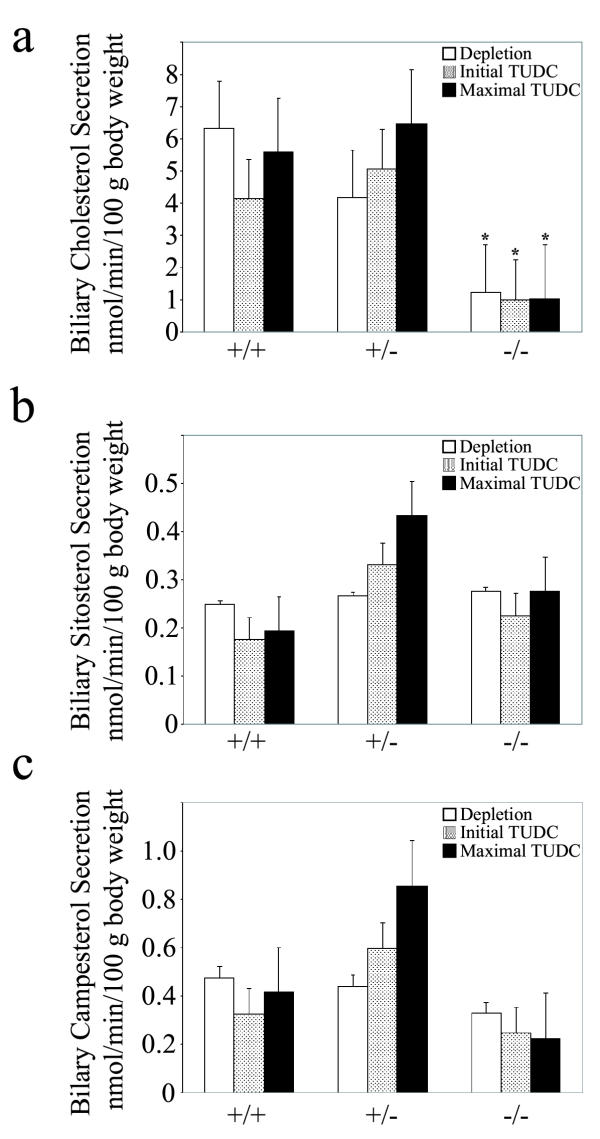
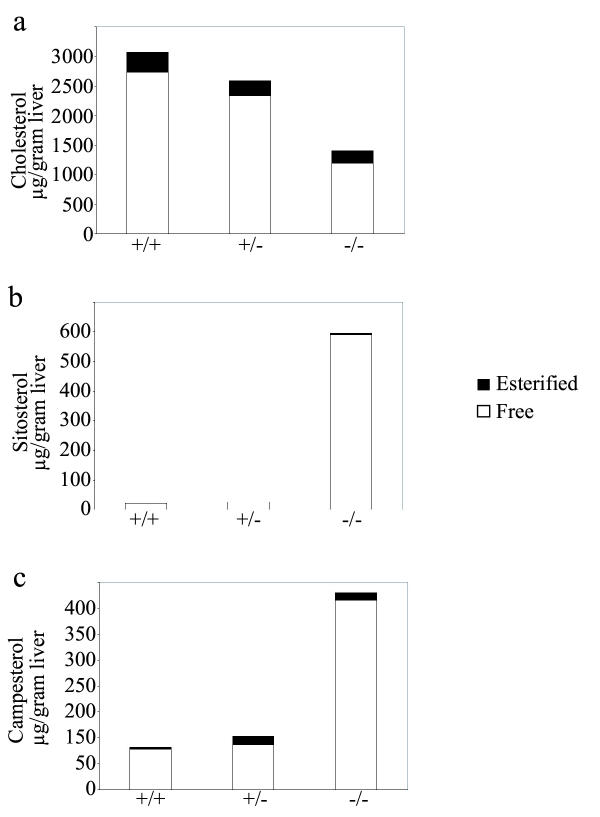
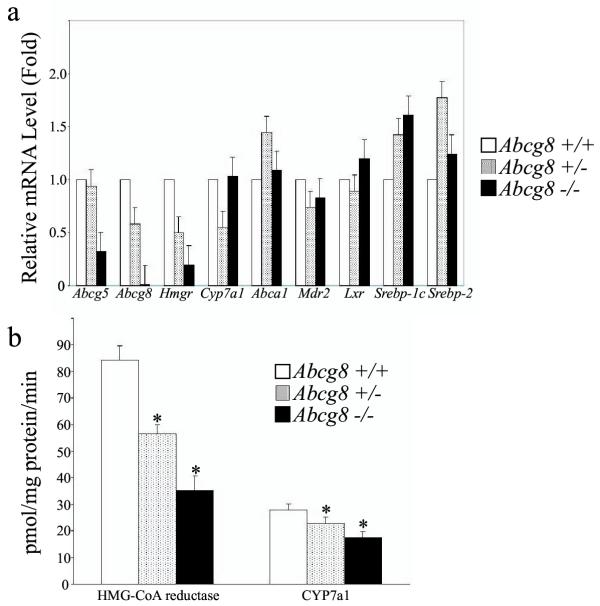
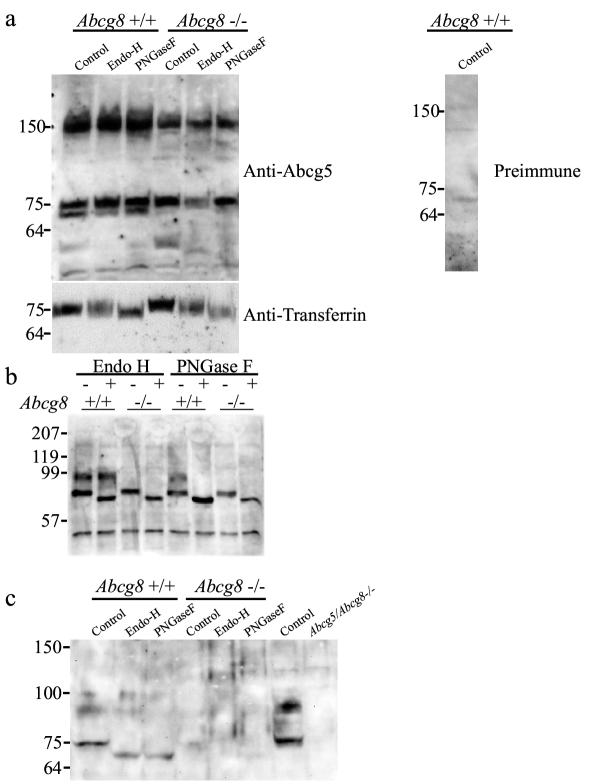
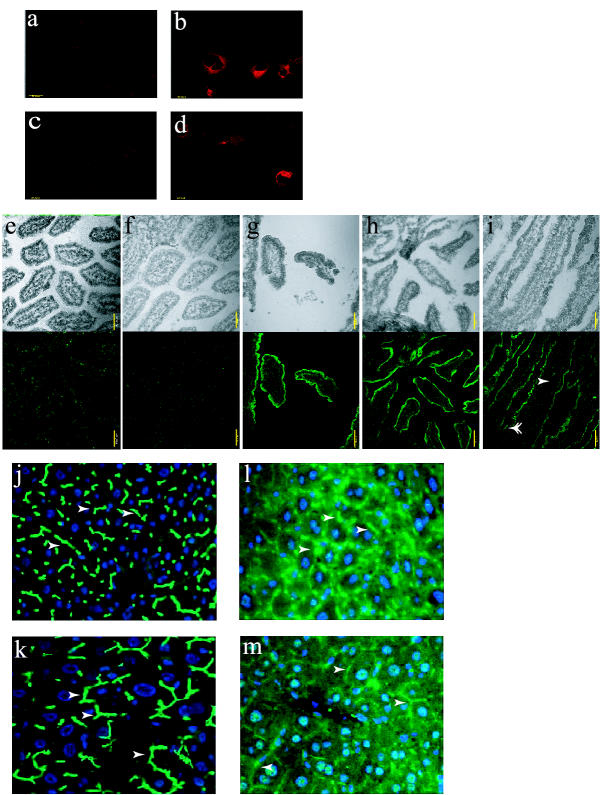
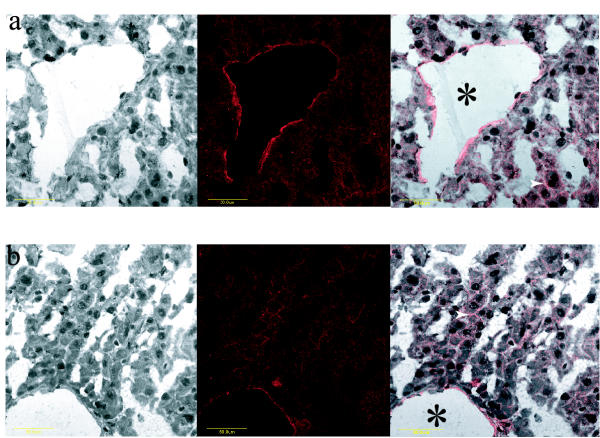
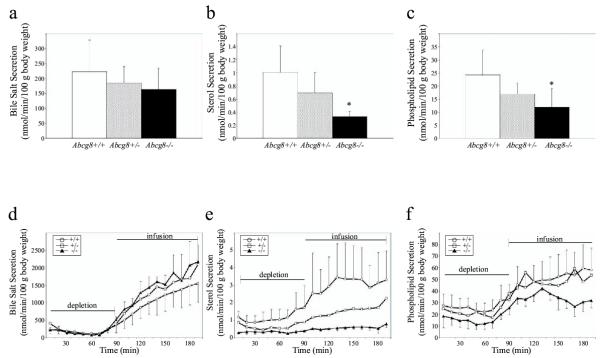
Mice deficient in Abcg8 have significantly increased plasma and tissue plant sterol levels (sitosterol and campesterol) consistent with sitosterolemia. Interestingly, Abcg5/sterolin-1 was expressed in both liver and intestine in Abcg8/sterolin-2 deficient mice and continued to show an apical expression. Remarkably, Abcg8 deficient mice had an impaired ability to secrete cholesterol into bile, but still maintained the ability to secrete sitosterol. We also report an intermediate phenotype in the heterozygous Abcg8+/- mice that are not sitosterolemic, but have a decreased level of biliary sterol secretion relative to wild-type mice.
These data indicate that Abcg8/sterolin-2 is necessary for biliary sterol secretion and that loss of Abcg8/sterolin-2 has a more profound effect upon biliary cholesterol secretion than sitosterol. Since biliary sitosterol secretion is preserved, although not elevated in the sitosterolemic mice, this observation suggests that mechanisms other than by Abcg8/sterolin-2 may be responsible for its secretion into bile.
构成STSL基因座的两个基因中的任何一个发生突变,即ATP结合盒(ABC)转运蛋白ABCG5(编码甾醇载体蛋白1)和ABCG8(编码甾醇载体蛋白2),都会导致谷甾醇血症,这是一种罕见的常染色体隐性甾醇转运障碍疾病,其特征是血浆植物甾醇水平升高。基于谷甾醇血症的遗传学,推测ABCG5/甾醇载体蛋白1和ABCG8/甾醇载体蛋白2作为必需异二聚体发挥作用。在ABCG5或ABCG8完全缺陷的人类中,尚未描述到表型差异。基于人类的缺陷,这些蛋白质负责调节膳食甾醇的摄入和胆汁甾醇的分泌。
为了模拟人类疾病,我们通过靶向破坏创建了一种仅导致Abcg8/甾醇载体蛋白2缺乏的谷甾醇血症小鼠模型。纯合敲除小鼠存活并表现出谷甾醇血症。
缺乏Abcg8的小鼠血浆和组织中的植物甾醇水平(谷甾醇和菜油甾醇)显著升高,与谷甾醇血症一致。有趣的是,在缺乏Abcg8/甾醇载体蛋白2的小鼠中,Abcg5/甾醇载体蛋白1在肝脏和肠道中均有表达,并继续呈现顶端表达。值得注意的是,缺乏Abcg8的小鼠将胆固醇分泌到胆汁中的能力受损,但仍保持分泌谷甾醇的能力。我们还报告了杂合Abcg8+/-小鼠的中间表型,这些小鼠不是谷甾醇血症患者,但相对于野生型小鼠,其胆汁甾醇分泌水平降低。
这些数据表明,Abcg8/甾醇载体蛋白2对于胆汁甾醇分泌是必需的,并且Abcg8/甾醇载体蛋白2的缺失对胆汁胆固醇分泌的影响比对谷甾醇的影响更为深远。由于在谷甾醇血症小鼠中,胆汁谷甾醇分泌得以保留,尽管没有升高,这一观察结果表明,除了Abcg8/甾醇载体蛋白2之外,其他机制可能负责其分泌到胆汁中。