Guasparri Ilaria, Keller Shannon A, Cesarman Ethel
Weill Medical College of Cornell University, New York, NY 10021, USA.
J Exp Med. 2004 Apr 5;199(7):993-1003. doi: 10.1084/jem.20031467.
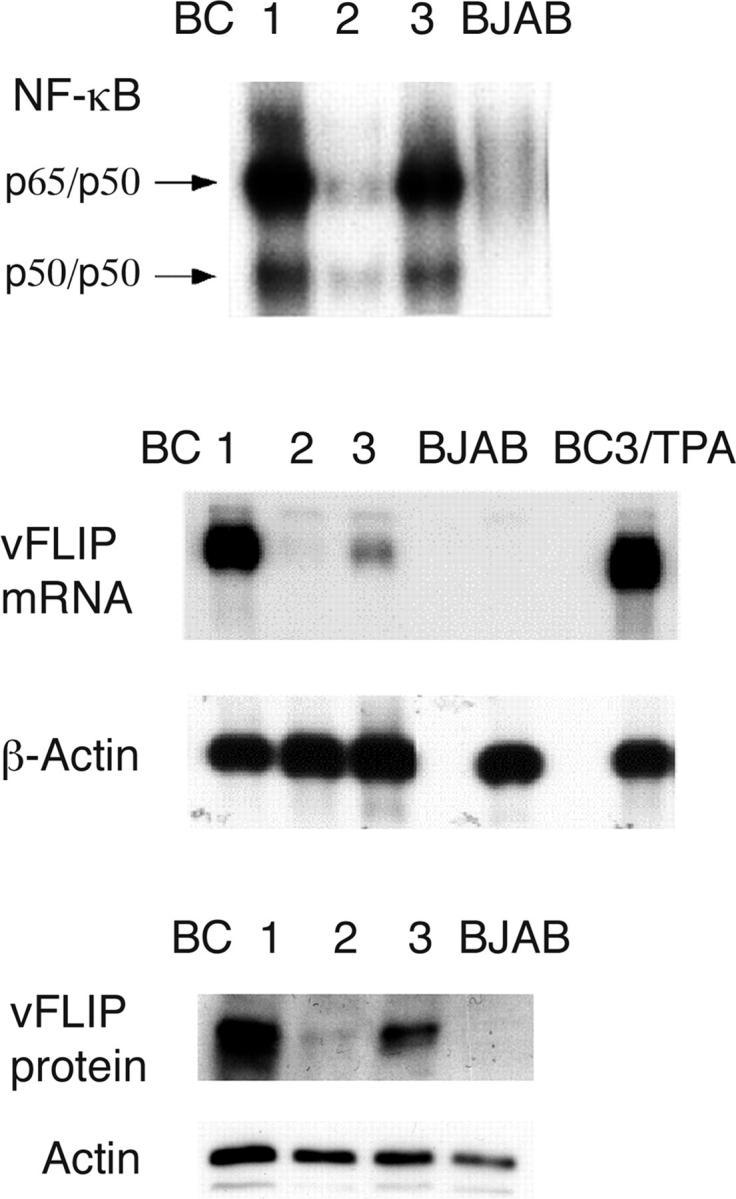
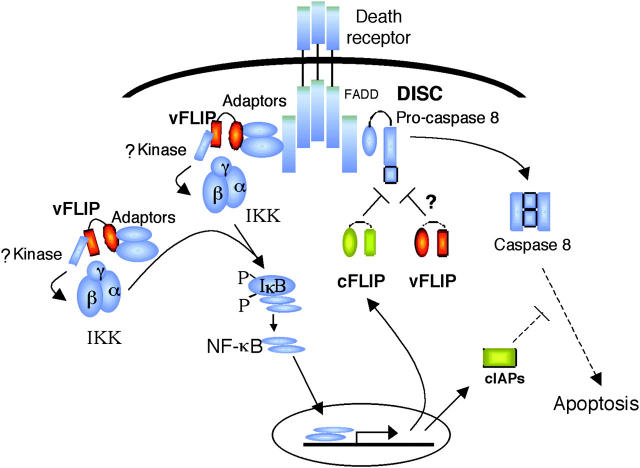
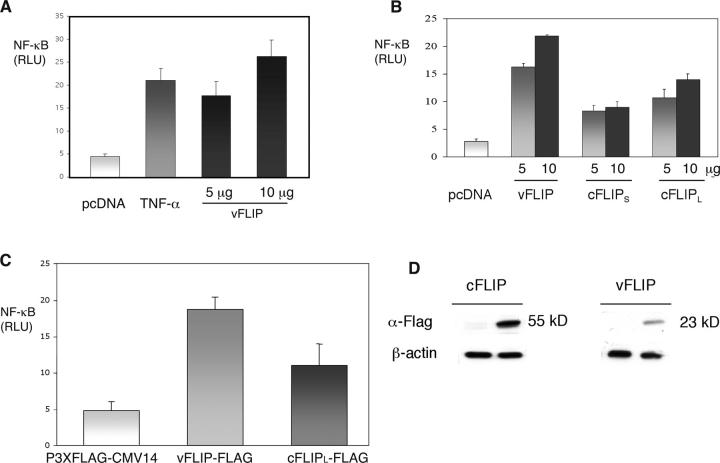
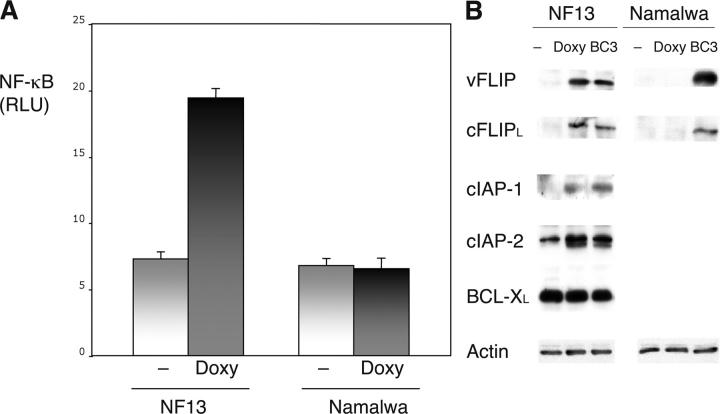
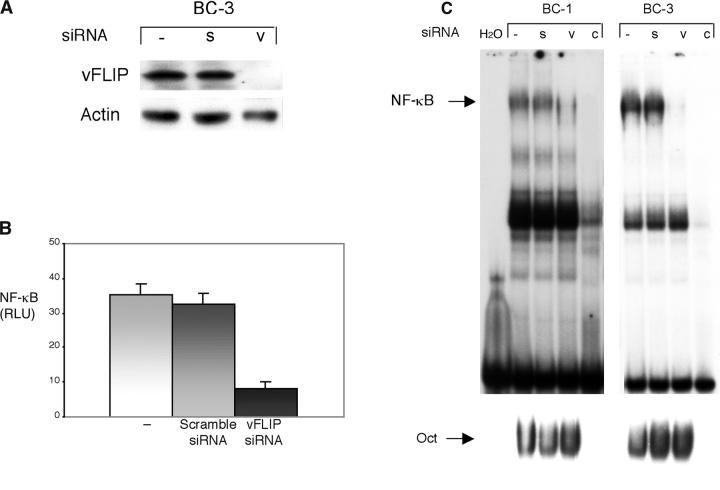
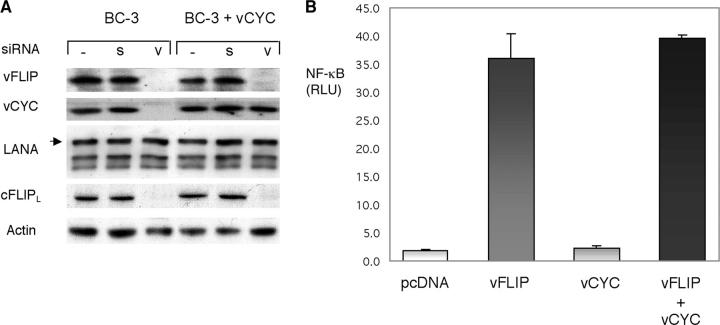
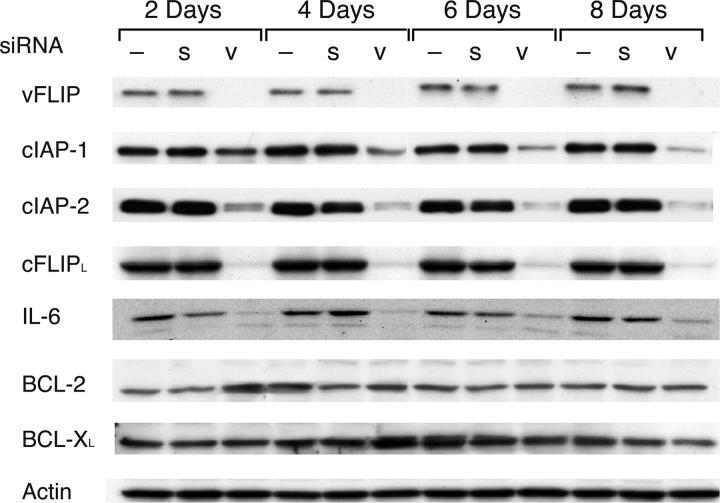
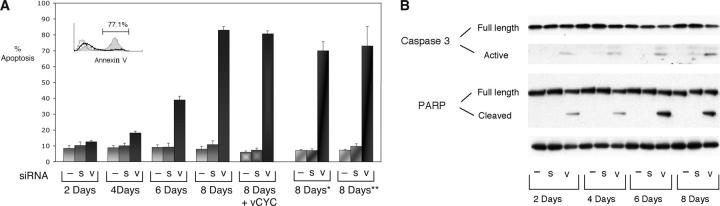
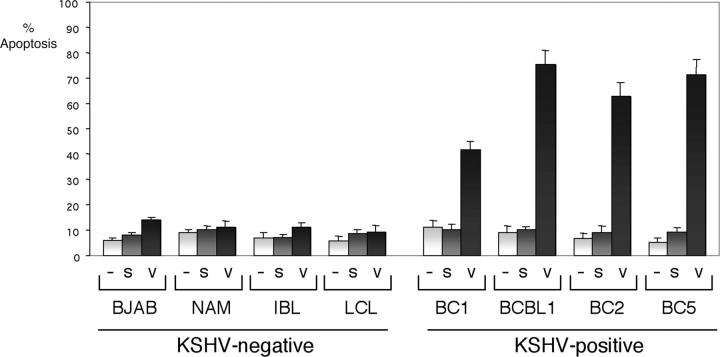
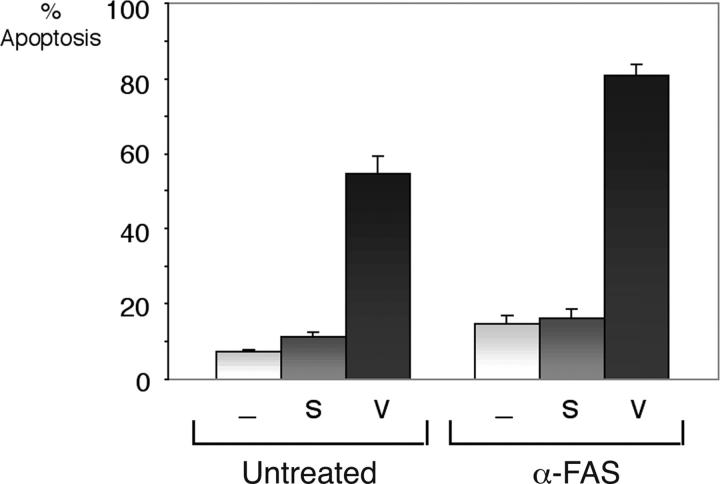
Primary effusion lymphomas (PELs) associated with infection by the Kaposi's sarcoma-associated herpesvirus (KSHV/HHV-8) have constitutive nuclear factor (NF)-kappaB activity that is essential for their survival, but the source of this activity is unknown. We report that viral FADD-like interleukin-1-beta-converting enzyme [FLICE/caspase 8]-inhibitory protein (FLIP) activates NF-kappaB more potently than cellular FLIP in B cells and that it is largely responsible for NF-kappaB activation in latently infected PEL cells. Elimination of vFLIP production in PEL cells by RNA interference results in significantly decreased NF-kappaB activity, down-regulation of essential NF-kappaB-regulated cellular prosurvival factors, induction of apoptosis, and enhanced sensitivity to external apoptotic stimuli. vFLIP is the first virally encoded gene shown to be essential for the survival of naturally infected tumor cells.
与卡波西肉瘤相关疱疹病毒(KSHV/HHV-8)感染相关的原发性渗出性淋巴瘤(PEL)具有组成性核因子(NF)-κB活性,这对其生存至关重要,但这种活性的来源尚不清楚。我们报告,病毒FADD样白细胞介素-1-β转化酶[FLICE/半胱天冬酶8]抑制蛋白(FLIP)在B细胞中比细胞FLIP更有效地激活NF-κB,并且它在很大程度上负责潜伏感染的PEL细胞中的NF-κB激活。通过RNA干扰消除PEL细胞中的vFLIP产生会导致NF-κB活性显著降低、必需的NF-κB调节的细胞存活因子下调、细胞凋亡诱导以及对外部凋亡刺激的敏感性增强。vFLIP是第一个被证明对自然感染的肿瘤细胞存活至关重要的病毒编码基因。