Moodad Sara, El Hajj Rana, Hleihel Rita, Hajjar Layal, Tawil Nadim, Karam Martin, Hamie Maguy, Abou Merhi Raghida, El Sabban Marwan, El Hajj Hiba
Department of Internal Medicine, Faculty of Medicine, American University of Beirut, Beirut 202627, Lebanon.
Department of Pathology and Laboratory Medicine, Faculty of Medicine, American University of Beirut, Beirut 202627, Lebanon.
Cancers (Basel). 2020 Sep 1;12(9):2483. doi: 10.3390/cancers12092483.
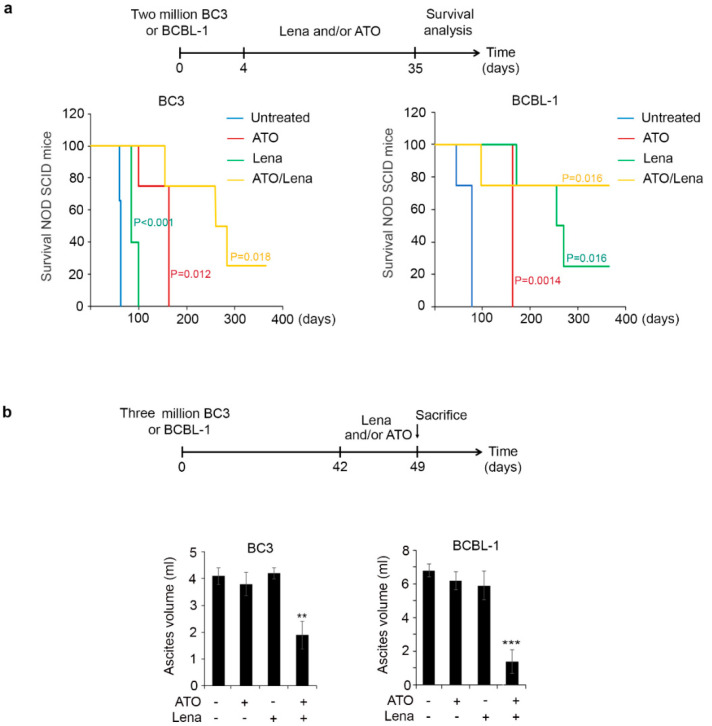
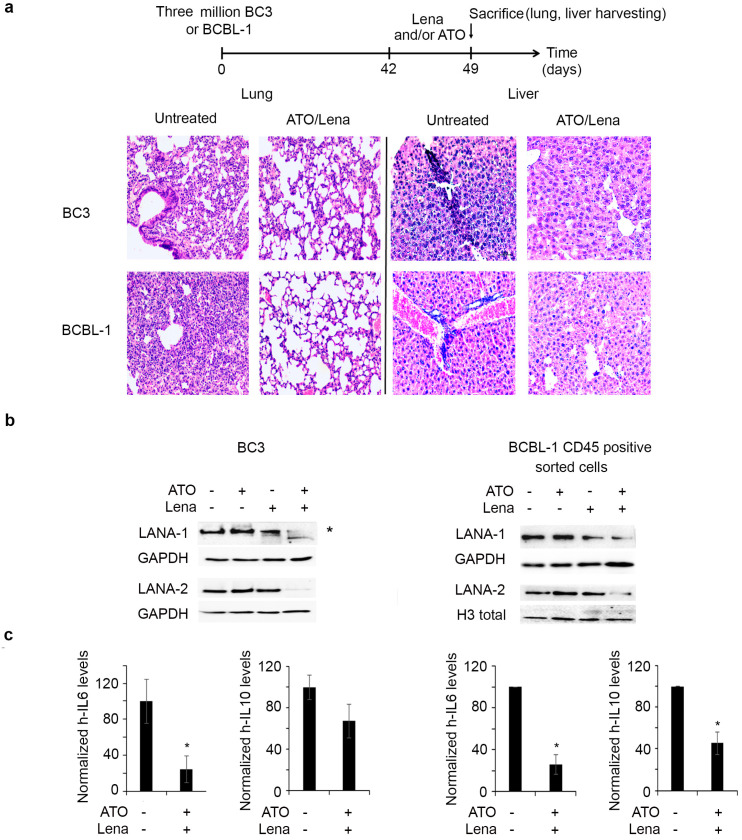
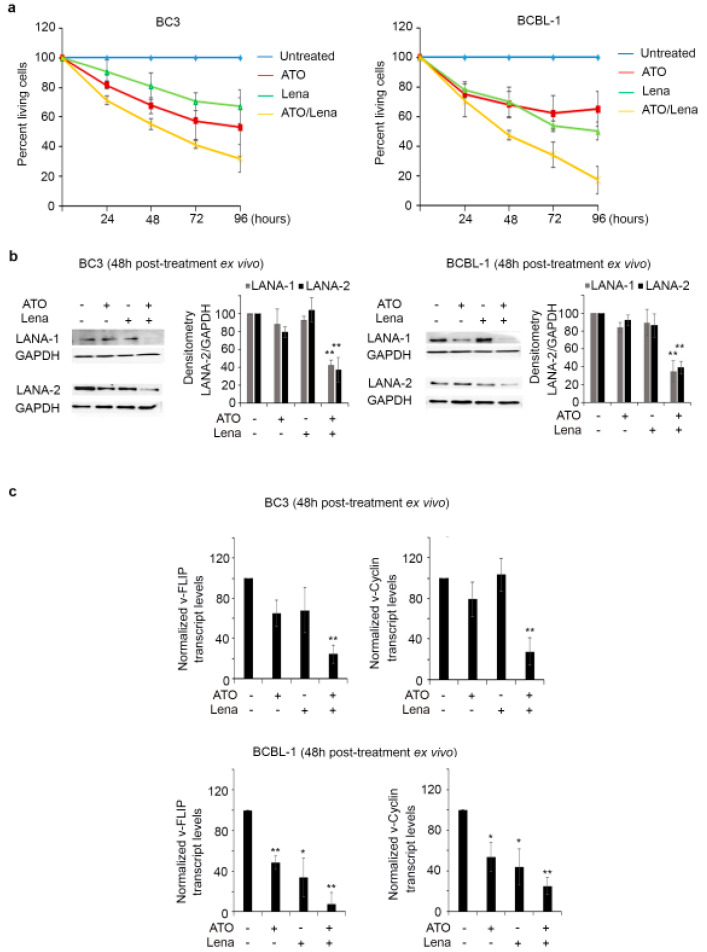
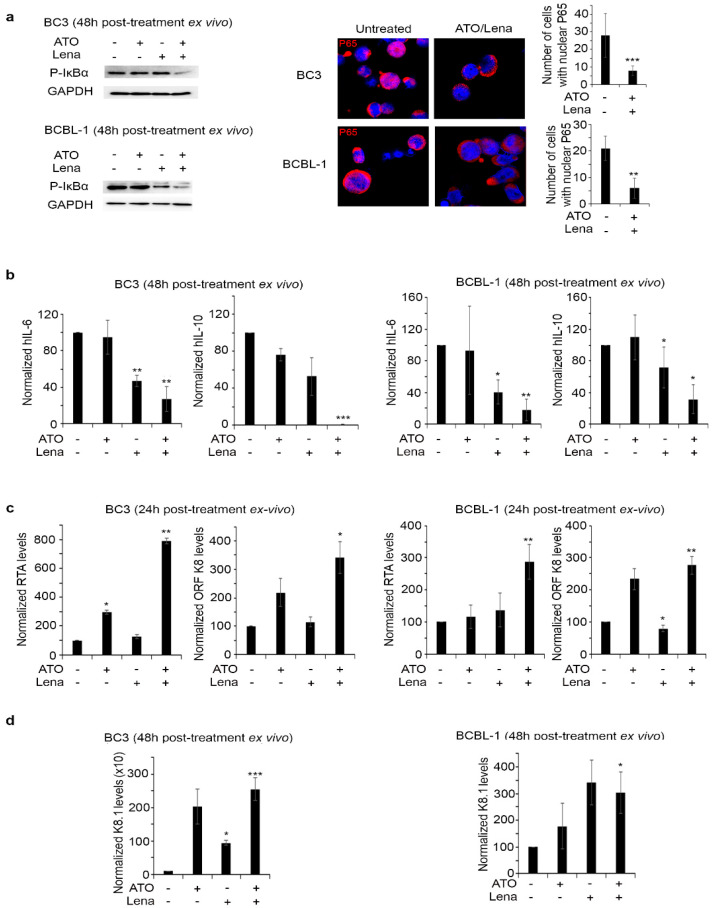
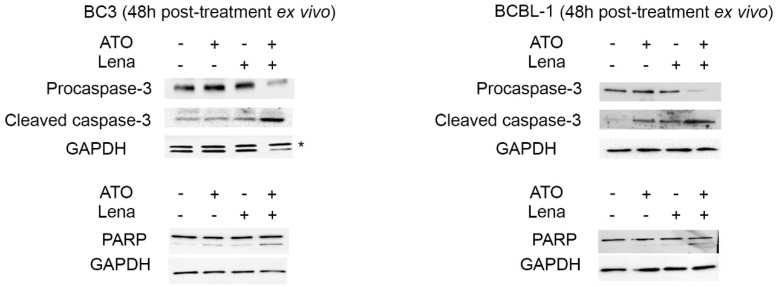
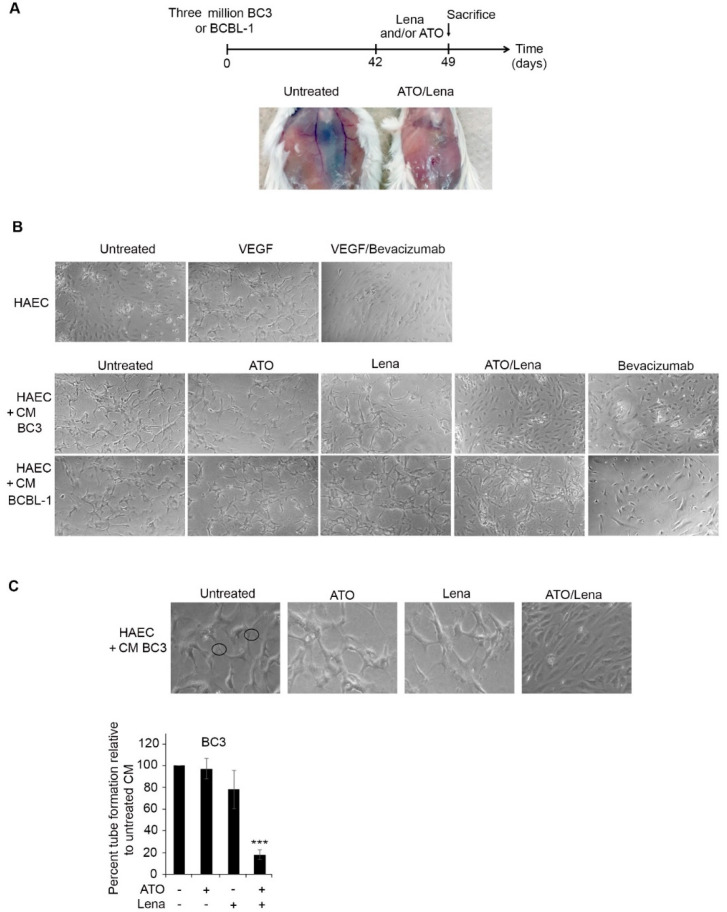
Primary effusion lymphoma (PEL) is a rare aggressive subset of non-Hodgkin B cell lymphoma. PEL is secondary to Kaposi sarcoma herpes virus (KSHV) and predominantly develops in serous cavities. Conventional chemotherapy remains the treatment of choice for PEL and yields high response rates with no significant comorbidities. Yet, chemotherapy often fails in achieving or maintaining long-term remission. Lenalidomide (Lena), an immunomodulatory drug, displayed some efficacy in the treatment of PEL. On the other hand, arsenic trioxide (ATO) in combination with other agents effectively treated a number of blood malignancies, including PEL. In this study, we present evidence that the combination of ATO/Lena significantly enhanced survival of PEL mice, decreased the volume of exacerbated ascites in the peritoneum, and reduced tumor infiltration in organs of treated animals. In ex vivo treated PEL cells, ATO/Lena decreased the proliferation and downregulated the expression of KSHV latent viral proteins. This was associated with decreased NF-κB activation, resulting in reactivation of viral replication, downregulation of interleukin-6 (IL-6) and IL-10, inhibition of vascular endothelial growth factor, and apoptosis. Our results elucidate the mechanism of action of ATO/Lena and present it as a promising targeted therapeutic modality in PEL management, which warrants further clinical investigation.
原发性渗出性淋巴瘤(PEL)是一种罕见的侵袭性非霍奇金B细胞淋巴瘤亚型。PEL继发于卡波西肉瘤疱疹病毒(KSHV),主要发生于浆膜腔。传统化疗仍是PEL的首选治疗方法,有效率高且无明显合并症。然而,化疗往往难以实现或维持长期缓解。来那度胺(Lena)是一种免疫调节药物,在PEL治疗中显示出一定疗效。另一方面,三氧化二砷(ATO)与其他药物联合可有效治疗多种血液系统恶性肿瘤,包括PEL。在本研究中,我们提供证据表明,ATO/Lena联合用药可显著提高PEL小鼠的生存率,减少腹膜中加剧的腹水体积,并减少治疗动物器官中的肿瘤浸润。在体外处理的PEL细胞中,ATO/Lena可降低细胞增殖并下调KSHV潜伏病毒蛋白的表达。这与NF-κB激活减少有关,导致病毒复制重新激活、白细胞介素-6(IL-6)和IL-10下调、血管内皮生长因子抑制及细胞凋亡。我们的结果阐明了ATO/Lena的作用机制,并将其作为PEL治疗中一种有前景的靶向治疗方式,值得进一步临床研究。