Rashid Hani H, Reeder Jay E, O'Connell Mary J, Zhang Chen-Ou, Messing Edward M, Keay Susan K
Department of Urology, University of Rochester, Rochester, New York, USA.
BMC Urol. 2004 Apr 6;4:3. doi: 10.1186/1471-2490-4-3.
Interstitial cystitis (IC) is a chronic bladder disorder of unknown etiology. Antiproliferative factor (APF), a peptide found in the urine of IC patients, has previously been shown to decrease incorporation of thymidine by normal bladder epithelial cells. This study was performed to determine the effect of APF on the cell cycle of bladder epithelial cells so as to better understand its antiproliferative activity.
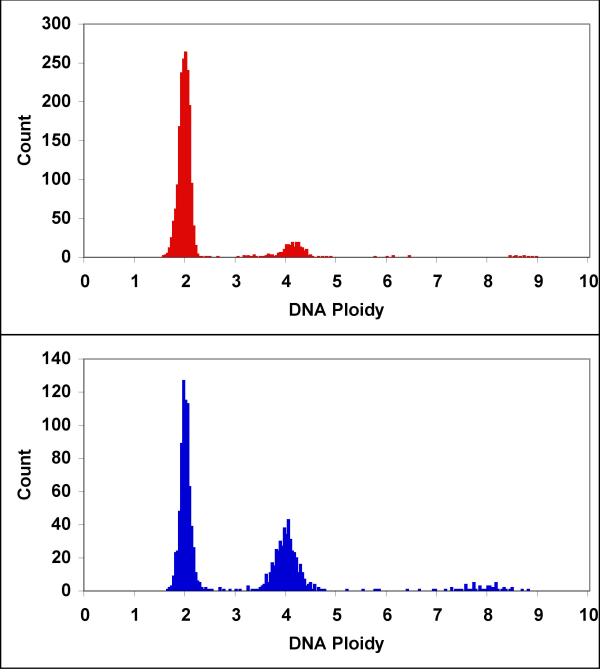
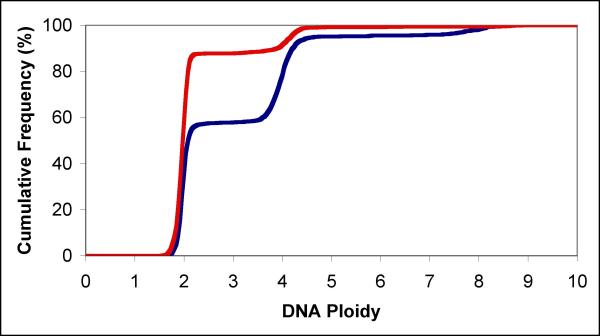
Explant cultures from normal bladder biopsy specimens were exposed to APF or mock control. DNA cytometry was performed using an automated image analysis system. Cell cycle phase fractions were calculated from the DNA frequency distributions and compared by two-way analysis of variance (ANOVA).
APF exposure produced statistically significant increases in the proportion of tetraploid and hypertetraploid cells compared to mock control preparations, suggesting a G2 and/or M phase cell cycle block and the production of polyploidy.
APF has a specific effect on cell cycle distributions. The presence of a peptide with this activity may contribute to the pathogenesis of interstitial cystitis through disruption of normal urothelial proliferation and repair processes.
间质性膀胱炎(IC)是一种病因不明的慢性膀胱疾病。抗增殖因子(APF)是一种在IC患者尿液中发现的肽,此前已显示它能减少正常膀胱上皮细胞中胸苷的掺入。进行这项研究以确定APF对膀胱上皮细胞细胞周期的影响,从而更好地理解其抗增殖活性。
将正常膀胱活检标本的外植体培养物暴露于APF或模拟对照。使用自动图像分析系统进行DNA细胞计数。根据DNA频率分布计算细胞周期阶段分数,并通过双向方差分析(ANOVA)进行比较。
与模拟对照制剂相比,暴露于APF后四倍体和超四倍体细胞的比例有统计学显著增加,提示存在G2和/或M期细胞周期阻滞以及多倍体的产生。
APF对细胞周期分布有特定影响。具有这种活性的肽的存在可能通过破坏正常尿路上皮增殖和修复过程而促成间质性膀胱炎的发病机制。