Gibbs J, Flores C M, Hargreaves K M
Departments of Endodontics and Pharmacology, The University of Texas Health Science Center at San Antonio, Mail Code 7892, 7703 Floyd Curl Lane, San Antonio, TX 78229-3900, USA.
Neuroscience. 2004;125(3):703-9. doi: 10.1016/j.neuroscience.2004.01.044.
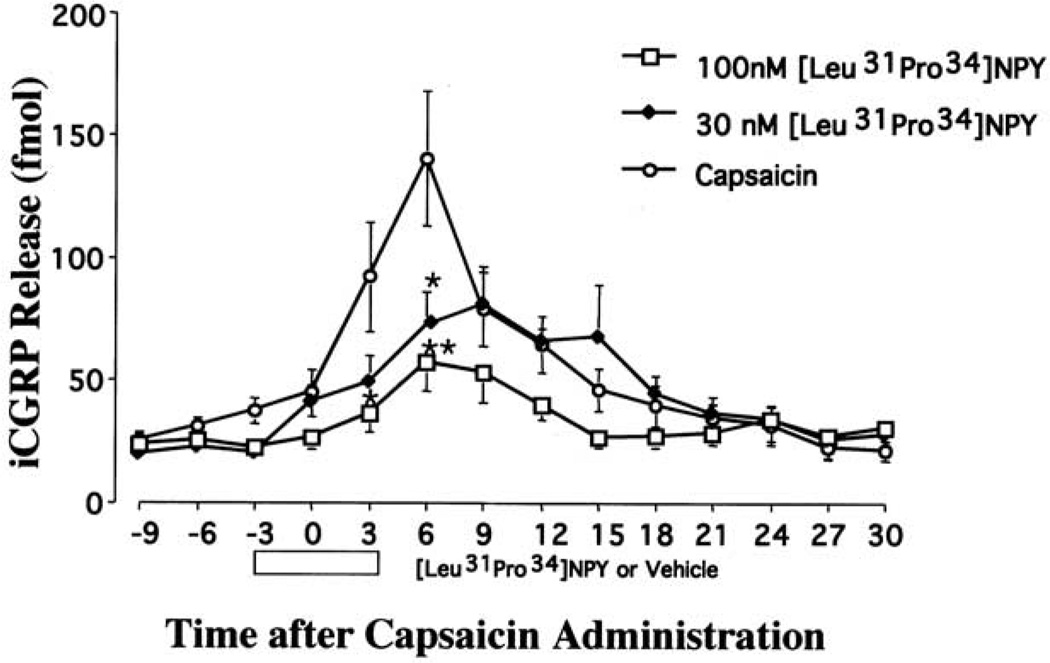
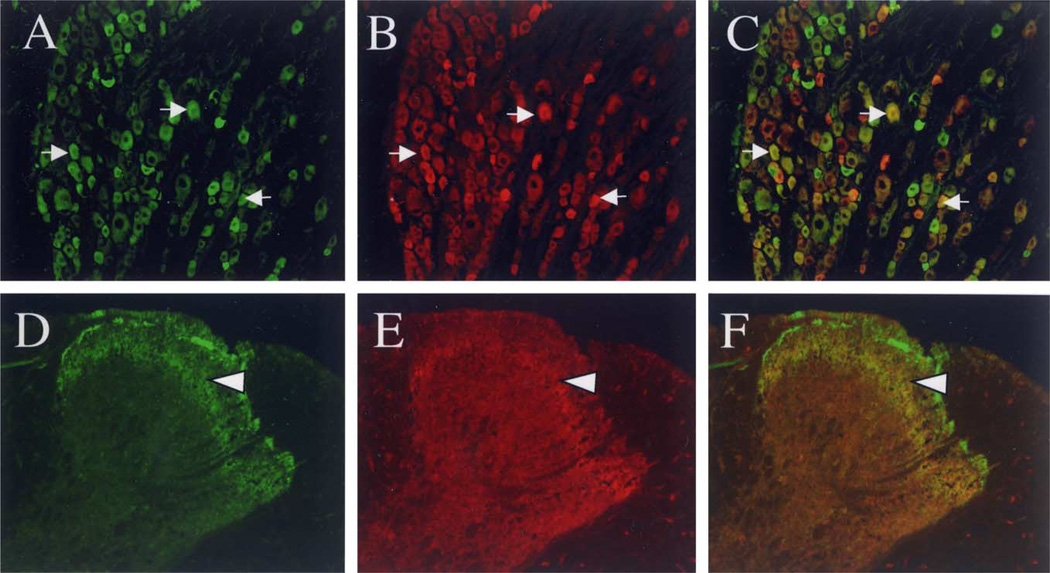
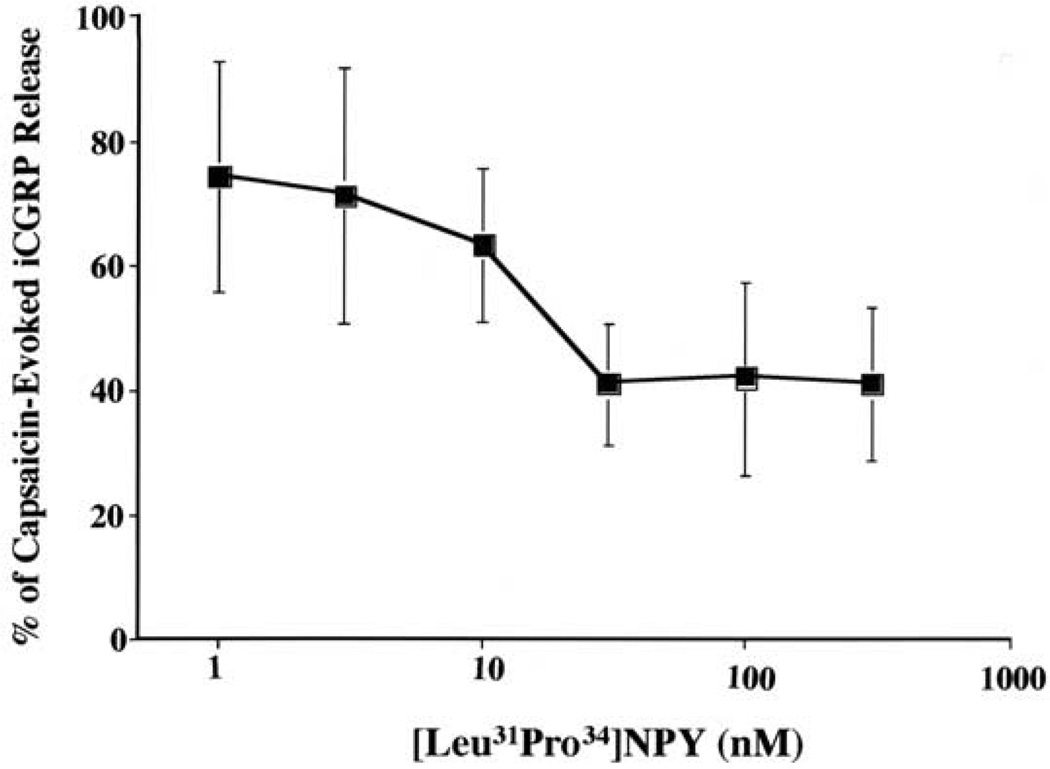
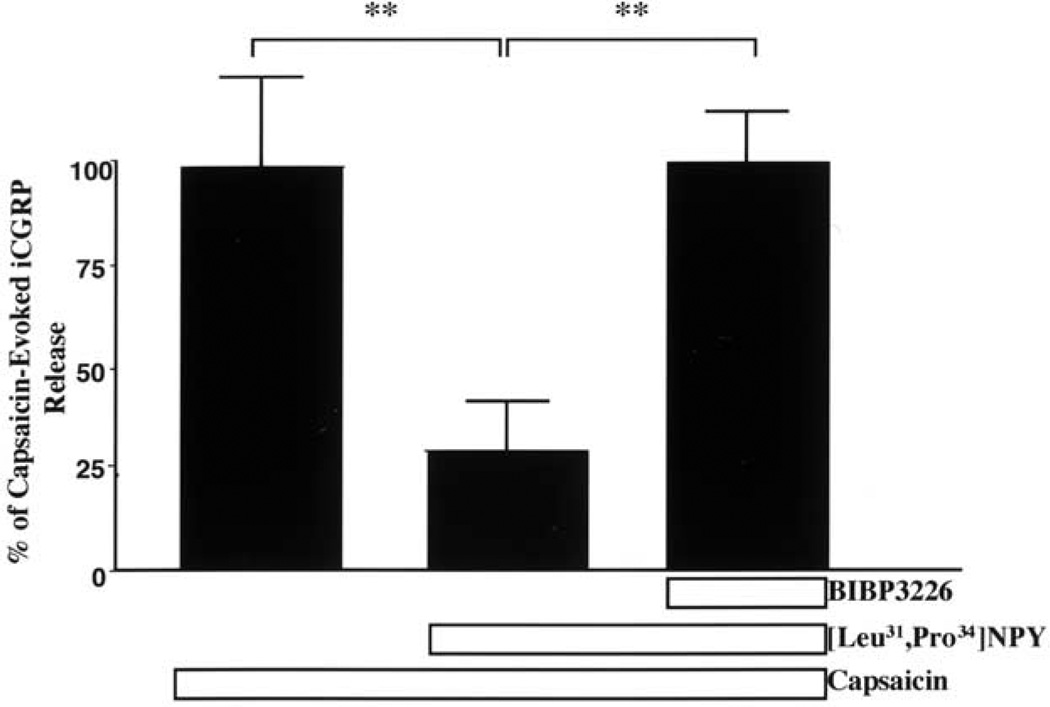
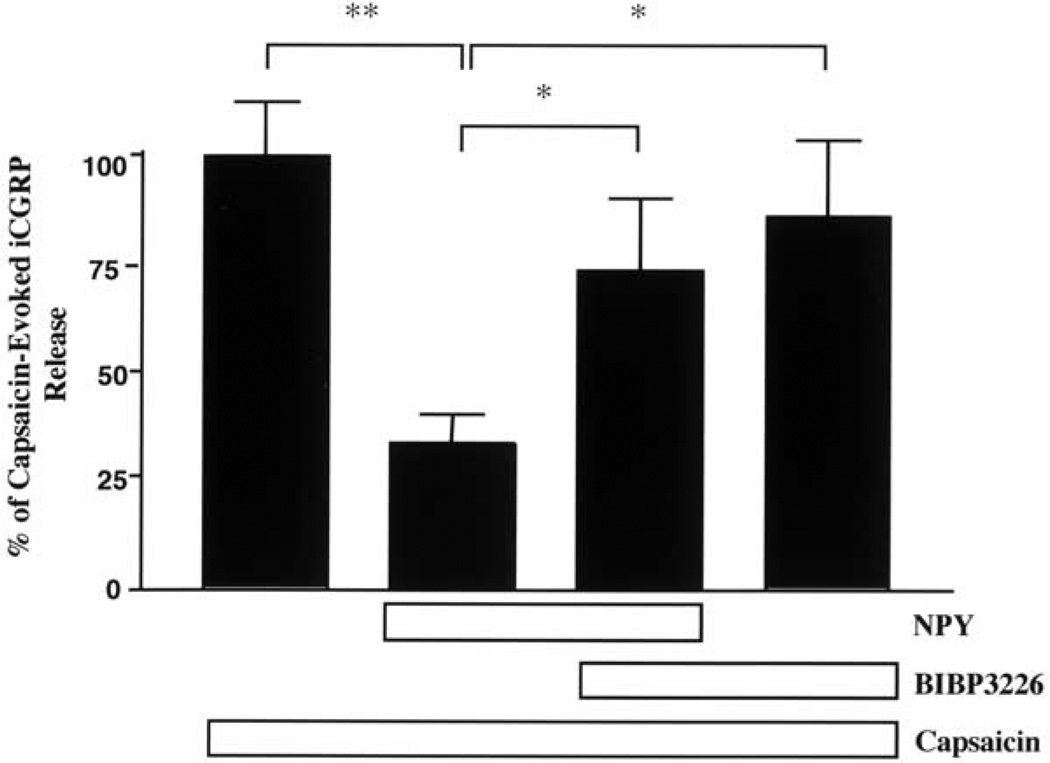
Neuropeptide Y (NPY) is expressed in certain primary afferent fibers, is up-regulated in response to tissue injury and is capable of inhibiting nociceptive behavior at the spinal level. However, the spinal mechanism(s) for NPY-evoked antinociception is unknown. In this study, we evaluated the hypothesis that agonists at the NPY Y1 receptor subtype (Y1-R) inhibit exocytosis from the capsaicin-sensitive class of nociceptors. Using in vitro superfusion of rat dorsal spinal cord slices, pre-treatment with the Y1-R agonist [Leu(31)Pro(34)]NPY significantly inhibited capsaicin-evoked release of immunoreactive calcitonin gene-related peptide with an EC(50) value of 10.6 nM. This inhibitory effect was concentration dependent, significantly attenuated by pre-treatment with the Y1 receptor antagonist BIBP3226 and reproduced by synthetic NPY. Examination of adult rat dorsal root ganglia using double immunofluorescent labeling revealed frequent co-localization of Y1 receptor immunoreactivity in vanilloid receptor type 1-immunoreactive neurons, indicating that Y1 agonists may directly modulate the capsaicin-sensitive class of nociceptors. Collectively, these results indicate that NPY is capable of inhibiting capsaicin-sensitive neurons via a Y1 receptor mechanism, suggesting the mechanisms for spinal NPY-induced antinociception is due, at least in part, to inhibition of central terminals of capsaicin-sensitive nociceptors.
神经肽Y(NPY)在某些初级传入纤维中表达,在组织损伤时上调,并且能够在脊髓水平抑制伤害性行为。然而,NPY诱发的抗伤害感受的脊髓机制尚不清楚。在本研究中,我们评估了以下假设:NPY Y1受体亚型(Y1-R)的激动剂抑制辣椒素敏感类伤害感受器的胞吐作用。使用大鼠背侧脊髓切片的体外灌流,用Y1-R激动剂[Leu(31)Pro(34)]NPY预处理可显著抑制辣椒素诱发的免疫反应性降钙素基因相关肽的释放,EC(50)值为10.6 nM。这种抑制作用是浓度依赖性的,用Y1受体拮抗剂BIBP3226预处理可显著减弱,并且可被合成NPY重现。使用双重免疫荧光标记检查成年大鼠背根神经节发现,Y1受体免疫反应性在1型香草酸受体免疫反应性神经元中频繁共定位,表明Y1激动剂可能直接调节辣椒素敏感类伤害感受器。总的来说,这些结果表明NPY能够通过Y1受体机制抑制辣椒素敏感神经元,提示脊髓NPY诱导的抗伤害感受机制至少部分是由于抑制了辣椒素敏感伤害感受器的中枢终末。