Solomon David A, Cardoso M Cristina, Knudsen Erik S
Department of Cell Biology, Vontz Center for Molecular Studies, University of Cincinnati College of Medicine, 3125 Eden Ave., Cincinnati, OH 45267, USA.
J Cell Biol. 2004 Aug 16;166(4):455-63. doi: 10.1083/jcb.200312048.
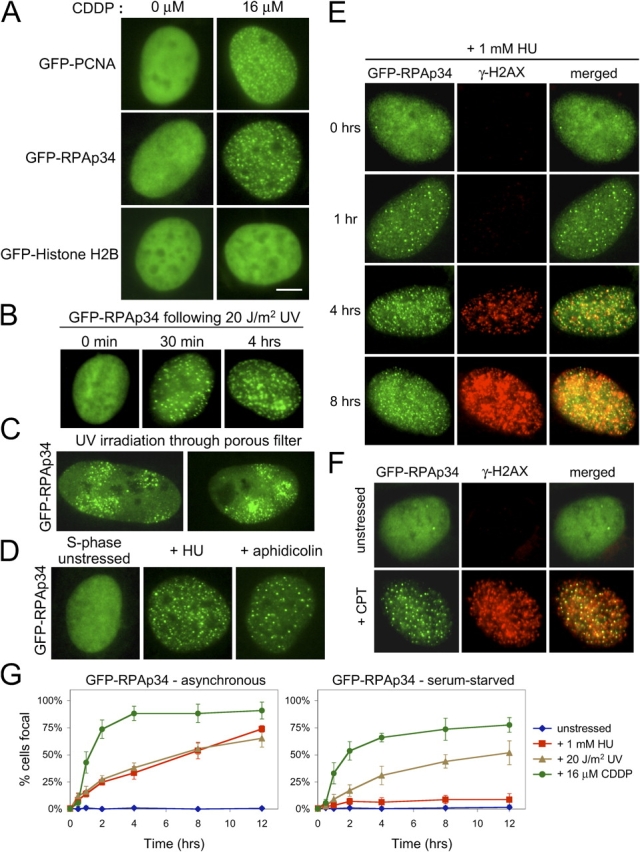
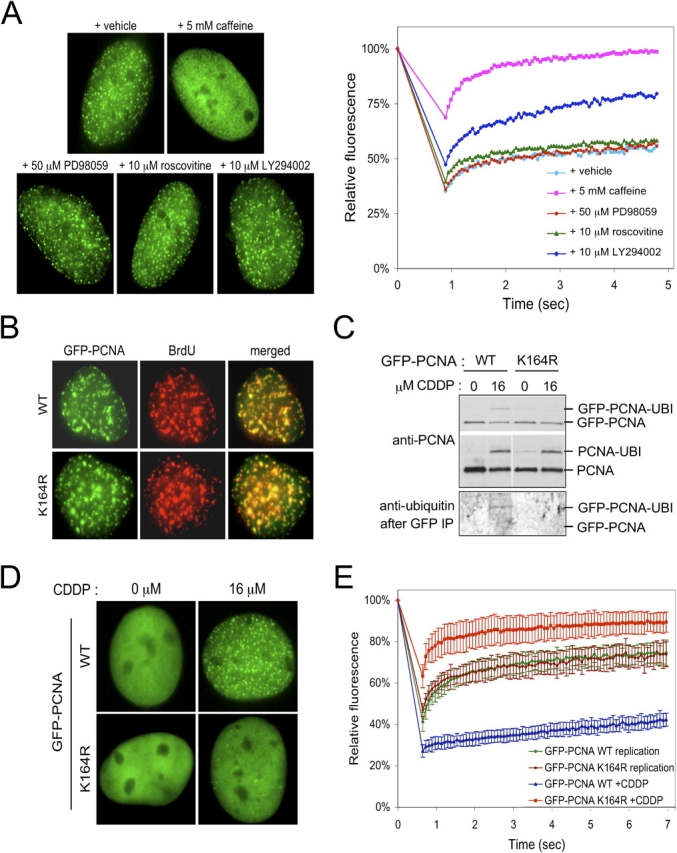
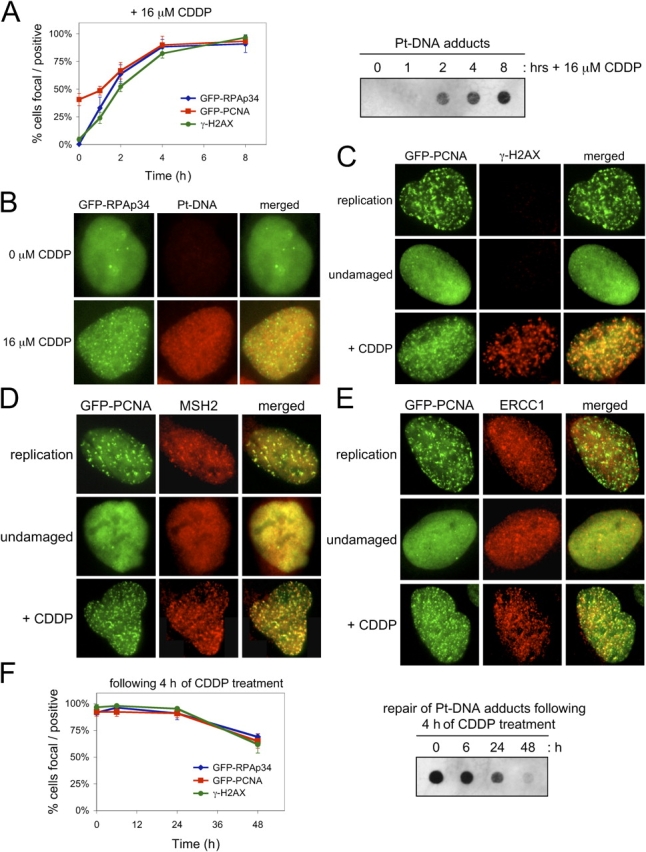
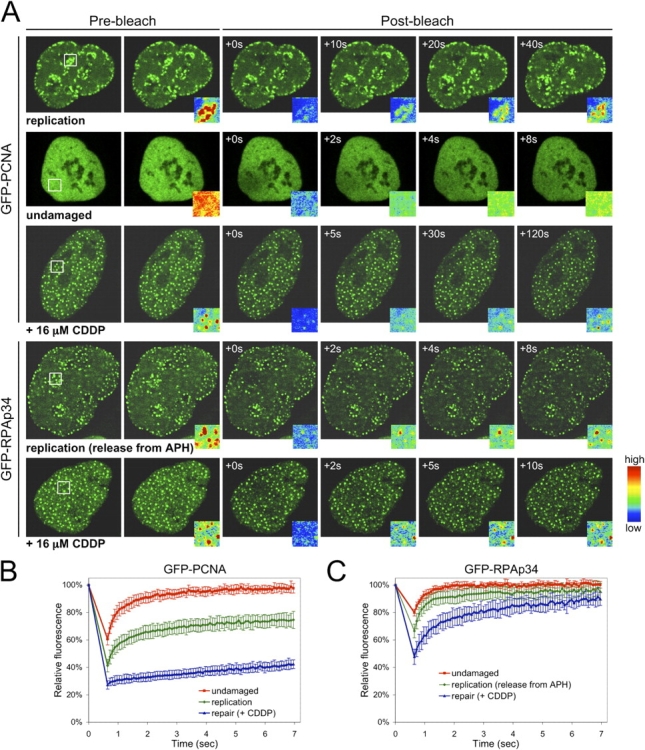
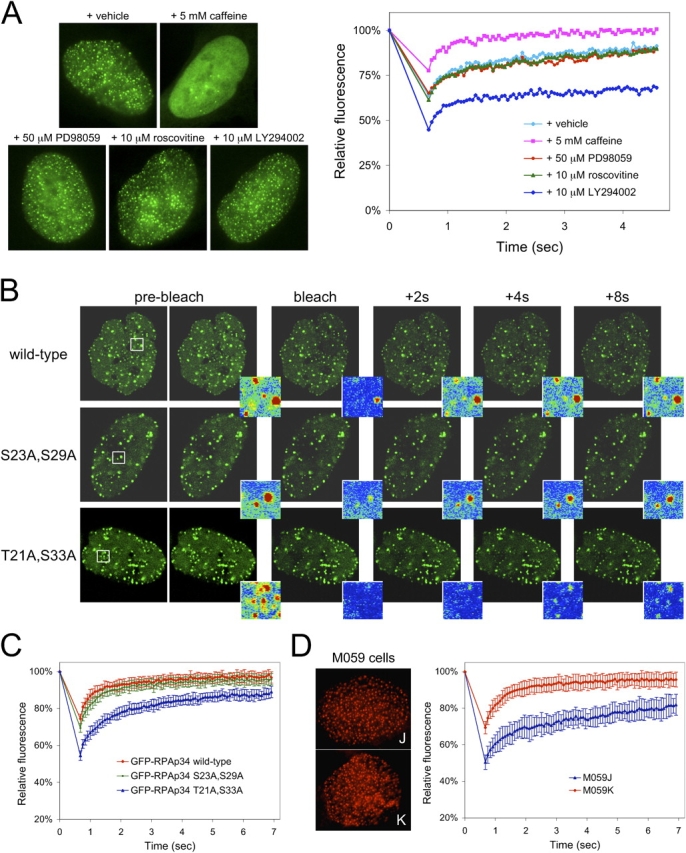
Components of the DNA replication machinery localize into discrete subnuclear foci after DNA damage, where they play requisite functions in repair processes. Here, we find that the replication factors proliferating cell nuclear antigen (PCNA) and RPAp34 dynamically exchange at these repair foci with discrete kinetics, and this behavior is distinct from kinetics during DNA replication. Posttranslational modification is hypothesized to target specific proteins for repair, and we find that accumulation and stability of PCNA at sites of damage requires monoubiquitination. Contrary to the popular notion that phosphorylation on the NH2 terminus of RPAp34 directs the protein for repair, we demonstrate that phosphorylation by DNA-dependent protein kinase enhances RPAp34 turnover at repair foci. Together, these findings support a dynamic exchange model in which multiple repair factors regulated by specific modifications have access to and rapidly turn over at sites of DNA damage.
DNA复制机制的组成部分在DNA损伤后定位于离散的核内亚结构域,在那里它们在修复过程中发挥必要作用。在此,我们发现复制因子增殖细胞核抗原(PCNA)和RPAp34在这些修复位点以离散的动力学动态交换,并且这种行为不同于DNA复制期间的动力学。翻译后修饰被认为是针对特定蛋白质进行修复,我们发现PCNA在损伤位点的积累和稳定性需要单泛素化。与普遍认为的RPAp34氨基末端的磷酸化指导蛋白质进行修复的观点相反,我们证明DNA依赖性蛋白激酶的磷酸化增强了RPAp34在修复位点的周转。总之,这些发现支持了一个动态交换模型,其中由特定修饰调节的多种修复因子能够进入DNA损伤位点并在那里快速周转。