Fundación Instituto Leloir, Buenos Aires, Argentina.
PLoS One. 2012;7(12):e51495. doi: 10.1371/journal.pone.0051495. Epub 2012 Dec 20.
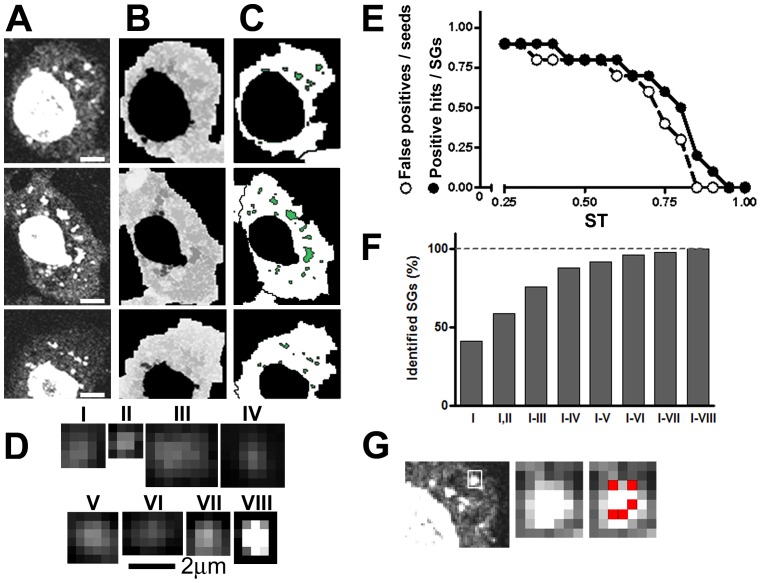
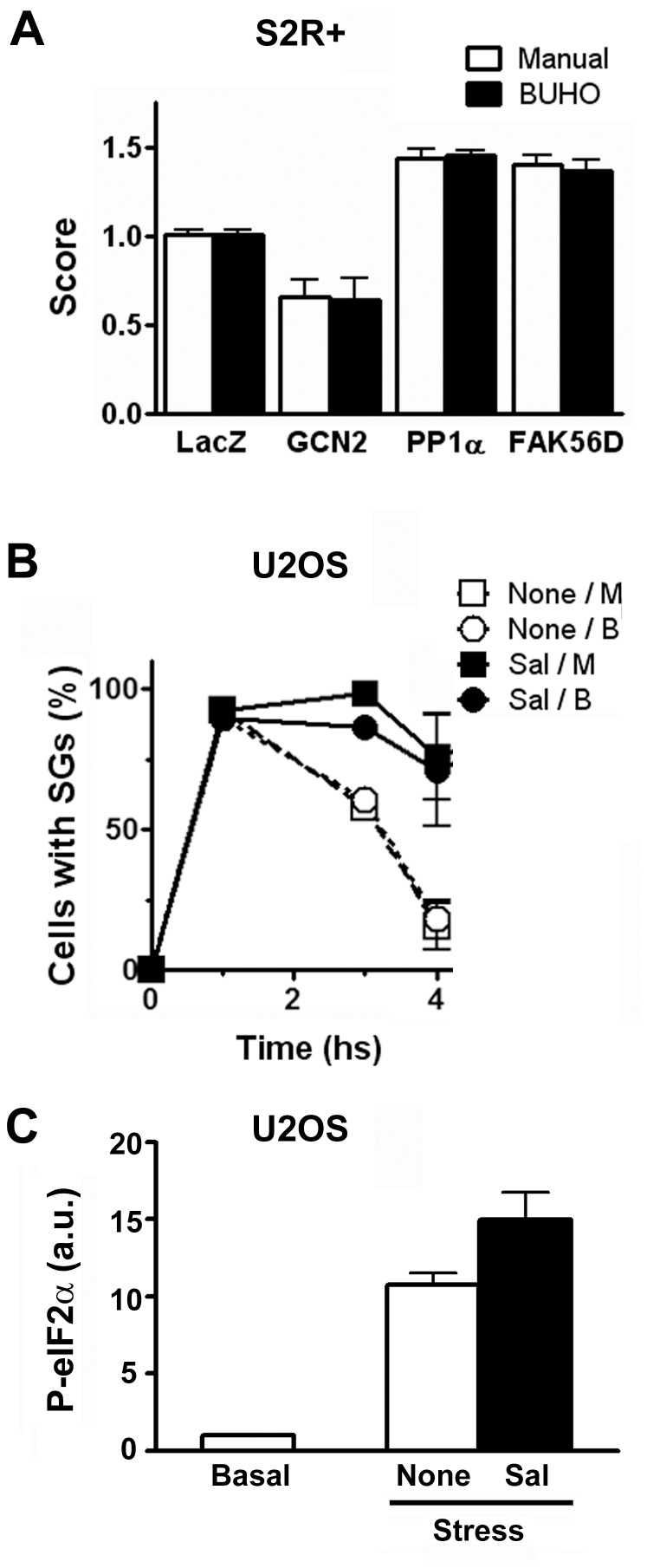
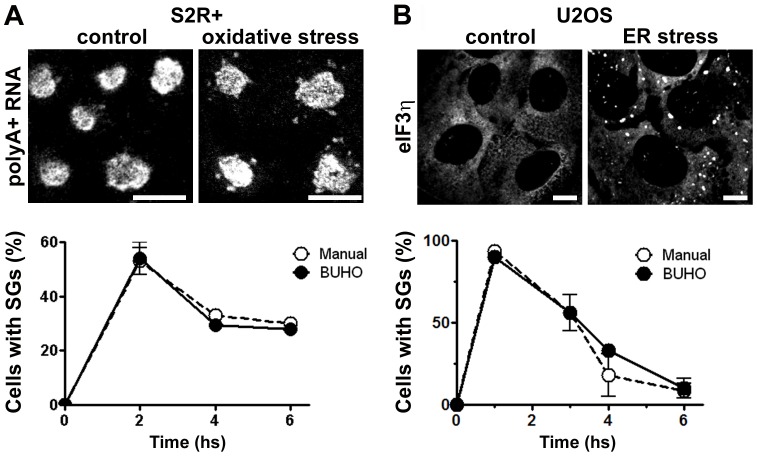
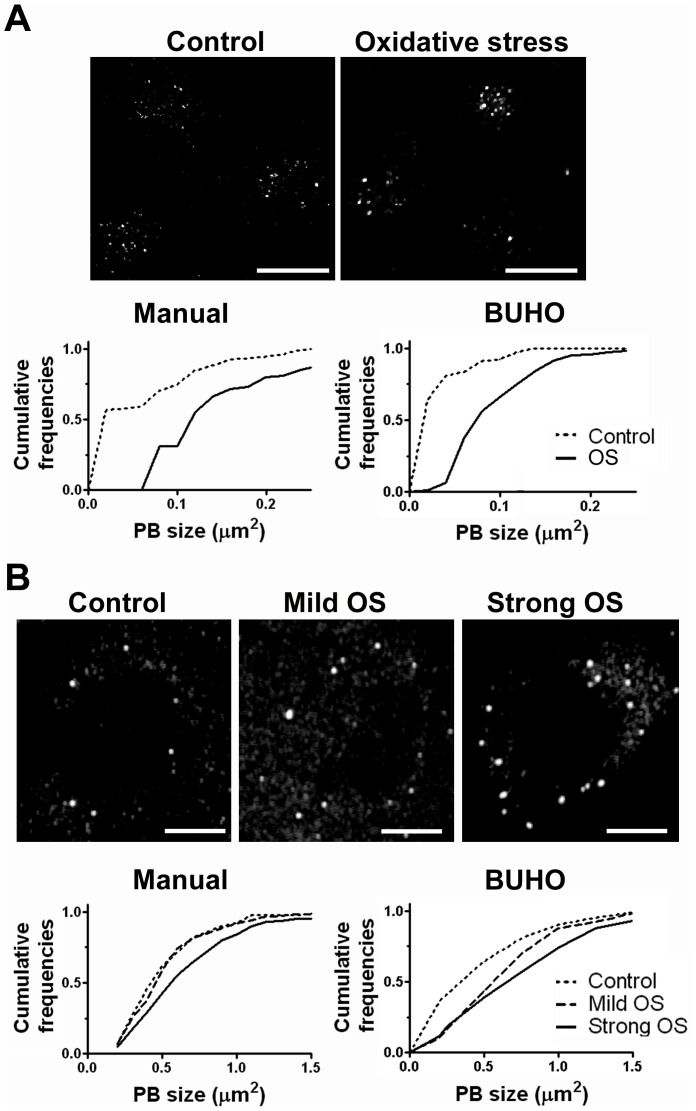
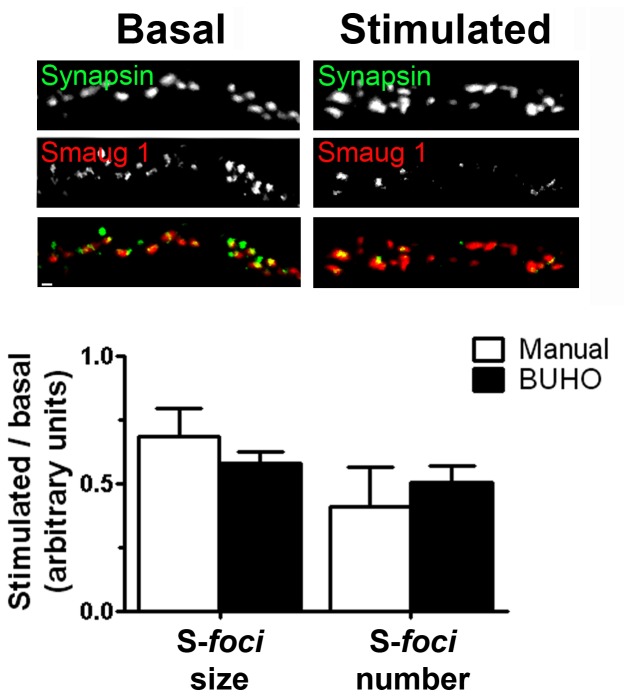
The spontaneous and reversible formation of foci and filaments that contain proteins involved in different metabolic processes is common in both the nucleus and the cytoplasm. Stress granules (SGs) and processing bodies (PBs) belong to a novel family of cellular structures collectively known as mRNA silencing foci that harbour repressed mRNAs and their associated proteins. SGs and PBs are highly dynamic and they form upon stress and dissolve thus releasing the repressed mRNAs according to changes in cell physiology. In addition, aggregates containing abnormal proteins are frequent in neurodegenerative disorders. In spite of the growing relevance of these supramolecular aggregates to diverse cellular functions a reliable automated tool for their systematic analysis is lacking. Here we report a MATLAB Script termed BUHO for the high-throughput image analysis of cellular foci. We used BUHO to assess the number, size and distribution of distinct objects with minimal deviation from manually obtained parameters. BUHO successfully addressed the induction of both SGs and PBs in mammalian and insect cells exposed to different stress stimuli. We also used BUHO to assess the dynamics of specific mRNA-silencing foci termed Smaug 1 foci (S-foci) in primary neurons upon synaptic stimulation. Finally, we used BUHO to analyze the role of candidate genes on SG formation in an RNAi-based experiment. We found that FAK56D, GCN2 and PP1 govern SG formation. The role of PP1 is conserved in mammalian cells as judged by the effect of the PP1 inhibitor salubrinal, and involves dephosphorylation of the translation factor eIF2α. All these experiments were analyzed manually and by BUHO and the results differed in less than 5% of the average value. The automated analysis by this user-friendly method will allow high-throughput image processing in short times by providing a robust, flexible and reliable alternative to the laborious and sometimes unfeasible visual scrutiny.
自发的和可逆的焦点和丝的形成,其中包含涉及不同代谢过程的蛋白质,在核和细胞质中都是常见的。应激颗粒(SGs)和处理体(PBs)属于一种新型的细胞结构家族,统称为 mRNA 沉默焦点,含有被抑制的 mRNA 及其相关蛋白。SGs 和 PBs 是高度动态的,它们在应激时形成,然后根据细胞生理学的变化溶解,从而释放被抑制的 mRNA。此外,在神经退行性疾病中,含有异常蛋白质的聚集体很常见。尽管这些超分子聚集体与多种细胞功能的相关性日益增强,但缺乏可靠的自动分析工具。在这里,我们报告了一个称为 BUHO 的 MATLAB 脚本,用于对细胞焦点进行高通量图像分析。我们使用 BUHO 来评估具有最小人为参数偏差的不同对象的数量、大小和分布。BUHO 成功地解决了哺乳动物和昆虫细胞在暴露于不同应激刺激时诱导 SGs 和 PBs 的问题。我们还使用 BUHO 来评估在突触刺激后初级神经元中特定的 mRNA 沉默焦点(称为 Smaug 1 焦点(S-焦点)的动态。最后,我们使用 BUHO 来分析候选基因在 RNAi 实验中对 SG 形成的作用。我们发现 FAK56D、GCN2 和 PP1 控制 SG 的形成。根据 PP1 抑制剂 salubrinal 的作用判断,PP1 在哺乳动物细胞中的作用是保守的,涉及到翻译因子 eIF2α的去磷酸化。所有这些实验都是手动和通过 BUHO 进行分析的,结果在平均值的 5%以内存在差异。这种用户友好的方法的自动分析将允许在短时间内进行高通量图像处理,为繁琐且有时不可行的视觉检查提供一种强大、灵活和可靠的替代方法。