Mathieu Patricia A, Gómez Karina A, Coutelier Jean-Paul, Retegui Lilia A
Instituto de Química y Fisicoquímica Biológicas (UBA-CONICET), Facultad de Farmacia y Bioquímica, Junín 956, 1113 Buenos Aires, Argentina.
J Autoimmun. 2004 Sep;23(2):117-26. doi: 10.1016/j.jaut.2004.05.006.
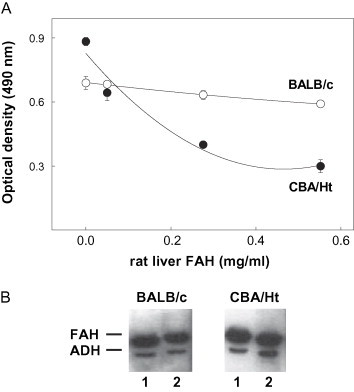
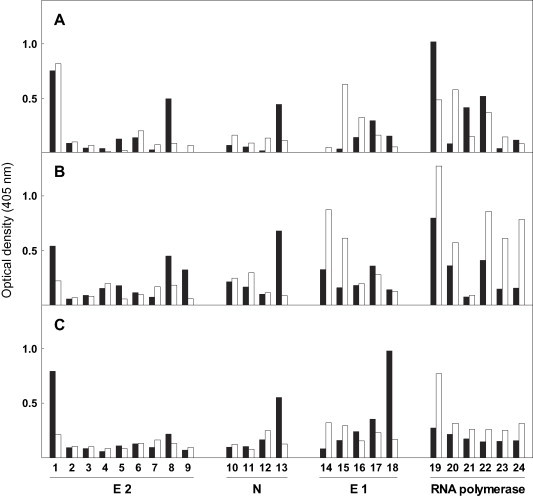
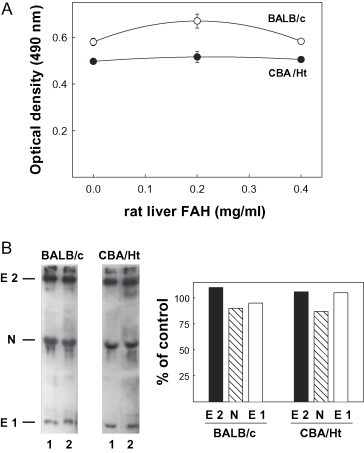
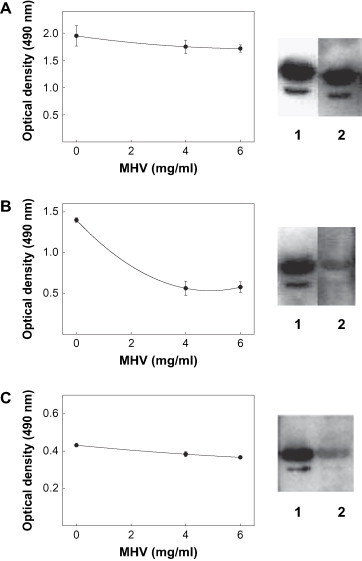
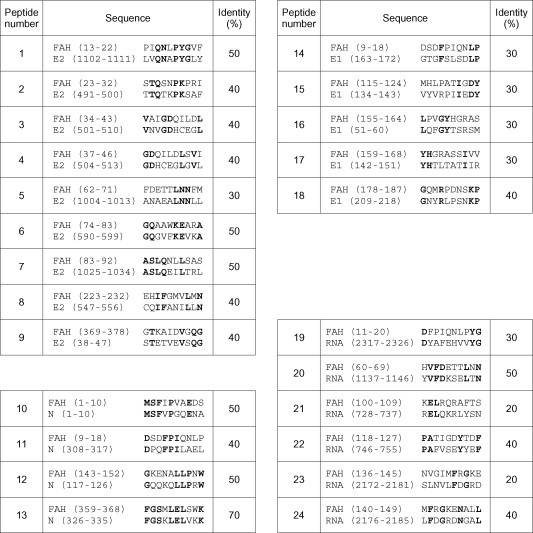
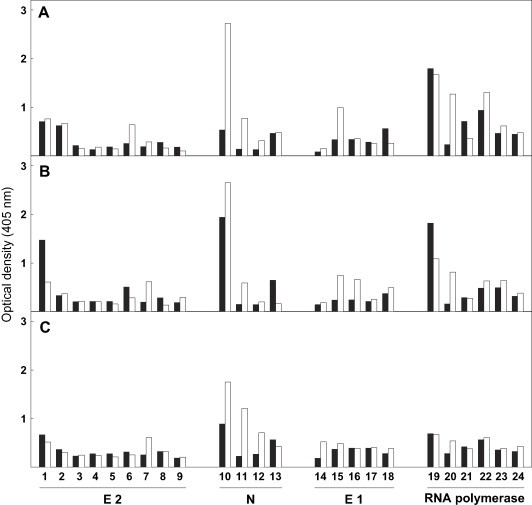
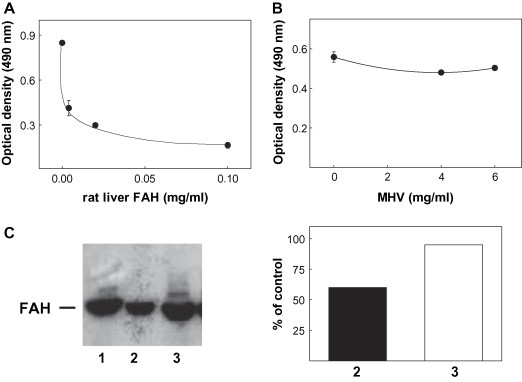
The features of autoantibodies (autoAb) to liver fumarylacetoacetate hydrolase (FAH) elicited in mice infected with mouse hepatitis virus (MHV) were studied by ELISA and western-blot competition assays. All sera tested contained Ab to cryptic FAH epitopes according with results from western-blot tests, whereas ELISA data indicated that some of these same sera did recognize native epitopes of the autoantigen (autoAg). Such differences were detected in individual sera from various mouse strains, and were ascribed to the fact that proteins insolubilized on solid supports expose a variety of conformational and cryptic antigenic determinants. On the other hand, whereas results from both experimental protocols showed that anti-MHV Ab did not cross-react with the soluble autoAg, the opposite situation did not show analogous results. Thus, binding of autoAb to insolubilized FAH could be inhibited by MHV depending on the mouse serum or the experimental protocol used. Additionally, a set of synthetic homologous peptides from mouse FAH and various viral proteins was employed to analyze the Ab repertoire of MHV-infected mice. Results indicated that two homologous peptides were recognized by most Ab: the N-terminal sequences (1-10) from FAH and the nucleocapside, both sharing 50% of identity, and sequence 2317-2326 of the RNA polymerase, a peptide showing 30% of identity with FAH 11-20. Results indicated that MHV-infection triggers at least three distinct Ab populations: anti-MHV, anti-FAH and cross-reacting Ab. This cross-reaction implies either sequential or conformational epitopes from both the viral proteins and the autoAg and may differ between individuals.
通过酶联免疫吸附测定(ELISA)和蛋白质免疫印迹竞争分析,研究了感染小鼠肝炎病毒(MHV)的小鼠体内产生的针对肝脏富马酰乙酰乙酸水解酶(FAH)的自身抗体(autoAb)的特征。根据蛋白质免疫印迹测试结果,所有检测的血清均含有针对隐蔽性FAH表位的抗体,而ELISA数据表明,其中一些相同的血清确实识别自身抗原(autoAg)的天然表位。在来自各种小鼠品系的个体血清中检测到了这种差异,这归因于固定在固相支持物上的蛋白质会暴露各种构象和隐蔽性抗原决定簇这一事实。另一方面,虽然两种实验方案的结果均表明抗MHV抗体不会与可溶性自身抗原发生交叉反应,但相反的情况并未显示出类似结果。因此,根据所用的小鼠血清或实验方案,MHV可抑制自身抗体与固定化FAH的结合。此外,还使用了一组来自小鼠FAH和各种病毒蛋白的合成同源肽来分析感染MHV的小鼠的抗体库。结果表明,大多数抗体识别两种同源肽:FAH的N端序列(1-10)和核衣壳,二者具有50%的同一性,以及RNA聚合酶的2317-2326序列,该肽与FAH的11-20具有30%的同一性。结果表明,MHV感染引发至少三种不同的抗体群体:抗MHV、抗FAH和交叉反应抗体。这种交叉反应意味着病毒蛋白和自身抗原的序列或构象表位,并且个体之间可能存在差异。