Qu Chunfeng, Edwards Emmerson W, Tacke Frank, Angeli Véronique, Llodrá Jaime, Sanchez-Schmitz Guzman, Garin Alexandre, Haque Nasreen S, Peters Wendy, van Rooijen Nico, Sanchez-Torres Carmen, Bromberg Jonathan, Charo Israel F, Jung Steffen, Lira Sergio A, Randolph Gwendalyn J
Dept. of Gene and Cell Medicine, Mt. Sinai School of Medicine, Box 1496, 1425 Madison Ave., New York, NY 10029, USA.
J Exp Med. 2004 Nov 15;200(10):1231-41. doi: 10.1084/jem.20032152. Epub 2004 Nov 8.
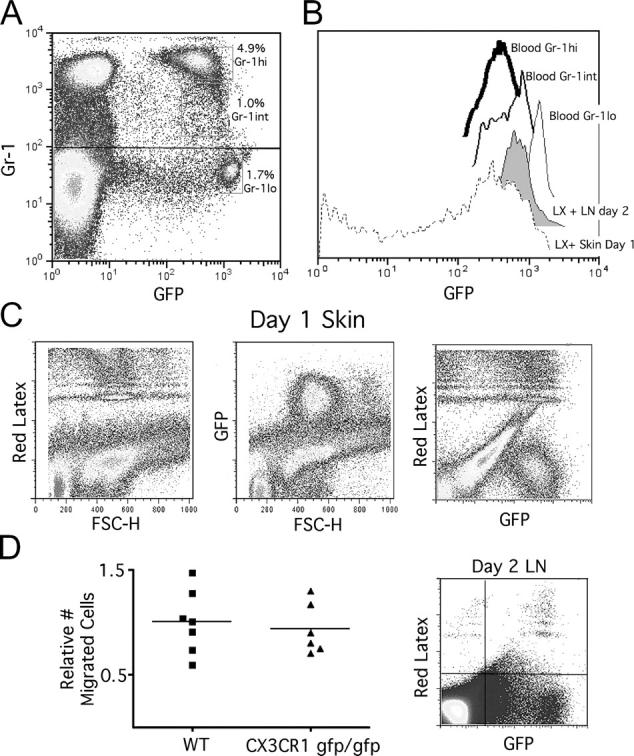
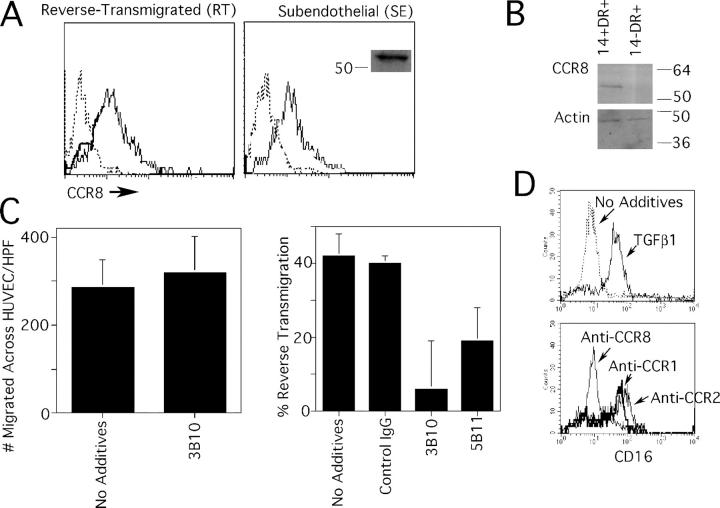
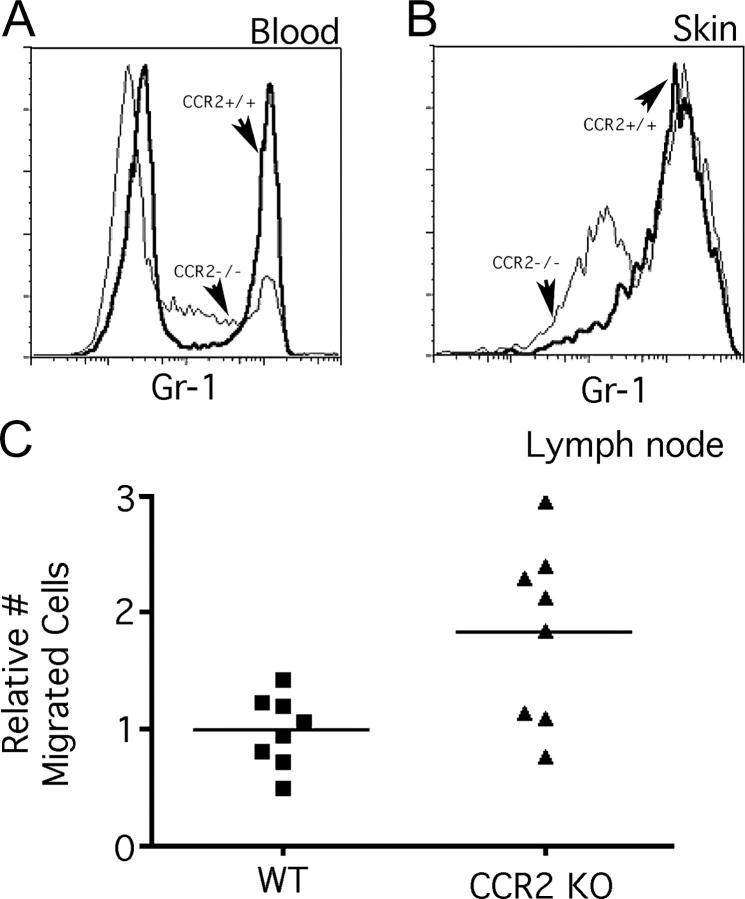
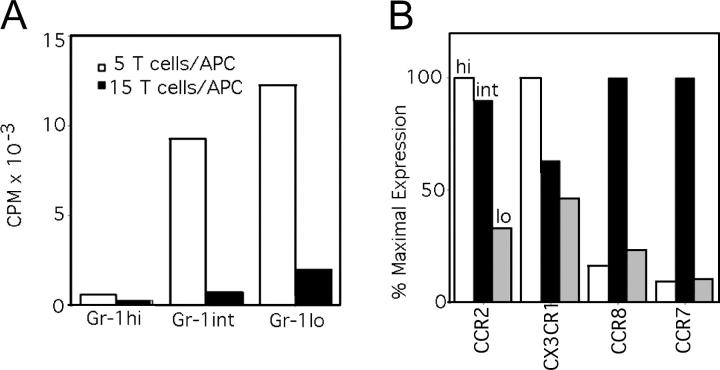
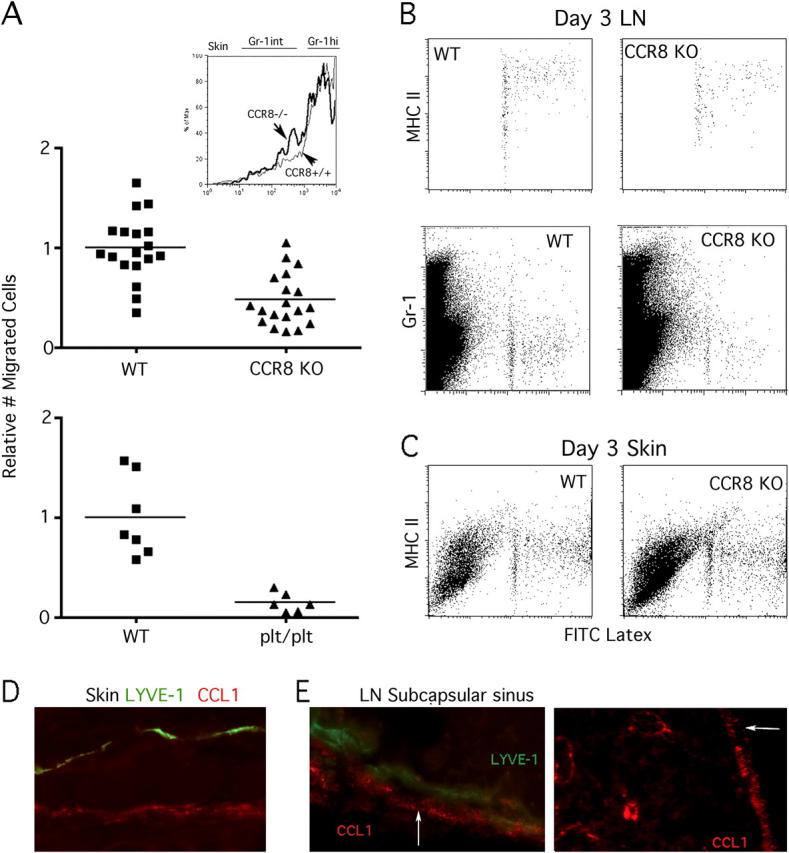
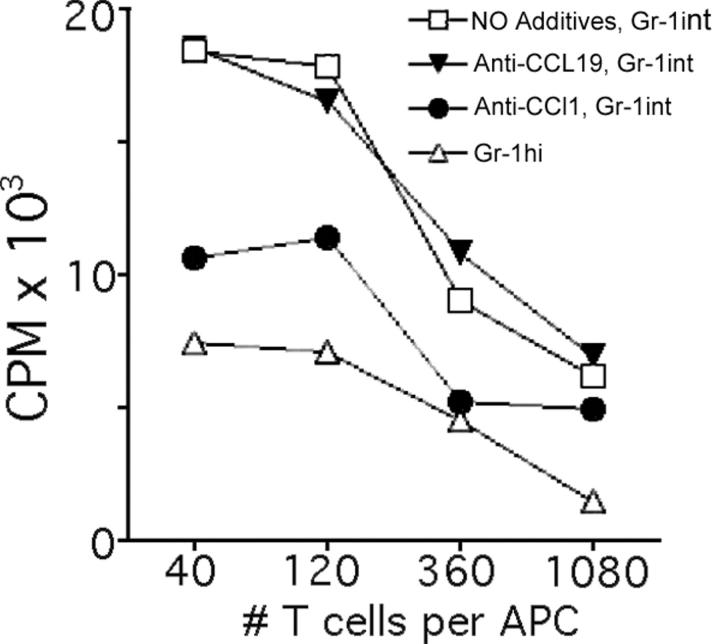
Studying the influence of chemokine receptors (CCRs) on monocyte fate may reveal information about which subpopulations of monocytes convert to dendritic cells (DCs) and the migration pathways that they use. First, we examined whether prominent CCRs on different monocyte subsets, CCR2 or CX3CR1, mediated migration events upstream of the accumulation of monocyte-derived DCs in lymph nodes (LNs). Monocytes were labeled and traced by uptake of latex microspheres in skin. Unexpectedly, neither CCR2 nor CX3CR1 were required. However, absence of CCR2 led to an increased labeling of the minor Gr-1int monocyte population, and the number of latex+ DCs that emigrated to LNs was correspondingly increased. Characterization of Gr-1int monocytes revealed that they selectively expressed CCR7 and CCR8 mRNA in blood. CCR7 and CCR8 pathways were used by monocyte-derived DCs during mobilization from skin to LNs. The role of CCR8 in emigration from tissues also applied to human monocyte-derived cells in a model of transendothelial trafficking. Collectively, the data suggest that Gr-1int monocytes may be most disposed to become a lymphatic-migrating DCs. When these monocyte-derived DCs exit skin to emigrate to LNs, they use not only CCR7 but also CCR8, which was not previously recognized to participate in migration to LNs.
研究趋化因子受体(CCRs)对单核细胞命运的影响,可能会揭示哪些单核细胞亚群会转化为树突状细胞(DCs)以及它们所采用的迁移途径。首先,我们检测了不同单核细胞亚群上的主要趋化因子受体CCR2或CX3CR1,是否介导了单核细胞衍生的DCs在淋巴结(LNs)中积累之前的迁移事件。通过在皮肤中摄取乳胶微球对单核细胞进行标记和追踪。出乎意料的是,CCR2和CX3CR1都不是必需的。然而,CCR2的缺失导致了次要的Gr-1int单核细胞群体标记增加,迁移到LNs的乳胶+ DCs数量相应增加。对Gr-1int单核细胞的特征分析表明,它们在血液中选择性表达CCR7和CCR8 mRNA。单核细胞衍生的DCs在从皮肤动员到LNs的过程中使用CCR7和CCR8途径。CCR8在从组织中迁出的作用也适用于跨内皮运输模型中的人单核细胞衍生细胞。总体而言,数据表明Gr-1int单核细胞可能最倾向于成为淋巴迁移的DCs。当这些单核细胞衍生的DCs离开皮肤迁移到LNs时,它们不仅使用CCR7,还使用CCR8,而CCR8以前未被认为参与向LNs的迁移。