Blink Elizabeth J, Light Amanda, Kallies Axel, Nutt Stephen L, Hodgkin Philip D, Tarlinton David M
The Walter and Eliza Hall Institute of Medical Research, Parkville 3050, Australia.
J Exp Med. 2005 Feb 21;201(4):545-54. doi: 10.1084/jem.20042060. Epub 2005 Feb 14.
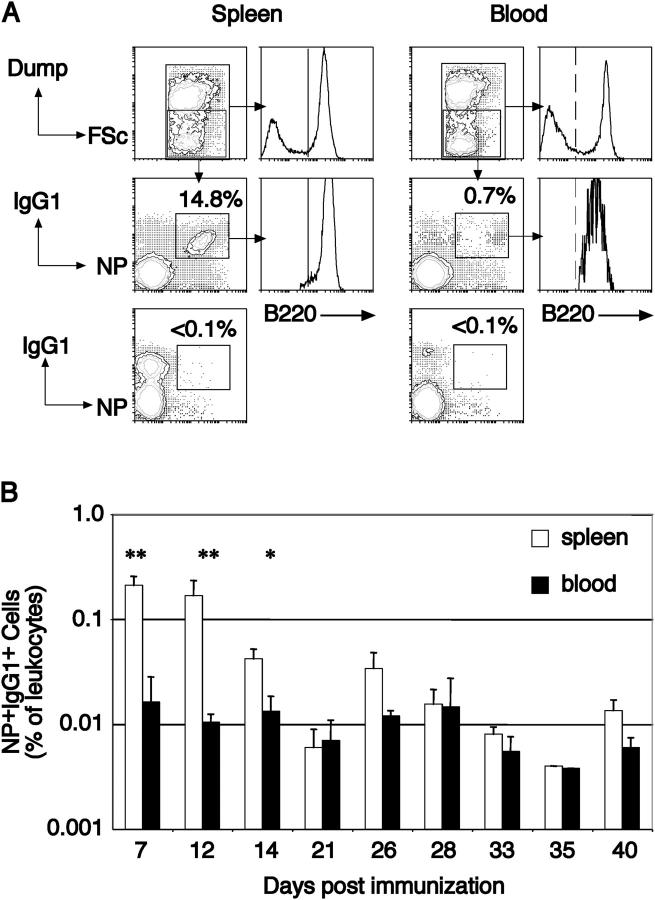
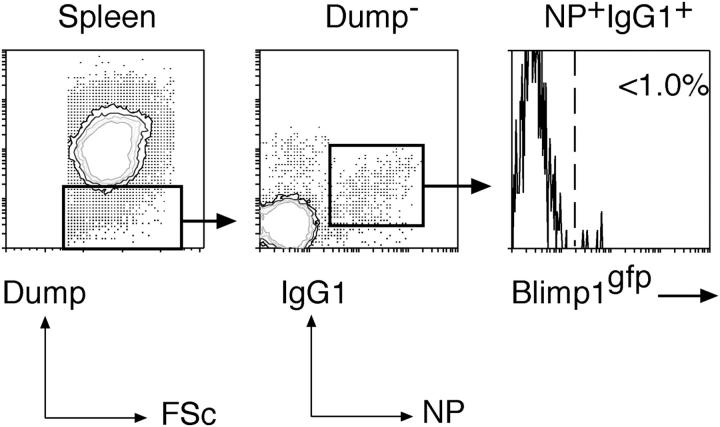
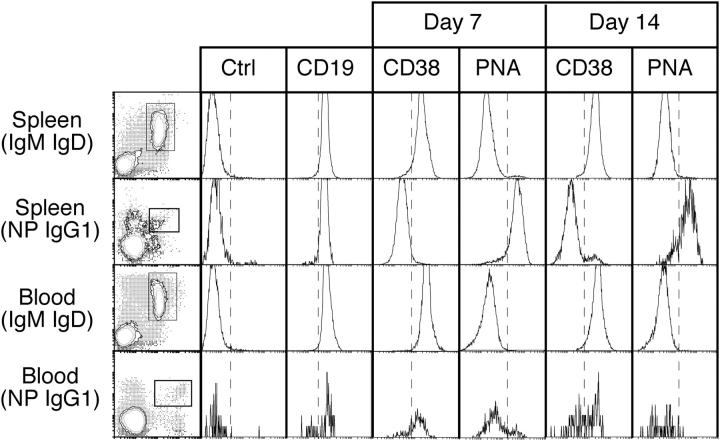
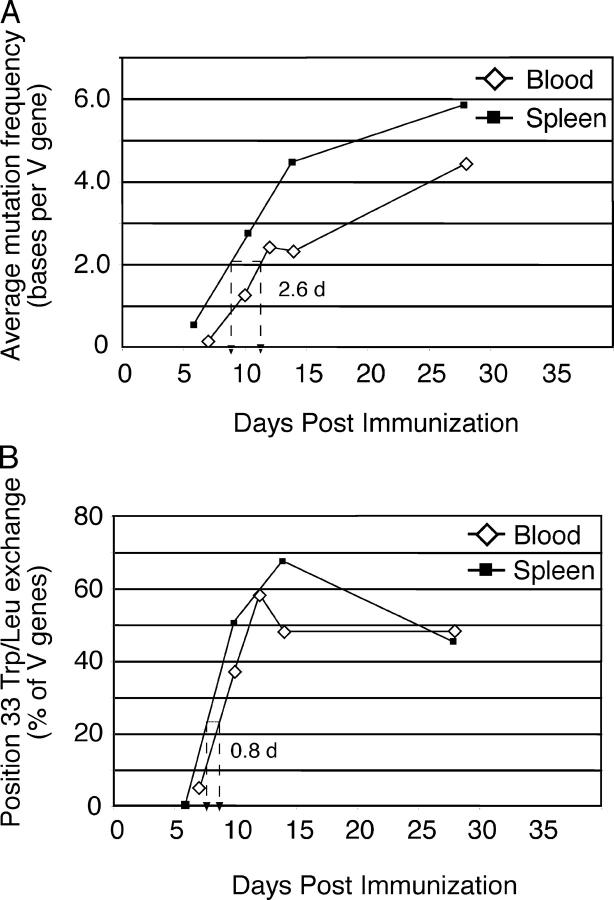
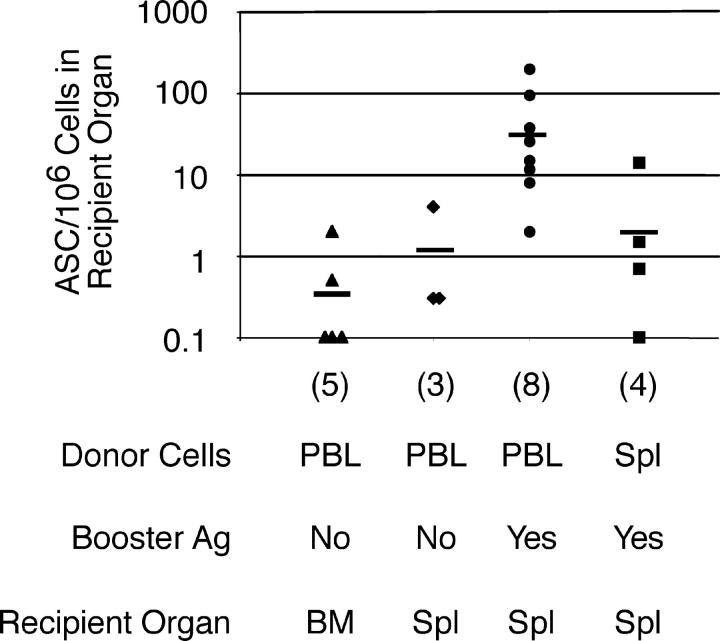
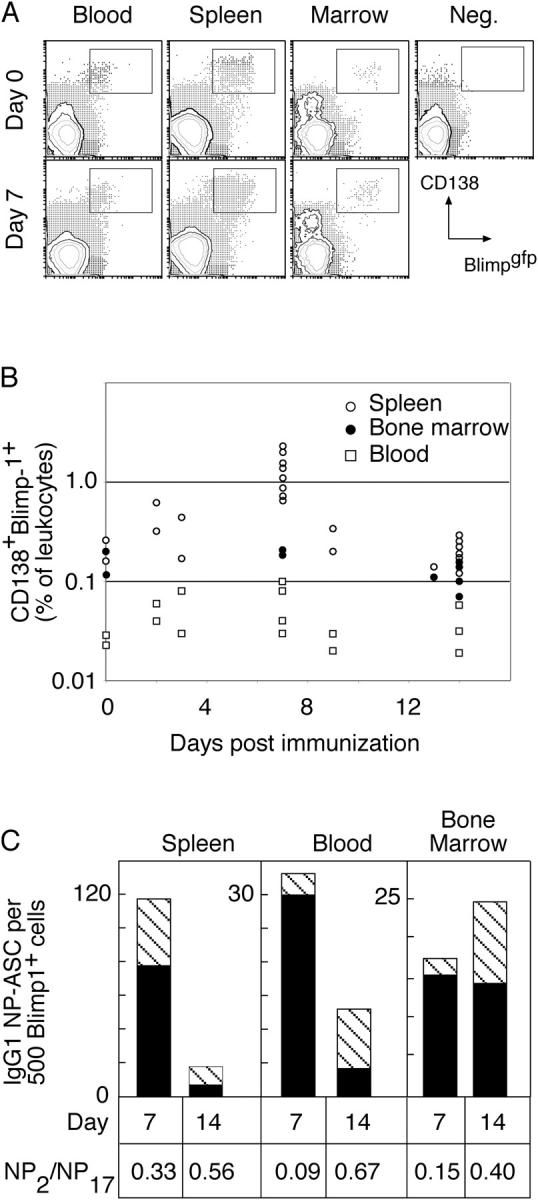
Immunization with a T cell-dependent antigen elicits production of specific memory B cells and antibody-secreting cells (ASCs). The kinetic and developmental relationships between these populations and the phenotypic forms they and their precursors may take remain unclear. Therefore, we examined the early stages of a primary immune response, focusing on the appearance of antigen-specific B cells in blood. Within 1 wk, antigen-specific B cells appear in the blood with either a memory phenotype or as immunoglobulin (Ig)G1 ASCs expressing blimp-1. The memory cells have mutated V(H) genes; respond to the chemokine CXCL13 but not CXCL12, suggesting recirculation to secondary lymphoid organs; uniformly express B220; show limited differentiation potential unless stimulated by antigen; and develop independently of blimp-1 expression. The antigen-specific IgG1 ASCs in blood show affinity maturation paralleling that of bone marrow ASCs, raising the possibility that this compartment is established directly by blood-borne ASCs. We find no evidence for a blimp-1-expressing preplasma memory compartment, suggesting germinal center output is restricted to ASCs and B220(+) memory B cells, and this is sufficient to account for the process of affinity maturation.
用依赖T细胞的抗原进行免疫会引发特异性记忆B细胞和抗体分泌细胞(ASC)的产生。这些细胞群体之间的动力学和发育关系,以及它们及其前体可能呈现的表型形式仍不清楚。因此,我们研究了初次免疫反应的早期阶段,重点关注血液中抗原特异性B细胞的出现。在1周内,抗原特异性B细胞出现在血液中,具有记忆表型或作为表达B淋巴细胞诱导成熟蛋白-1(Blimp-1)的免疫球蛋白(Ig)G1 ASC。记忆细胞具有突变的重链可变区(V(H))基因;对趋化因子CXC趋化因子配体13(CXCL13)有反应,但对CXC趋化因子配体12(CXCL12)无反应,提示其再循环至二级淋巴器官;均一性表达B220;除非受到抗原刺激,分化潜能有限;且其发育独立于Blimp-1表达。血液中的抗原特异性IgG1 ASC显示出与骨髓ASC相似的亲和力成熟,这增加了该细胞区室直接由血源性ASC建立的可能性。我们没有发现存在表达Blimp-1的前浆细胞记忆细胞区室的证据,提示生发中心输出仅限于ASC和B220(+)记忆B细胞,而这足以解释亲和力成熟过程。