Carrington Mary, Wang Sophia, Martin Maureen P, Gao Xiaojiang, Schiffman Mark, Cheng Jie, Herrero Rolando, Rodriguez Ana Cecilia, Kurman Robert, Mortel Rodrigue, Schwartz Peter, Glass Andrew, Hildesheim Allan
Basic Research Program, Laboratory of Genomic Diversity, Science Applications International Corporation-Frederick, Inc., National Cancer Institute, Frederick, MD 21702, USA.
J Exp Med. 2005 Apr 4;201(7):1069-75. doi: 10.1084/jem.20042158.
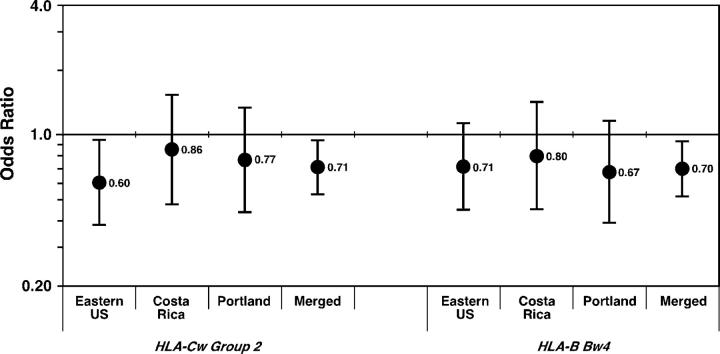
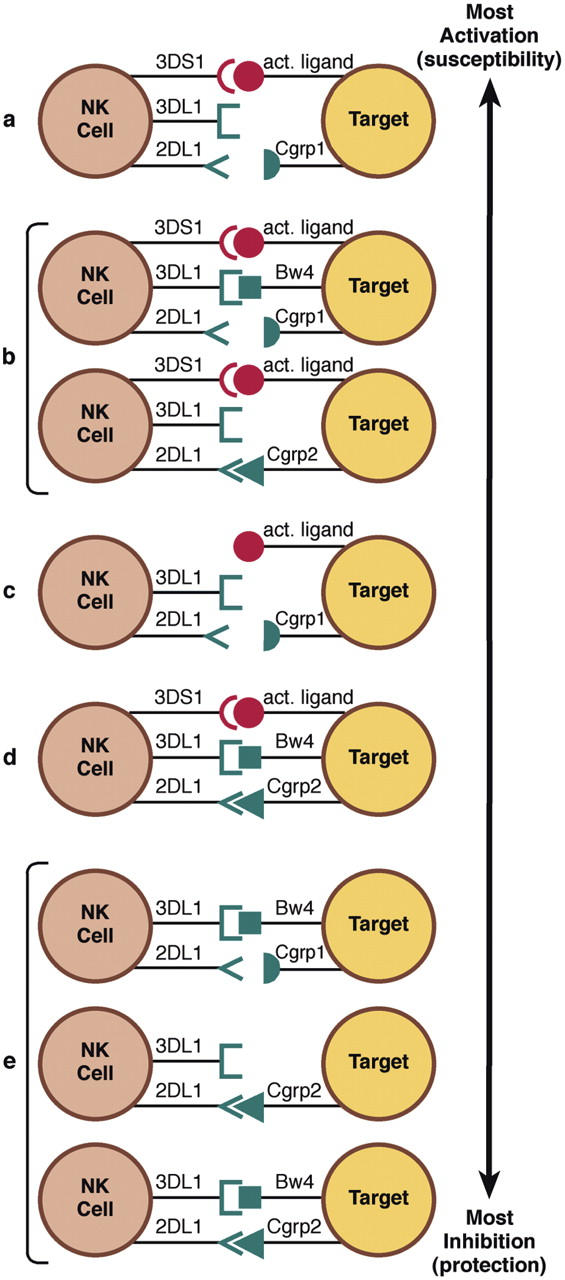
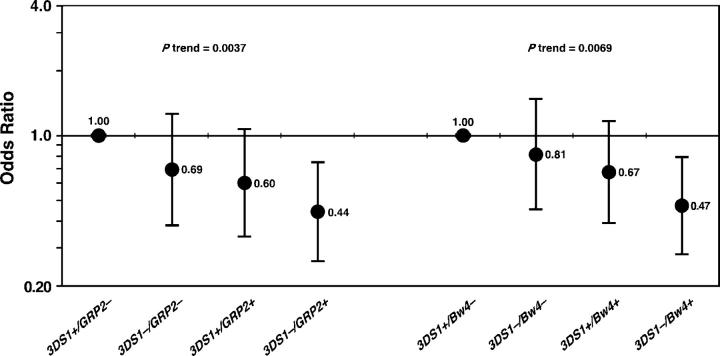
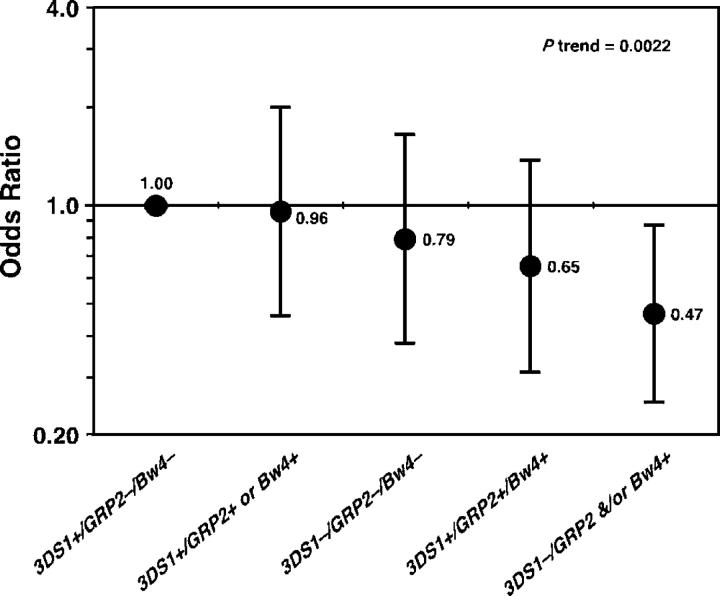
Killer immunoglobulin-like receptor (KIR) recognition of specific human histocompatibility leukocyte antigen (HLA) class I allotypes contributes to the array of receptor-ligand interactions that determine natural killer (NK) cell response to its target. Contrasting genetic effects of KIR/HLA combinations have been observed in infectious and autoimmune diseases, where genotypes associated with NK cell activation seem to be protective or to confer susceptibility, respectively. We show here that combinations of KIR and HLA loci also affect the risk of developing cervical neoplasia. Specific inhibitory KIR/HLA ligand pairs decrease the risk of developing neoplasia, whereas the presence of the activating receptor KIR3DS1 results in increased risk of disease, particularly when the protective inhibitory combinations are missing. These data suggest a continuum of resistance conferred by NK cell inhibition to susceptibility involving NK cell activation in the development of cervical neoplasia and underscore the pervasive influence of KIR/HLA genetic variation in human disease pathogenesis.
杀伤细胞免疫球蛋白样受体(KIR)对特定人类组织相容性白细胞抗原(HLA)I类同种异型的识别,促成了一系列受体 - 配体相互作用,这些相互作用决定了自然杀伤(NK)细胞对其靶标的反应。在感染性疾病和自身免疫性疾病中,已观察到KIR/HLA组合的不同遗传效应,其中与NK细胞激活相关的基因型似乎分别具有保护作用或导致易感性。我们在此表明,KIR和HLA基因座的组合也会影响发生宫颈肿瘤的风险。特定的抑制性KIR/HLA配体对可降低发生肿瘤的风险,而激活受体KIR3DS1的存在则会增加疾病风险,尤其是在缺少保护性抑制组合的情况下。这些数据表明,在宫颈肿瘤发生过程中,NK细胞抑制所赋予的抗性到涉及NK细胞激活的易感性是一个连续过程,并强调了KIR/HLA基因变异在人类疾病发病机制中的广泛影响。