Johansson Sofia, Johansson Maria, Rosmaraki Eleftheria, Vahlne Gustaf, Mehr Ramit, Salmon-Divon Mali, Lemonnier François, Kärre Klas, Höglund Petter
Microbiology and Tumor Biology Center, Karolinska Institutet, S-17177 Stockholm, Sweden.
J Exp Med. 2005 Apr 4;201(7):1145-55. doi: 10.1084/jem.20050167.
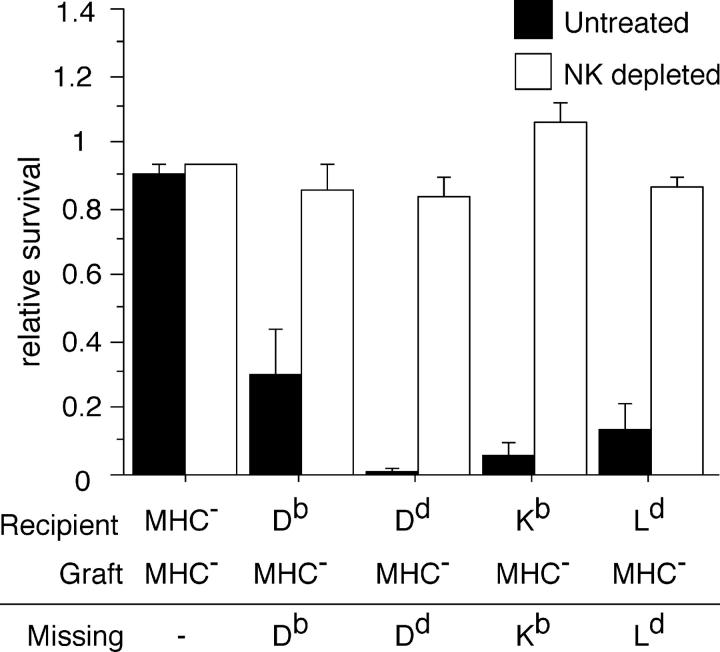
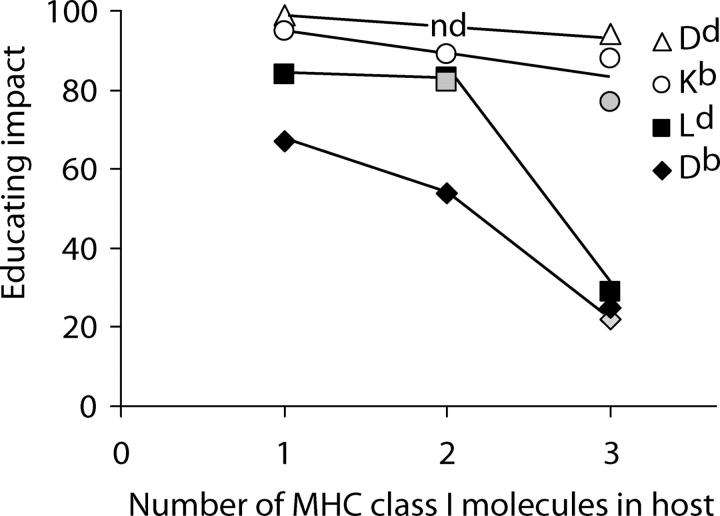
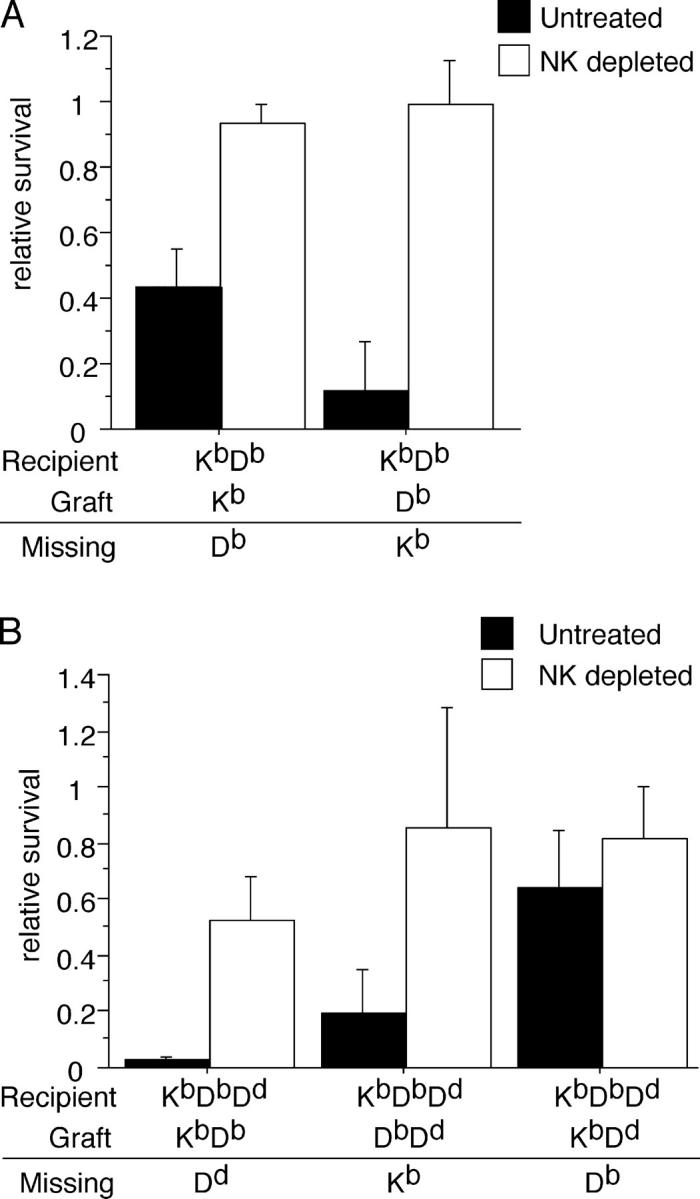
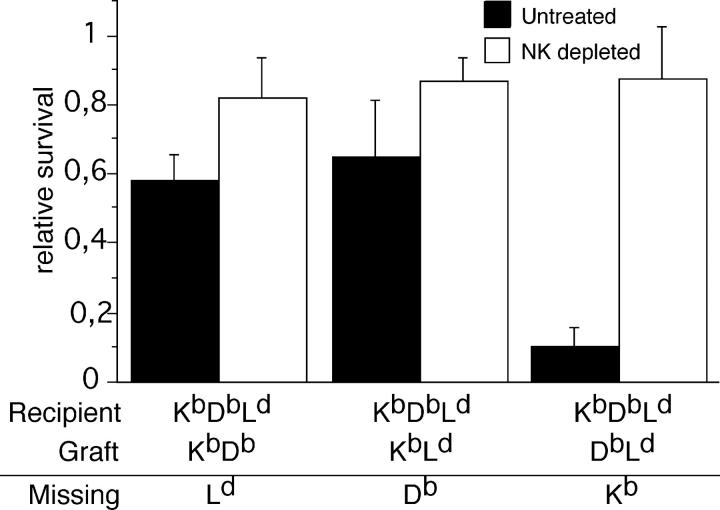
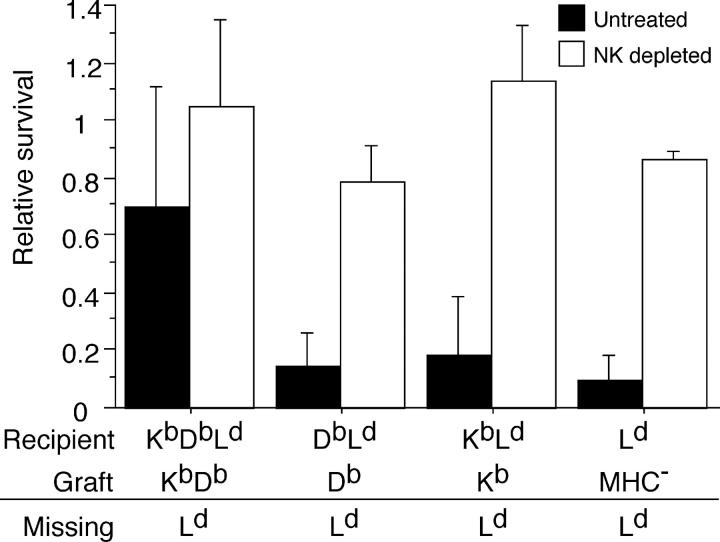
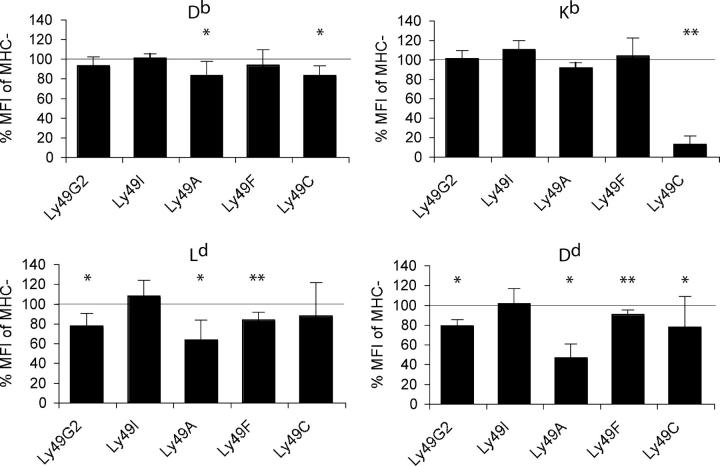
The ability of murine NK cells to reject cells lacking self MHC class I expression results from an in vivo education process. To study the impact of individual MHC class I alleles on this process, we generated mice expressing single MHC class I alleles (K(b), D(b), D(d), or L(d)) or combinations of two or more alleles. All single MHC class I mice rejected MHC class I-deficient cells in an NK cell-dependent way. Expression of K(b) or D(d) conveyed strong rejection of MHC class I-deficient cells, whereas the expression of D(b) or L(d) resulted in weaker responses. The educating impact of weak ligands (D(b) and L(d)) was further attenuated by the introduction of additional MHC class I alleles, whereas strong ligands (K(b) and D(d)) maintained their educating impact under such conditions. An analysis of activating and inhibitory receptors in single MHC class I mice suggested that the educating impact of a given MHC class I molecule was controlled both by the number of NK cells affected and by the strength of each MHC class I-Ly49 receptor interaction, indicating that NK cell education may be regulated by a combination of qualitative and quantitative events.
小鼠自然杀伤(NK)细胞排斥缺乏自身MHC I类分子表达细胞的能力源于一个体内的驯化过程。为了研究单个MHC I类等位基因对这一过程的影响,我们构建了表达单个MHC I类等位基因(K(b)、D(b)、D(d)或L(d))或两个或更多等位基因组合的小鼠。所有单个MHC I类小鼠均以NK细胞依赖的方式排斥MHC I类缺陷细胞。K(b)或D(d)的表达介导了对MHC I类缺陷细胞的强烈排斥,而D(b)或L(d)的表达则导致较弱的反应。引入额外的MHC I类等位基因会进一步减弱弱配体(D(b)和L(d))的驯化作用,而强配体(K(b)和D(d))在这种情况下仍保持其驯化作用。对单个MHC I类小鼠中激活和抑制性受体的分析表明,给定MHC I类分子的驯化作用既受受影响NK细胞数量的控制,也受每个MHC I类-Ly49受体相互作用强度的控制,这表明NK细胞驯化可能受定性和定量事件组合的调节。