Morris Peter S, Leach Amanda J, Silberberg Peter, Mellon Gabrielle, Wilson Cate, Hamilton Elizabeth, Beissbarth Jemima
Ear Health and Education Unit, Menzies School of Health Research, Darwin, Australia.
BMC Pediatr. 2005 Jul 20;5:27. doi: 10.1186/1471-2431-5-27.
Middle ear disease (otitis media) is common and frequently severe in Australian Aboriginal children. There have not been any recent large-scale surveys using clear definitions and a standardised middle ear assessment. The aim of the study was to determine the prevalence of middle ear disease (otitis media) in a high-risk population of young Aboriginal children from remote communities in Northern and Central Australia.
709 Aboriginal children aged 6-30 months living in 29 communities from 4 health regions participated in the study between May and November 2001. Otitis media (OM) and perforation of the tympanic membrane (TM) were diagnosed by tympanometry, pneumatic otoscopy, and video-otoscopy. We used otoscopic criteria (bulging TM or recent perforation) to diagnose acute otitis media.
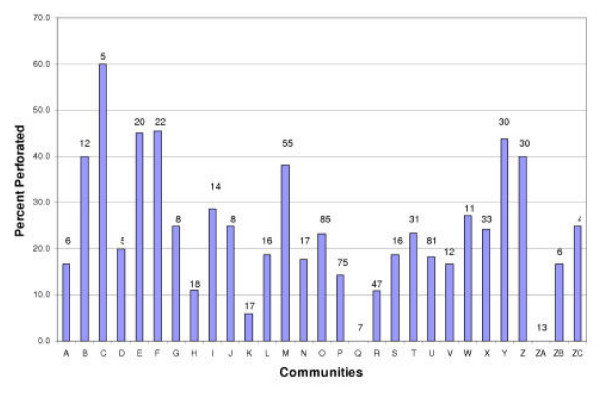
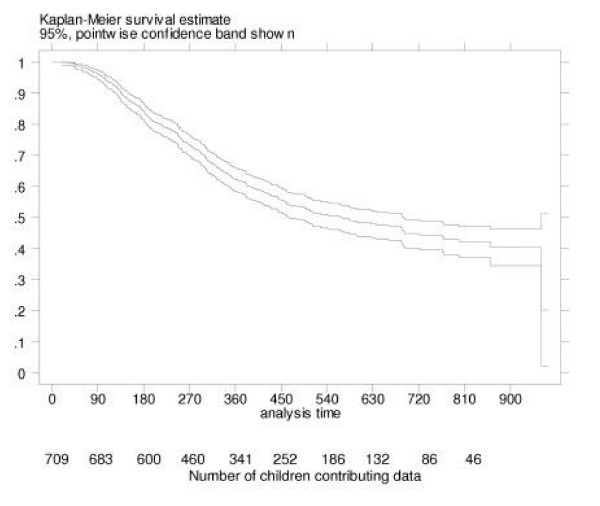
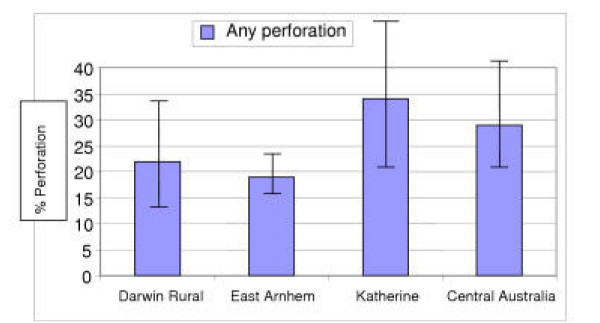
914 children were eligible to participate in the study and 709 were assessed (78%). Otitis media affected nearly all children (91%, 95%CI 88, 94). Overall prevalence estimates adjusted for clustering by community were: 10% (95%CI 8, 12) for unilateral otitis media with effusion (OME); 31% (95%CI 27, 34) for bilateral OME; 26% (95%CI 23, 30) for acute otitis media without perforation (AOM/woP); 7% (95%CI 4, 9) for AOM with perforation (AOM/wiP); 2% (95%CI 1, 3) for dry perforation; and 15% (95%CI 11, 19) for chronic suppurative otitis media (CSOM). The perforation prevalence ranged from 0-60% between communities and from 19-33% between regions. Perforations of the tympanic membrane affected 40% of children in their first 18 months of life. These were not always persistent.
Overall, 1 in every 2 children examined had otoscopic signs consistent with suppurative ear disease and 1 in 4 children had a perforated tympanic membrane. Some of the children with intact tympanic membranes had experienced a perforation that healed before the survey. In this high-risk population, high rates of tympanic perforation were associated with high rates of bulging of the tympanic membrane.
中耳疾病(中耳炎)在澳大利亚原住民儿童中很常见,且往往较为严重。近期尚未有使用明确的定义和标准化中耳评估方法的大规模调查。本研究的目的是确定澳大利亚北部和中部偏远社区的高危原住民幼儿群体中耳疾病(中耳炎)的患病率。
2001年5月至11月期间,来自4个卫生区域29个社区的709名6至30个月大的原住民儿童参与了本研究。通过鼓室导抗图、气耳镜检查和视频耳镜检查诊断中耳炎(OM)和鼓膜穿孔(TM)。我们使用耳镜检查标准(鼓膜膨出或近期穿孔)诊断急性中耳炎。
914名儿童符合参与研究的条件,709名儿童接受了评估(78%)。几乎所有儿童都患有中耳炎(91%,95%可信区间88,94)。经社区聚类调整后的总体患病率估计为:单侧中耳积液(OME)为10%(95%可信区间8,12);双侧OME为31%(95%可信区间27,34);无穿孔的急性中耳炎(AOM/无穿孔)为26%(95%可信区间23,30);有穿孔的AOM(AOM/有穿孔)为7%(95%可信区间4,9);干性穿孔为2%(95%可信区间1,3);慢性化脓性中耳炎(CSOM)为15%(95%可信区间11,19)。各社区之间的穿孔患病率在0至60%之间,各区域之间在19至33%之间。鼓膜穿孔影响了40%的18个月内的儿童。这些穿孔并非总是持续存在。
总体而言,每2名接受检查的儿童中有1名有与化脓性耳部疾病相符的耳镜检查体征,每4名儿童中有1名鼓膜穿孔。一些鼓膜完整的儿童在调查前经历过穿孔且已愈合。在这个高危人群中,鼓膜高穿孔率与鼓膜高膨出率相关。