Walker Lynn S, Smith Craig A, Garber Judy, Claar Robyn Lewis
Division of Adolescent Medicine and Behavioral Science, Department of Pediatrics, Vanderbilt University School of Medicine, Nashville, TN 37232-3571, USA.
Health Psychol. 2005 Jul;24(4):364-74. doi: 10.1037/0278-6133.24.4.364.
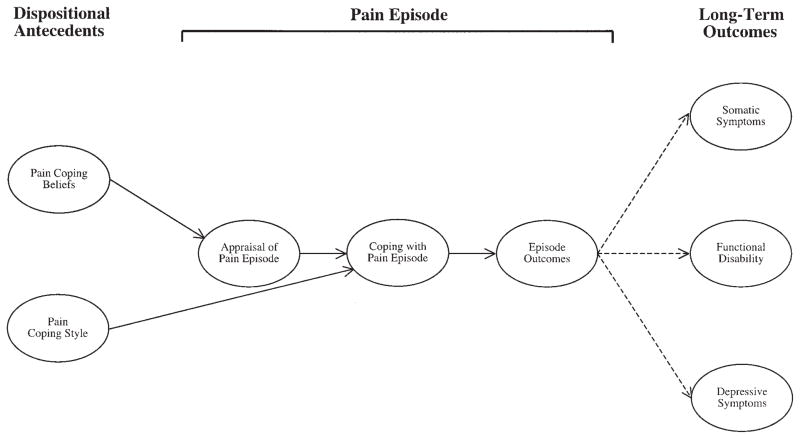
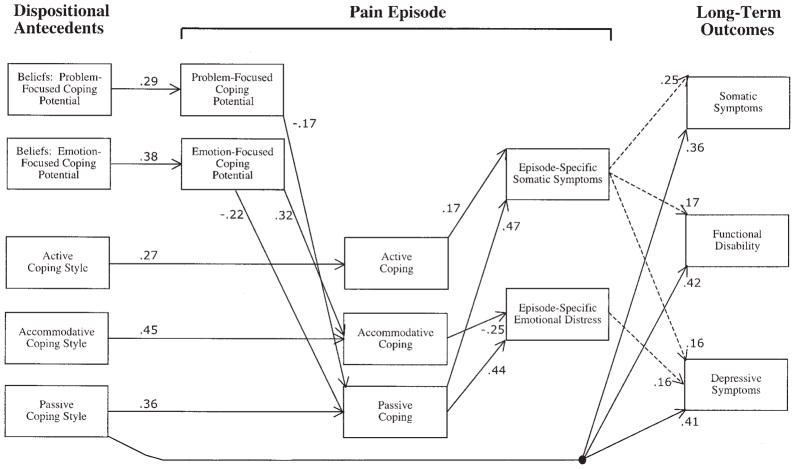
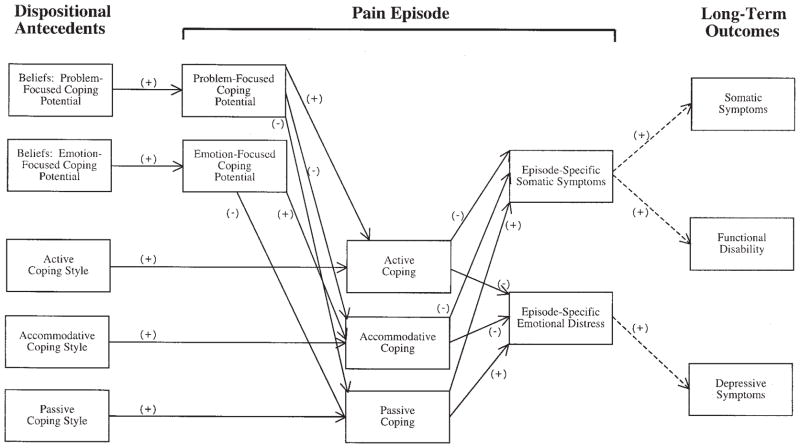
This prospective study of children with recurrent abdominal pain (N=133; ages 8--15 years) used path analysis to examine relations among dispositional pain beliefs and coping styles, cognitions and behavior related to a specific pain episode, and short- and long-term outcomes. Children believing they could not reduce or accept pain appraised their episode-specific coping ability as low and reported passive coping behavior. Dispositional passive coping had direct effects on both episode-specific passive coping and long-term symptoms and disability. Accommodative coping (acceptance and self-encouragement) was associated with reduced episode-specific distress, which itself predicted reduced depressive symptoms 3 months later. Results suggest that coping-skill interventions for children with chronic pain should target reductions in passive coping and consider the potential benefits of accommodative coping strategies.
这项针对复发性腹痛儿童(N = 133;年龄8 - 15岁)的前瞻性研究采用路径分析来检验特质性疼痛信念与应对方式、与特定疼痛发作相关的认知和行为,以及短期和长期结果之间的关系。那些认为自己无法减轻或接受疼痛的儿童,对其特定发作的应对能力评价较低,并报告有消极的应对行为。特质性消极应对对特定发作的消极应对以及长期症状和残疾都有直接影响。适应性应对(接受和自我鼓励)与特定发作时的痛苦减轻相关,而这本身又预示着3个月后抑郁症状会减轻。结果表明,针对慢性疼痛儿童的应对技能干预应旨在减少消极应对,并考虑适应性应对策略的潜在益处。