Parsons Jason L, Zharkov Dmitry O, Dianov Grigory L
MRC Radiation and Genome Stability Unit Harwell, Oxfordshire, OX11 0RD, UK.
Nucleic Acids Res. 2005 Aug 29;33(15):4849-56. doi: 10.1093/nar/gki816. Print 2005.
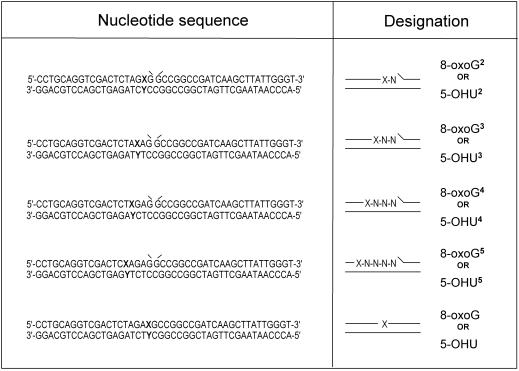
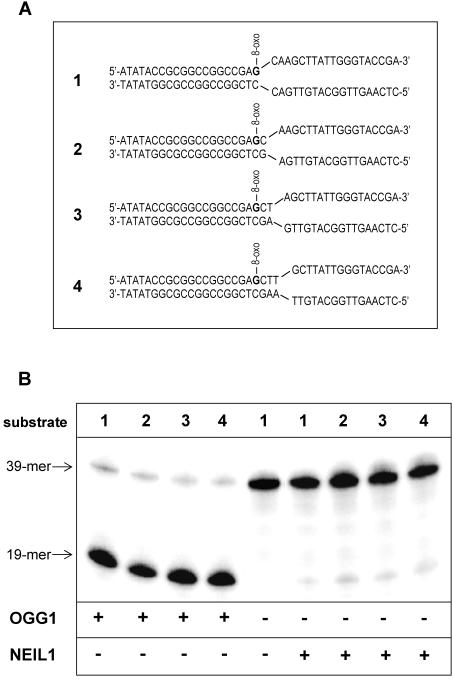
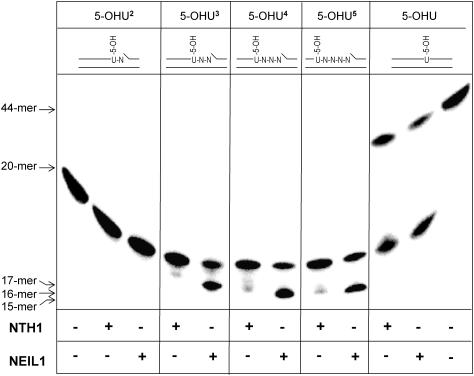
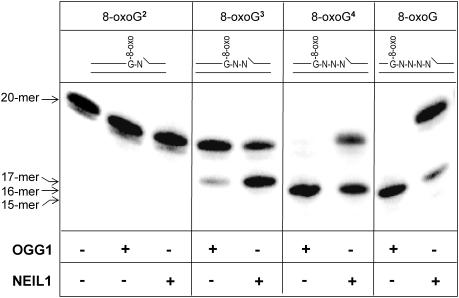
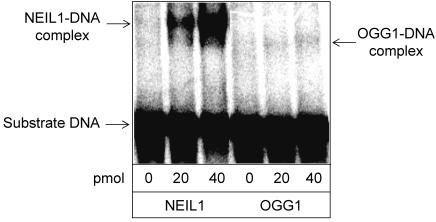
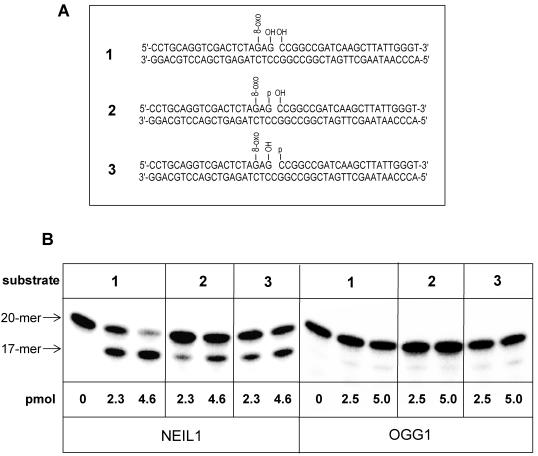
Base excision repair is the major pathway for the repair of oxidative DNA damage in human cells that is initiated by a damage-specific DNA glycosylase. In human cells, the major DNA glycosylases for the excision of oxidative base damage are OGG1 and NTH1 that excise 8-oxoguanine and oxidative pyrimidines, respectively. We find that both enzymes have limited activity on DNA lesions located in the vicinity of the 3' end of a DNA single-strand break, suggesting that other enzymes are involved in the processing of such lesions. In this study, we identify and characterize NEIL1 as a major DNA glycosylase that excises oxidative base damage located in close proximity to the 3' end of a DNA single-strand break.
碱基切除修复是人类细胞中修复氧化性DNA损伤的主要途径,该途径由损伤特异性DNA糖基化酶启动。在人类细胞中,切除氧化性碱基损伤的主要DNA糖基化酶是OGG1和NTH1,它们分别切除8-氧代鸟嘌呤和氧化性嘧啶。我们发现这两种酶对位于DNA单链断裂3'端附近的DNA损伤的活性有限,这表明其他酶参与了此类损伤的处理。在本研究中,我们鉴定并表征了NEIL1作为一种主要的DNA糖基化酶,它能切除位于DNA单链断裂3'端附近的氧化性碱基损伤。