Taniguchi Yuko, Nosaka Kisato, Yasunaga Jun-ichirou, Maeda Michiyuki, Mueller Nancy, Okayama Akihiko, Matsuoka Masao
Laboratory of Virus Immunology, Institute for Virus Research, Kyoto University, Kyoto 606-8507, Japan.
Retrovirology. 2005 Oct 22;2:64. doi: 10.1186/1742-4690-2-64.
Human T-cell leukemia virus type I (HTLV-I) causes adult T-cell leukemia (ATL) after a long latent period. Among accessory genes encoded by HTLV-I, the tax gene is thought to play a central role in oncogenesis. However, Tax expression is disrupted by several mechanims including genetic changes of the tax gene, deletion/hypermethylation of 5'-LTR. To clarify the role of epigenetic changes, we analyzed DNA methylation and histone modification in the whole HTLV-I provirus genome.
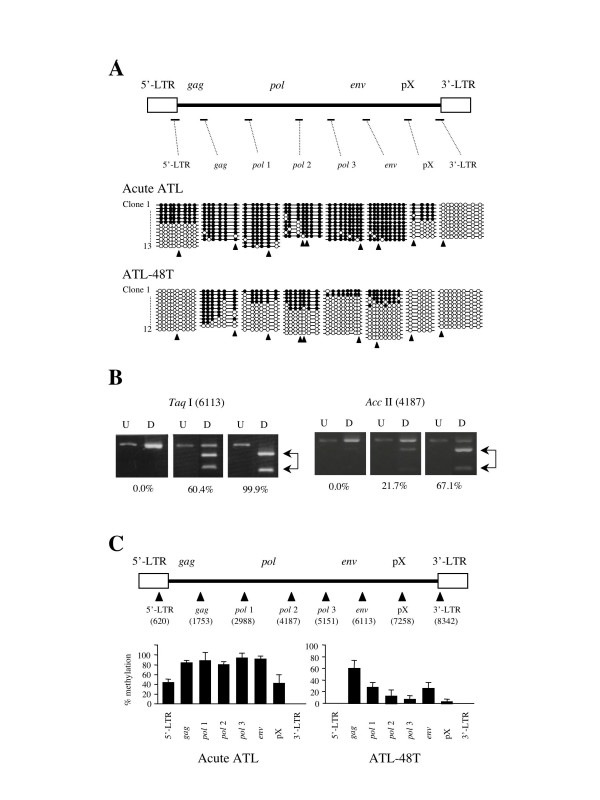
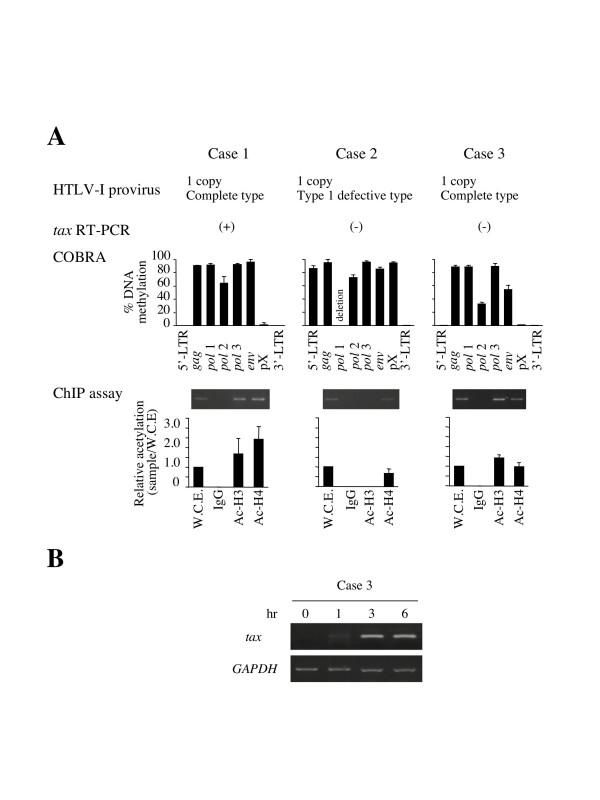
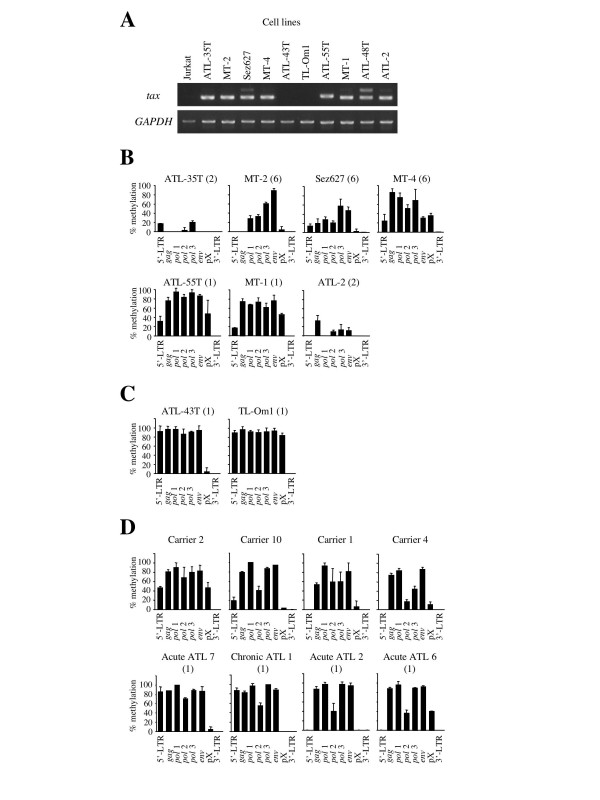
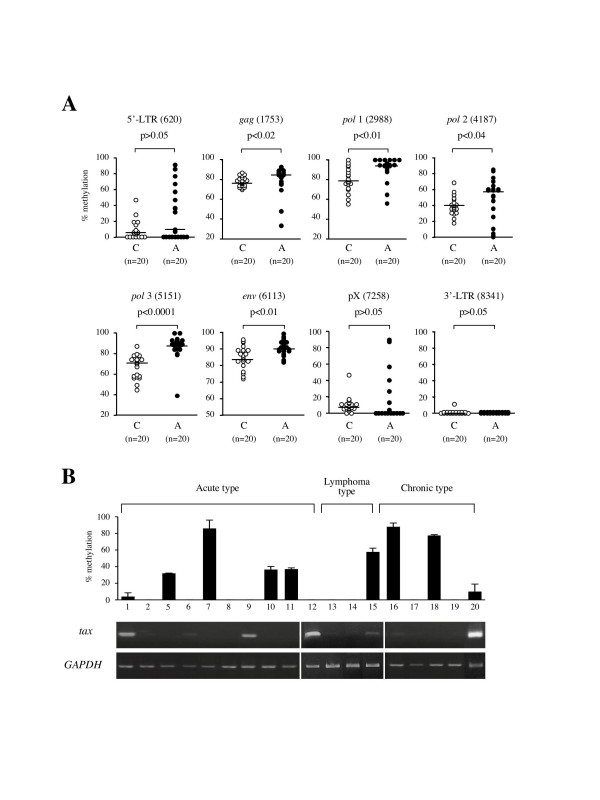
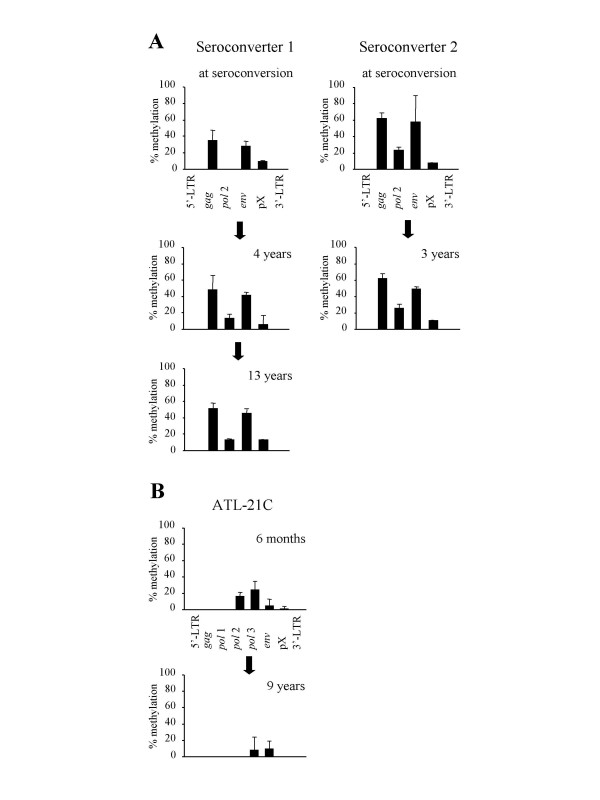
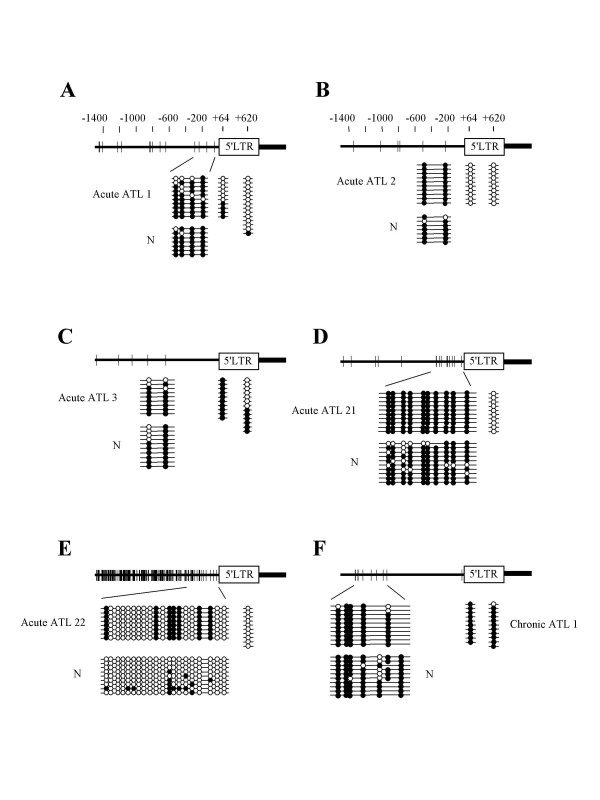
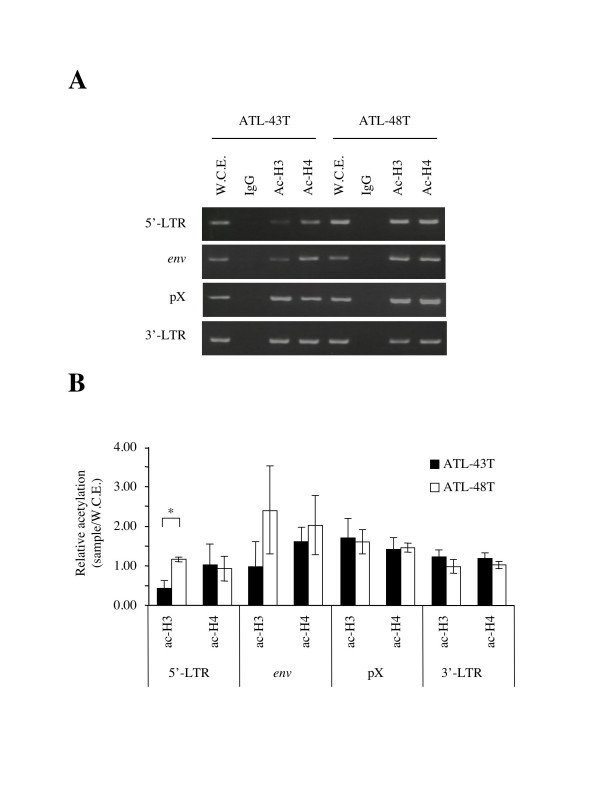
The gag, pol and env genes of HTLV-I provirus were more methylated than pX region, whereas methylation of 5'-LTR was variable and 3'-LTR was not methylated at all. In ATL cell lines, complete DNA methylation of 5'-LTR was associated with transcriptional silencing of viral genes. HTLV-I provirus was more methylated in primary ATL cells than in carrier state, indicating the association with disease progression. In seroconvertors, DNA methylation was already observed in internal sequences of provirus just after seroconversion. Taken together, it is speculated that DNA methylation first occurs in the gag, pol and env regions and then extends in the 5' and 3' directions in vivo, and when 5'-LTR becomes methylated, viral transcription is silenced. Analysis of histone modification in the HTLV-I provirus showed that the methylated provirus was associated with hypoacetylation. However, the tax gene transcript could not be detected in fresh ATL cells regardless of hyperacetylated histone H3 in 5'-LTR. The transcription rapidly recovered after in vitro culture in such ATL cells.
These results showed that epigenetic changes of provirus facilitated ATL cells to evade host immune system by suppressing viral gene transcription. In addition, this study shows the presence of another reversible mechanism that suppresses the tax gene transcription without DNA methylation and hypoacetylated histone.
人类嗜T淋巴细胞病毒I型(HTLV-I)经过较长潜伏期后可引发成人T细胞白血病(ATL)。在HTLV-I编码的辅助基因中,tax基因被认为在肿瘤发生过程中起核心作用。然而,Tax表达会因多种机制而受到干扰,包括tax基因的遗传改变、5'-LTR的缺失/高甲基化。为阐明表观遗传变化的作用,我们分析了整个HTLV-I前病毒基因组中的DNA甲基化和组蛋白修饰情况。
HTLV-I前病毒的gag、pol和env基因比pX区域甲基化程度更高,而5'-LTR的甲基化情况各异,3'-LTR则完全未甲基化。在ATL细胞系中,5'-LTR的完全DNA甲基化与病毒基因的转录沉默相关。HTLV-I前病毒在原发性ATL细胞中的甲基化程度高于携带状态,表明其与疾病进展相关。在血清转化者中,血清转化后不久就在前病毒的内部序列中观察到了DNA甲基化。综合来看,推测DNA甲基化首先发生在gag、pol和env区域,然后在体内向5'和3'方向延伸,当5'-LTR甲基化时,病毒转录被沉默。对HTLV-I前病毒中组蛋白修饰的分析表明,甲基化的前病毒与低乙酰化相关。然而,无论5'-LTR中的组蛋白H3是否高度乙酰化,在新鲜的ATL细胞中均未检测到tax基因转录本。此类ATL细胞在体外培养后转录迅速恢复。
这些结果表明,前病毒的表观遗传变化通过抑制病毒基因转录促进ATL细胞逃避宿主免疫系统。此外,本研究表明存在另一种可逆机制,该机制在无DNA甲基化和低乙酰化组蛋白的情况下抑制tax基因转录。