Holland Peter C, Petrovich Gorica D
Johns Hopkins University, 222 Ames Hall, 3400 North Charles St., Baltimore, MD 21218, USA.
Physiol Behav. 2005 Dec 15;86(5):747-61. doi: 10.1016/j.physbeh.2005.08.062. Epub 2005 Oct 25.
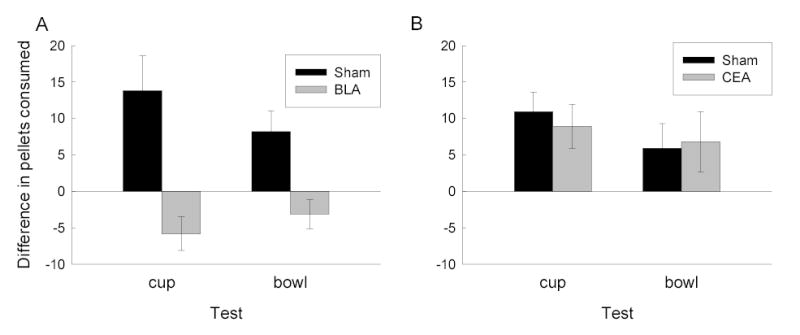
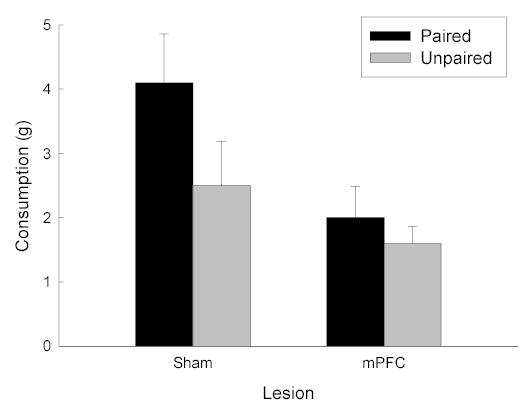
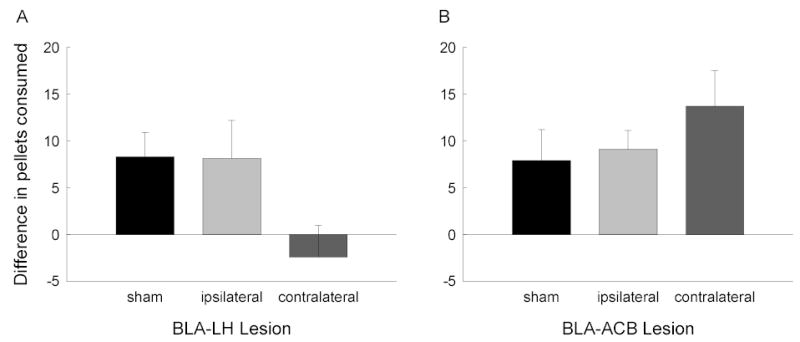
Associative learning processes play many important roles in the control of food consumption. Although these processes can complement regulatory mechanisms in the control of eating by providing opportunities for the anticipation of upcoming needs, they may also contribute to inappropriate or pathological consumption patterns by overriding internal regulatory signals. In this article, we first review some of the ways in which associative learning can contribute to the control of feeding, and then describe a neural systems analysis of a simple animal model of the control of feeding by Pavlovian-conditioned stimuli (CSs). Food-sated rats increase their food consumption after presentation of CSs that were previously paired with food while the rats were food-deprived. This cue-potentiated feeding is independent of conditioned approach responses, and is at least somewhat specific to the foods associated with those CSs. A series of studies that used neuroanatomical tract tracing, immediate early gene expression, and neurotoxic disconnection lesion techniques implicated circuitry that includes the basolateral complex of the amygdala, the lateral hypothalamus, and the medial prefrontal cortex, but not the amygdala central nucleus, nucleus accumbens, or lateral orbitofrontal cortex, in cue-potentiated feeding. These studies also showed dissociations between cue-potentiated feeding and other learned motivational phenomena that are known to depend on function of amygdala systems. The data suggest that cue-potentiated feeding is uniquely mediated by cortical and amygdalar neurons that directly target the lateral hypothalamus, and thus gain access to hypothalamic neuropeptide and other systems involved in the promotion and suppression of eating.
联想学习过程在食物摄入控制中发挥着许多重要作用。虽然这些过程可以通过提供预期即将到来需求的机会来补充进食控制中的调节机制,但它们也可能通过超越内部调节信号而导致不适当或病理性的消费模式。在本文中,我们首先回顾联想学习有助于进食控制的一些方式,然后描述对巴甫洛夫条件刺激(CSs)控制进食的简单动物模型的神经系统分析。食物充足的大鼠在呈现先前与食物配对的CSs后会增加食物摄入量,而这些大鼠在之前处于食物匮乏状态。这种线索增强的进食独立于条件性接近反应,并且至少在一定程度上对与那些CSs相关的食物具有特异性。一系列使用神经解剖学追踪、即时早期基因表达和神经毒性切断损伤技术的研究表明,线索增强的进食涉及包括杏仁核基底外侧复合体、下丘脑外侧区和内侧前额叶皮层在内的神经回路,但不涉及杏仁核中央核、伏隔核或外侧眶额叶皮层。这些研究还表明线索增强的进食与其他已知依赖杏仁核系统功能的学习动机现象之间存在分离。数据表明,线索增强的进食是由直接靶向下丘脑外侧区的皮层和杏仁核神经元独特介导的,从而能够接触到参与促进和抑制进食的下丘脑神经肽和其他系统。