Onganer P U, Seckl M J, Djamgoz M B A
Division of Cell and Molecular Biology, Imperial College London, South Kensington Campus, UK.
Br J Cancer. 2005 Nov 28;93(11):1197-201. doi: 10.1038/sj.bjc.6602857.
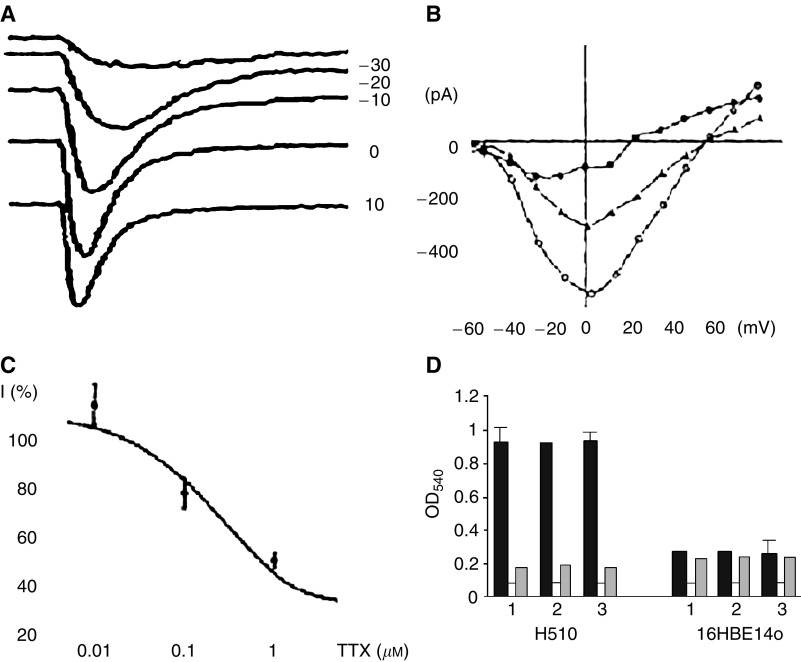
Wide ranging experimental evidence suggests that human small-cell lung cancer (SCLC) has a number of molecular and subcellular characteristics normally associated with neurones. This review outlines and discusses these characteristics in the light of recent developments in the field. Emphasis is placed upon neuronal cell adhesion molecules, neurone-restrictive silencer factor, neurotransmitters/peptides and voltage-gated ion, especially Na(+) channels. The hypothesis is put forward that acquisition of such characteristics and the membrane 'excitability' that would follow can accelerate metastatic progression. The clinical potential of the neuronal characteristics of SCLC, in particular ion channel expression/activity, is discussed in relation to possible novel diagnostic and therapeutic modalities.
大量实验证据表明,人类小细胞肺癌(SCLC)具有许多通常与神经元相关的分子和亚细胞特征。本综述根据该领域的最新进展概述并讨论了这些特征。重点放在神经元细胞粘附分子、神经元限制性沉默因子、神经递质/肽以及电压门控离子,尤其是钠(Na+)通道上。本文提出这样的假设,即获得这些特征以及随之而来的膜“兴奋性”会加速转移进程。结合可能的新型诊断和治疗方式,讨论了SCLC神经元特征的临床潜力,特别是离子通道的表达/活性。