Sacco Alessandra, Doyonnas Regis, LaBarge Mark A, Hammer Mark M, Kraft Peggy, Blau Helen M
Department of Molecular Pharmacology, Baxter Laboratory in Genetic Pharmacology, Stanford University School of Medicine, Stanford, CA 94305, USA.
J Cell Biol. 2005 Nov 7;171(3):483-92. doi: 10.1083/jcb.200506123.
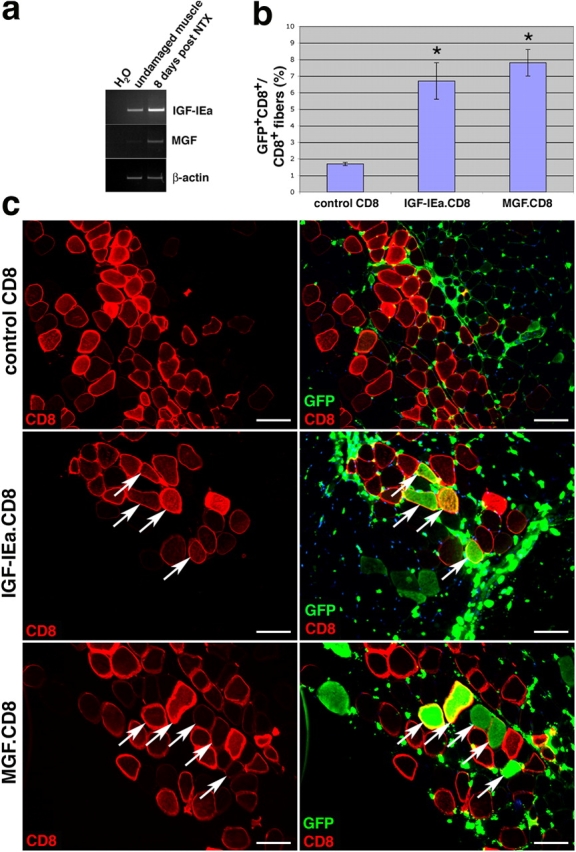
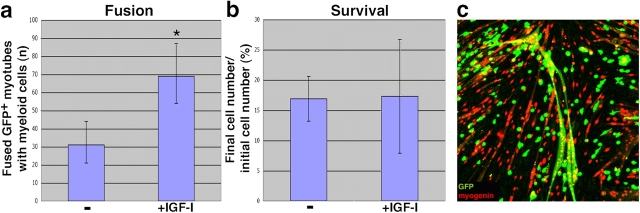
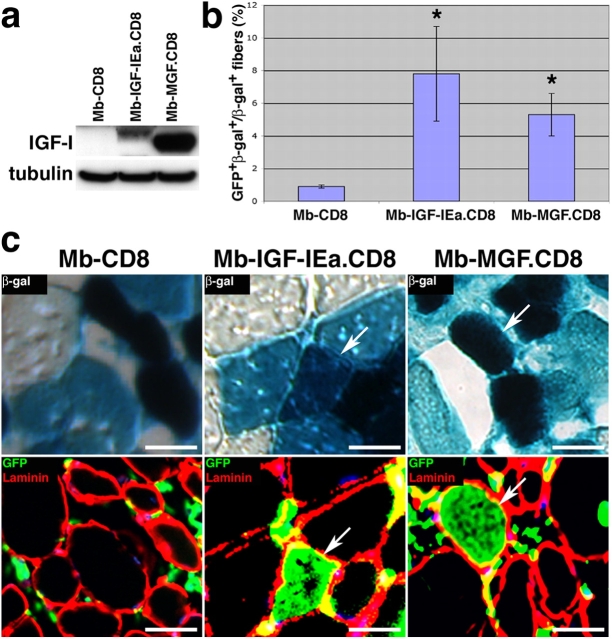
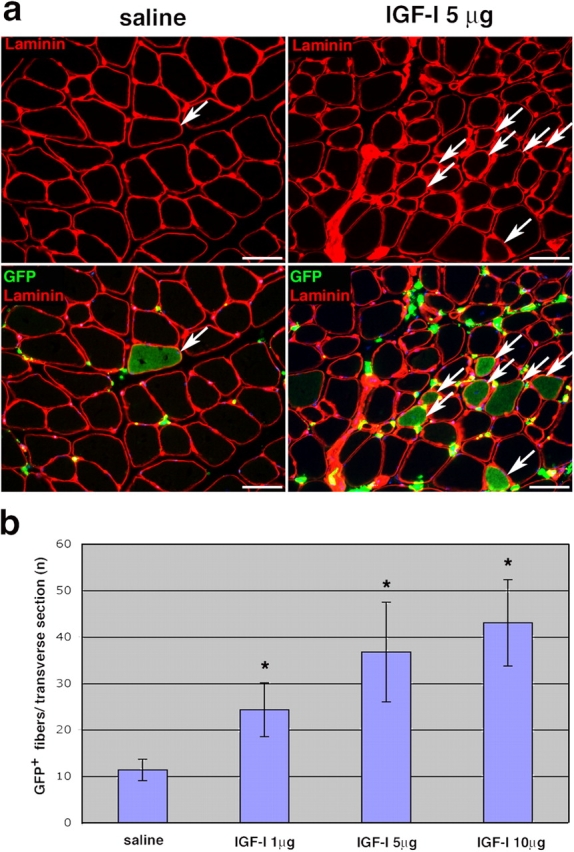
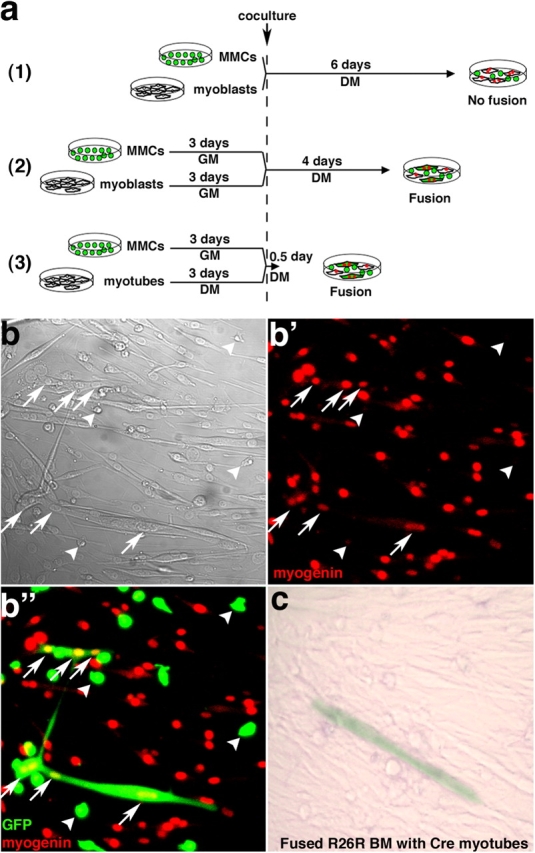
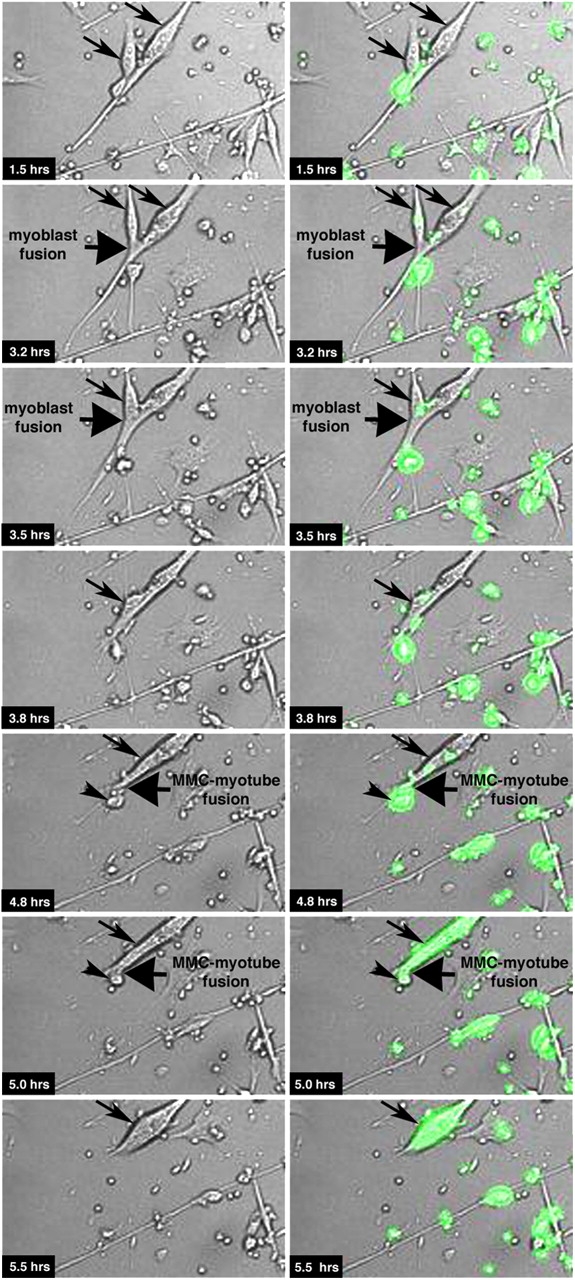
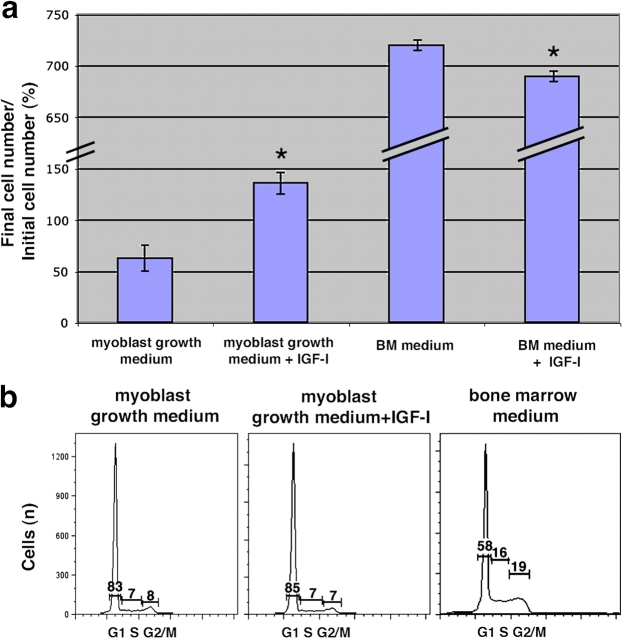
Muscle damage has been shown to enhance the contribution of bone marrow-derived cells (BMDCs) to regenerating skeletal muscle. One responsible cell type involved in this process is a hematopoietic stem cell derivative, the myelomonocytic precursor (MMC). However, the molecular components responsible for this injury-related response remain largely unknown. In this paper, we show that delivery of insulin-like growth factor I (IGF-I) to adult skeletal muscle by three different methods-plasmid electroporation, injection of genetically engineered myoblasts, and recombinant protein injection-increases the integration of BMDCs up to fourfold. To investigate the underlying mechanism, we developed an in vitro fusion assay in which co-cultures of MMCs and myotubes were exposed to IGF-I. The number of fusion events was substantially augmented by IGF-I, independent of its effect on cell survival. These results provide novel evidence that a single factor, IGF-I, is sufficient to enhance the fusion of bone marrow derivatives with adult skeletal muscle.
肌肉损伤已被证明可增强骨髓源性细胞(BMDCs)对再生骨骼肌的贡献。参与这一过程的一种相关细胞类型是造血干细胞衍生物,即骨髓单核细胞前体(MMC)。然而,负责这种损伤相关反应的分子成分在很大程度上仍然未知。在本文中,我们表明通过三种不同方法将胰岛素样生长因子I(IGF-I)递送至成年骨骼肌——质粒电穿孔、注射基因工程成肌细胞和重组蛋白注射——可使BMDCs的整合增加多达四倍。为了研究潜在机制,我们开发了一种体外融合试验,其中将MMC和肌管的共培养物暴露于IGF-I。IGF-I显著增加了融合事件的数量,与其对细胞存活的影响无关。这些结果提供了新的证据,表明单一因子IGF-I足以增强骨髓衍生物与成年骨骼肌的融合。