Zhou Jun, Fonseca Maria I, Kayed Rakez, Hernandez Irma, Webster Scott D, Yazan Ozkan, Cribbs David H, Glabe Charles G, Tenner Andrea J
Department of Molecular Biology and Biochemistry, University of California, Irvine, CA 92697, USA.
J Neuroinflammation. 2005 Dec 7;2:28. doi: 10.1186/1742-2094-2-28.
Alzheimer's disease, a common dementia of the elder, is characterized by accumulation of protein amyloid deposits in the brain. Immunization to prevent this accumulation has been proposed as a therapeutic possibility, although adverse inflammatory reactions in human trials indicate the need for novel vaccination strategies.
Here vaccination with novel amyloid peptide immunogens was assessed in a transgenic mouse model displaying age-related accumulation of fibrillar plaques.
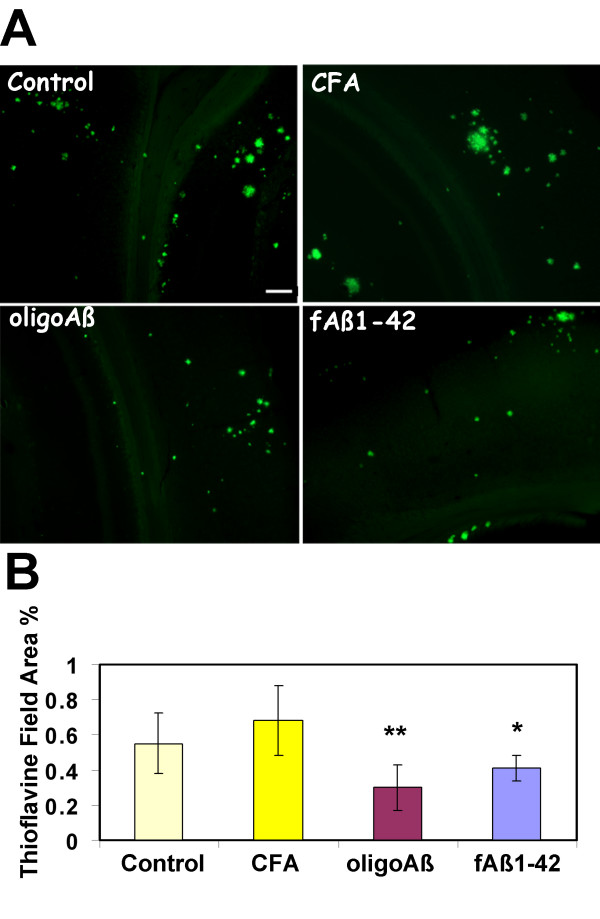
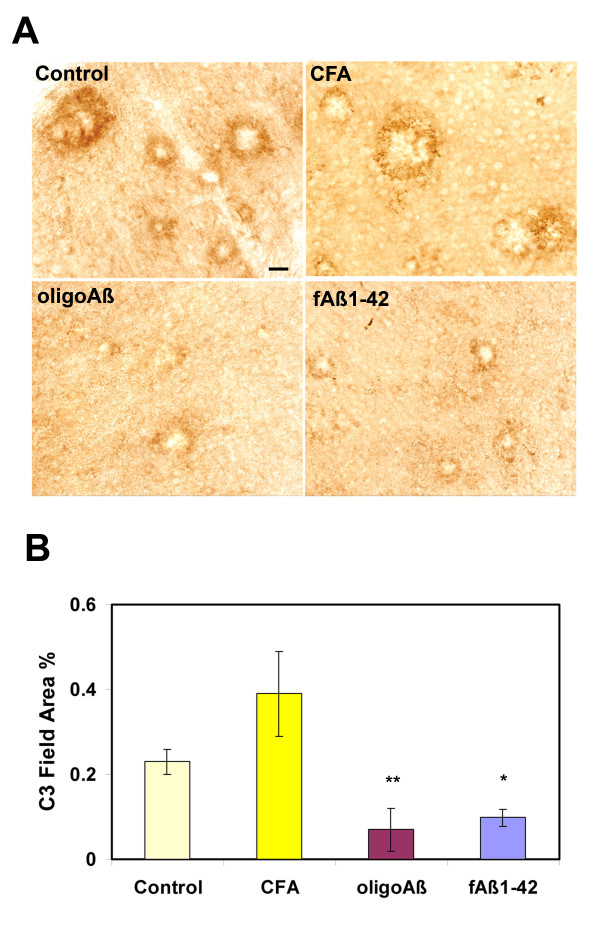
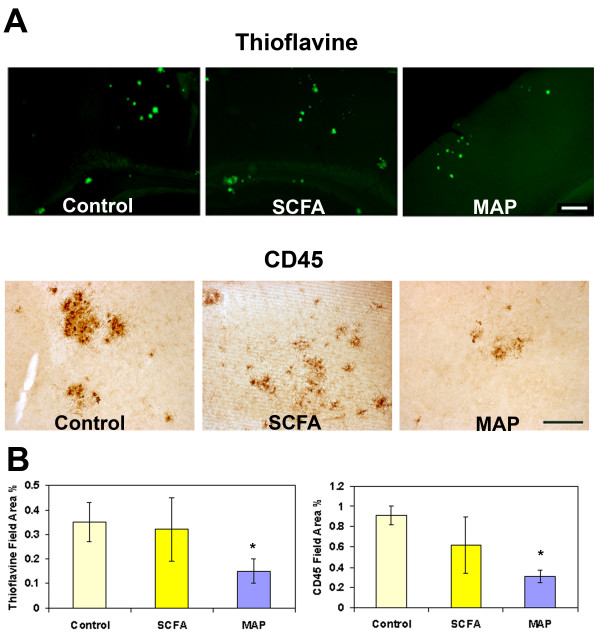
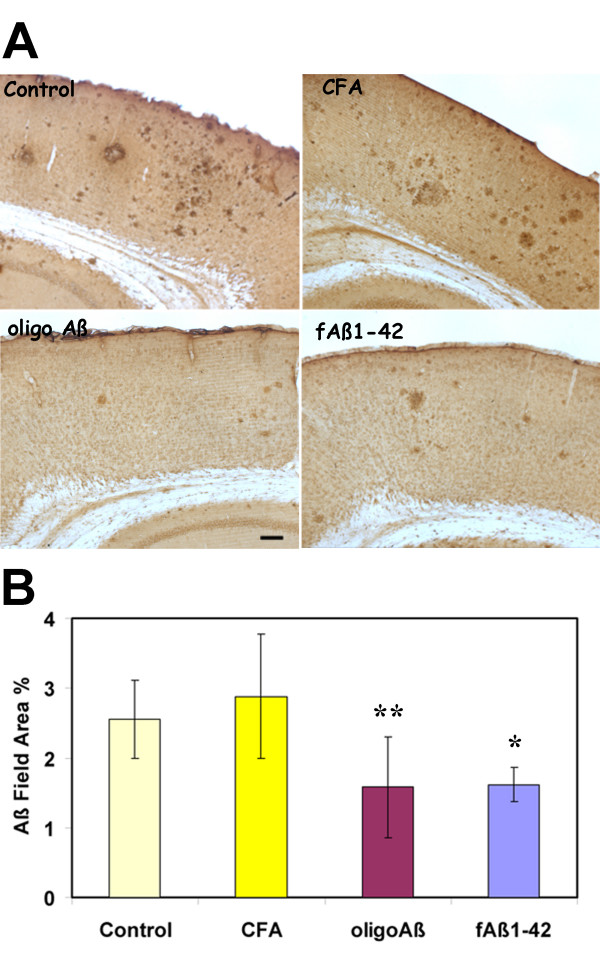
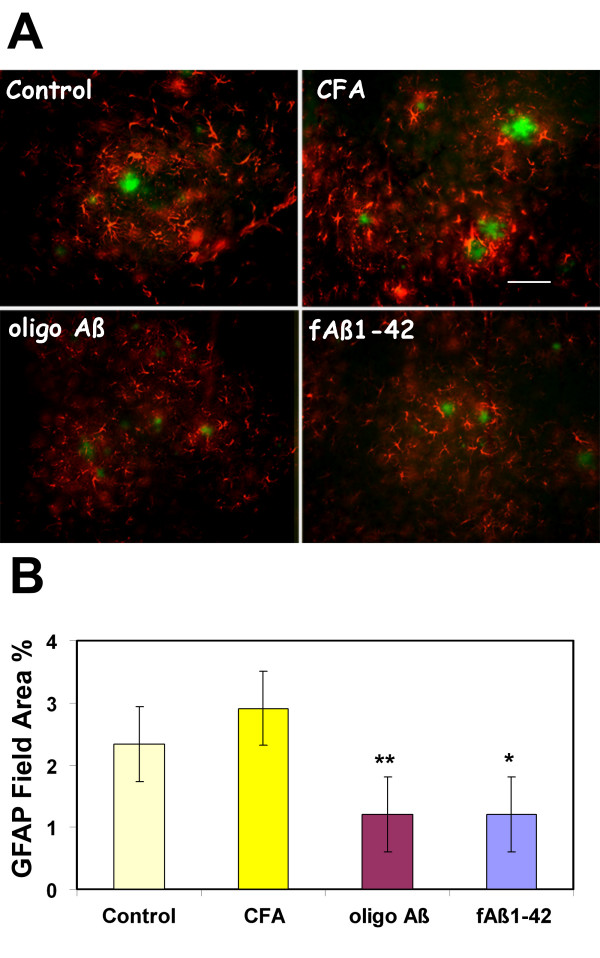
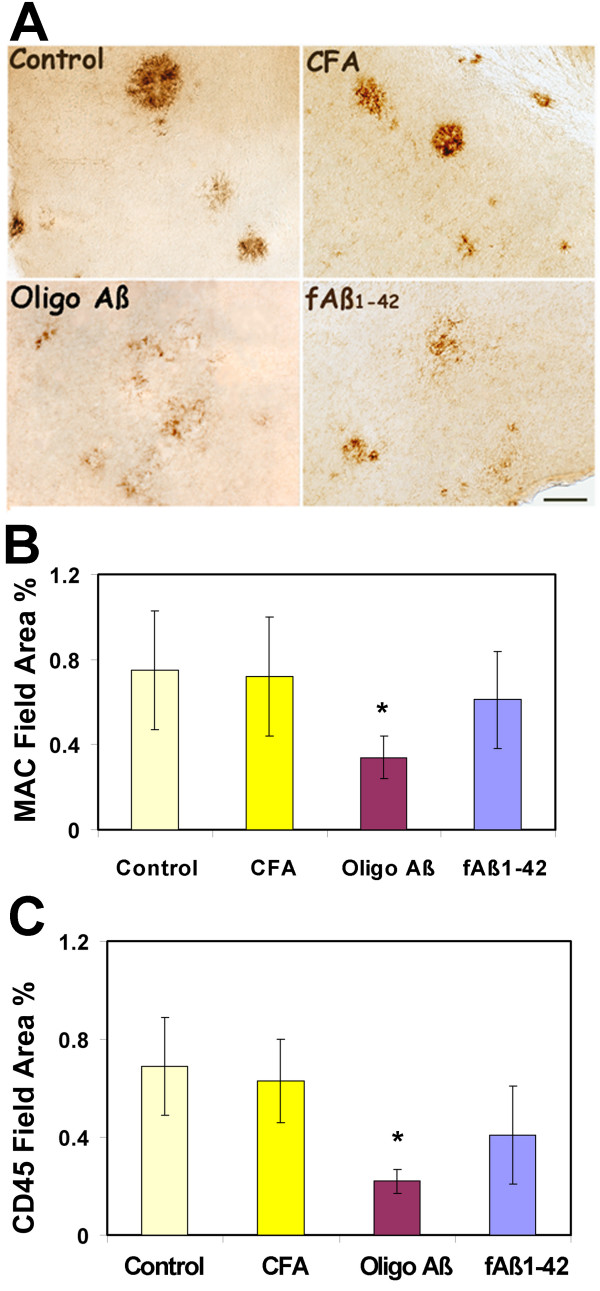
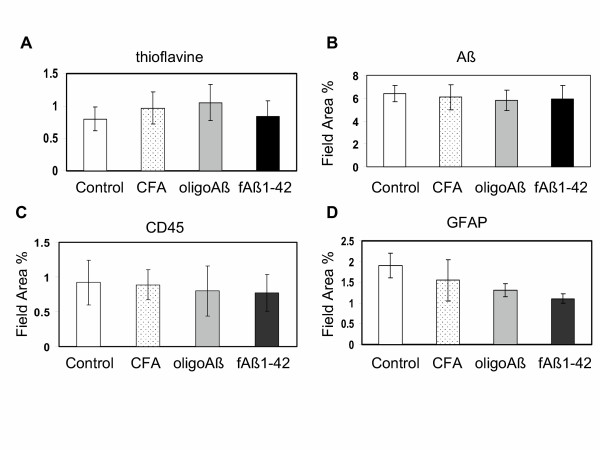
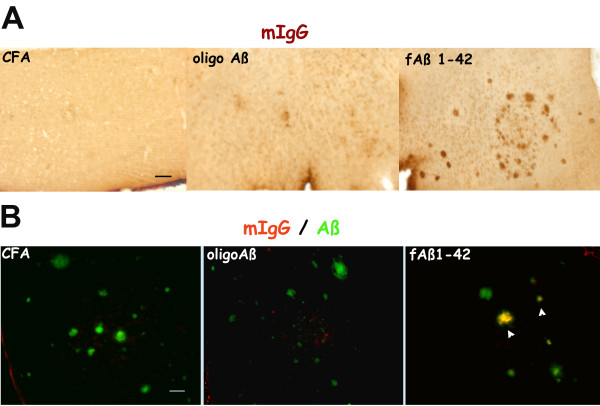
Immunization with any conformation of the amyloid peptide initiated at 12 months of age (at which time fibrillar amyloid has just begun to accumulate) showed significant decrease in total and fibrillar amyloid deposits and in glial reactivity relative to control transgenic animals. In contrast, there was no significant decrease in amyloid deposition or glial activation in mice in which vaccination was initiated at 16 months of age, despite the presence of similar levels anti-Abeta antibodies in young and old animals vaccinated with a given immunogen. Interestingly, immunization with an oligomeric conformation of Abeta was equally as effective as other amyloid peptides at reducing plaque accumulation. However, the antibodies generated by immunization with the oligomeric conformation of Abeta have more limited epitope reactivity than those generated by fAbeta, and the microglial response was significantly less robust.
These results suggest that a more specific immunogen such as oligomeric Abeta can be designed that achieves the goal of depleting amyloid while reducing potential detrimental inflammatory reactions. In addition, the data show that active immunization of older Tg2576 mice with any amyloid conformation is not as efficient at reducing amyloid accumulation and related pathology as immunization of younger mice, and that serum anti-amyloid antibody levels are not quantitatively related to reduced amyloid-associated pathology.
阿尔茨海默病是一种常见的老年痴呆症,其特征是大脑中蛋白质淀粉样沉积物的积累。尽管人体试验中的不良炎症反应表明需要新的疫苗接种策略,但通过免疫来预防这种积累已被提出作为一种治疗可能性。
在此,我们在一个显示与年龄相关的纤维状斑块积累的转基因小鼠模型中评估了新型淀粉样肽免疫原的疫苗接种情况。
在12个月大时(此时纤维状淀粉样蛋白刚刚开始积累)开始用任何构象的淀粉样肽进行免疫接种,与对照转基因动物相比,总淀粉样沉积物和纤维状淀粉样沉积物以及神经胶质反应性均显著降低。相比之下,在16个月大时开始接种疫苗的小鼠中,淀粉样蛋白沉积或神经胶质激活没有显著减少,尽管用给定免疫原接种的年轻和老年动物中存在相似水平的抗Aβ抗体。有趣的是,用Aβ的寡聚体构象进行免疫接种在减少斑块积累方面与其他淀粉样肽同样有效。然而,用Aβ的寡聚体构象免疫产生的抗体的表位反应性比fAβ产生的抗体更有限,并且小胶质细胞反应明显不那么强烈。
这些结果表明,可以设计一种更具特异性的免疫原,如寡聚体Aβ,以实现减少淀粉样蛋白同时减少潜在有害炎症反应的目标。此外,数据表明,用任何淀粉样构象对老年Tg2576小鼠进行主动免疫在减少淀粉样蛋白积累和相关病理学方面不如对年轻小鼠进行免疫有效,并且血清抗淀粉样抗体水平与减少的淀粉样蛋白相关病理学没有定量关系。