Department of Food Science, North Carolina State University, Raleigh, North Carolina 27650.
Appl Environ Microbiol. 1983 Oct;46(4):785-92. doi: 10.1128/aem.46.4.785-792.1983.
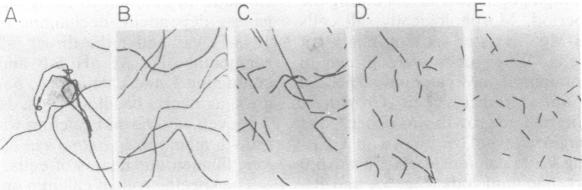
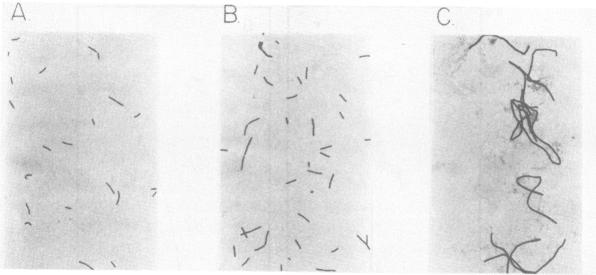
The events responsible for the transition of Lactobacillus bulgaricus 1243-F from long filamentous chains to short bacilloid rods were examined in a cation-depleted liquid medium. In the presence of magnesium only, cells grew as long chains of unseparated cells. The addition of 100 muM to 1 mM calcium or manganese to this medium resulted in the dechaining of these cells to short bacilloid rods. Fe, Zn, Co, and Cu failed to induce dechaining. Induction of calcium and manganese dechaining functioned under controlled pH maintained at 5.0 and 6.0 but not at pH 7.0. This was consistent with a previous report showing failure in synthesis of dechaining enzymes by L. bulgaricus under pH conditions approaching alkalinity (S. K. Rhee and M. Y. Pack, J. Bacteriol. 144:865-868, 1980). We conclude that under pH conditions which permit synthesis of dechaining enzymes, calcium and manganese are necessary for dechaining activity.
研究了在阳离子耗尽的液体培养基中,保加利亚乳杆菌 1243-F 从长丝状链到短杆菌状的转变的原因。仅在镁存在的情况下,细胞生长为未分离细胞的长链。向该培养基中添加 100 μM 至 1 mM 的钙或锰会导致这些细胞解链成短杆菌状。铁、锌、钴和铜不能诱导解链。钙和锰解链功能的诱导在控制的 pH 值 5.0 和 6.0 下起作用,但在 pH 值 7.0 下不起作用。这与之前的一项研究结果一致,该研究表明在接近碱性的 pH 条件下保加利亚乳杆菌不能合成解链酶(S. K. Rhee 和 M. Y. Pack,J. Bacteriol. 144:865-868, 1980)。我们得出结论,在允许解链酶合成的 pH 条件下,钙和锰是解链活性所必需的。