Department of Agriculture and Environmental Science and Department of Biological and Nutritional Sciences, The University of Newcastle upon Tyne, Kings Road, Newcastle upon Tyne NE1 7RU, and Department of Biochemistry, AFRC Institute of Animal Physiology and Genetics Research, Babraham, Cambridge CB2 4AT, England.
Appl Environ Microbiol. 1992 Aug;58(8):2517-22. doi: 10.1128/aem.58.8.2517-2522.1992.
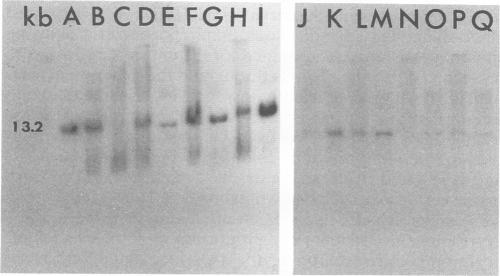
The growth and persistence of two genetically manipulated forms of Lactobacillus plantarum NCDO (National Collection of Dairy Organisms) 1193 have been monitored in grass silage. Both recombinants contained pSA3, a shuttle vector for gram-positive organisms that encodes erythromycin resistance. In one of the recombinants, pSA3 was integrated onto the chromosome, whereas in the other, a pSA3 derivative designated pM25, which contains a Clostridium thermocellum cellulase gene cloned into pSA3, was maintained as an extrachromosomal element. This extrachromosomal element is a plasmid. Rifampin-resistant mutants were selected for the recombinants and the parent strain. When applied to minisilos at a rate of 10 CFU/g of grass, both the recombinants and the parent strain proliferated to dominate the epiphytic microflora and induced an increase in the decline in pH compared with that of the noninoculated silos. The presence of extra genetic material did not appear to disadvantage the bacterium in comparison with the parent strain. The selective recovery of both strains by using rifampin and erythromycin was confirmed by Southern hybridization. Interestingly, the free plasmid (pM25) appeared more stable in silage than was expected from studies in MRS broth. The plasmid was retained by 85% of the rifampin-resistant L. plantarum colonies isolated from a day 30 silo. These data answer an important question by showing that genetically manipulated recombinants of L. plantarum can proliferate and compete with epiphytic lactic acid bacteria in silage.
两种经基因改造的植物乳杆菌 NCDO(国家乳制品微生物保藏中心)1193 已在青贮中进行了生长和持久性监测。这两种重组菌都含有 pSA3,这是一种用于革兰氏阳性菌的穿梭载体,可编码红霉素抗性。在其中一种重组菌中,pSA3 整合到染色体上,而在另一种重组菌中,pM25 是 pSA3 的衍生物,它含有一个克隆到 pSA3 中的嗜热梭菌纤维素酶基因,作为染色体外元件维持。这个染色体外元件是一个质粒。选择对重组菌和原始菌株进行了 Rifampin 抗性突变。当以 10 CFU/g 草的速率应用于 minisilos 时,与未接种青贮的青贮相比,两种重组菌和原始菌株都增殖到主导了附生微生物区系,并诱导 pH 值下降增加。与原始菌株相比,额外遗传物质的存在似乎并没有使细菌处于劣势。通过使用 Rifampin 和红霉素选择性回收两种菌株,通过 Southern 杂交得到了证实。有趣的是,与在 MRS 肉汤中的研究相比,在青贮中发现游离质粒(pM25)更稳定。从第 30 天青贮中分离出的 Rifampin 抗性植物乳杆菌菌落中,有 85%保留了质粒。这些数据通过表明遗传改造的植物乳杆菌重组体可以在青贮中增殖并与附生乳酸菌竞争,回答了一个重要问题。